
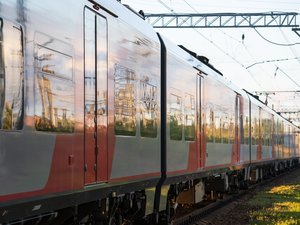
On June 8, an 18-year-old political science student at the University of Lausanne faced a potential disaster when his CFF train from Arnex-sur-Orbe was canceled at the last minute. Thankfully, his mother swooped in to save the day, racing him to campus just in time for him to take a crucial exam and avoid a repeat year. The CFF has since apologized, citing a significant mechanical breakdown as the cause of the train’s cancellation.
A Cold Sweat: The Countdown to Crisis
Early that fateful morning, the student arrived at Arnex-sur-Orbe station around 7 a.m. Initially, the railway company’s app indicated a minor delay, but within moments, it escalated to a full 14-minute delay, culminating in a cancellation announcement. Panic ensued. With his exam set to begin at 8 a.m., missing it would mean a mandatory repeat of his year. “In the first year, failing an exam forces us to repeat the year,” he explained, highlighting the stakes he was facing.
Just when despair threatened to take hold, his mother became an unlikely hero, embodying the spirit of a Formula 1 driver. Under immense pressure, she sped through the streets, eager to get him to campus in time.
Driving Against the Clock
In recounting the frantic drive, the student’s mother remarked on her willingness to bend the rules of the road. “I had to drive fast; I may have pressed the accelerator a little hard and I did a U-turn in the middle of a village.” Their efforts paid off; they arrived at the university at 8:03, just moments before the exam doors closed. Despite the adrenaline rush, the student admitted that he was not in the ideal state to concentrate on a political reflection that would last four hours.
Voices of Concern: Passenger Rights and CFF’s Response
Faced with the chaos, the mother expressed her frustration with the railway service: “Nothing is done for stranded passengers at small stations, no replacement bus, no explanations, nothing! Already, CFF subscriptions are so expensive every year…” Her concerns highlight a larger issue regarding customer service for rail passengers, especially in smaller locales.
In response, CFF issued a formal apology, explaining that the mechanical failure was the primary reason for the train’s cancellation. They informed the family that any potential replacement bus would have arrived later than the next scheduled train, which was set to depart 30 minutes after the canceled service. A spokesperson stated, “Whether in a small or large station, the treatment of customers is the same,” attempting to assure the public that their policies apply uniformly.
Conclusion: A Narrow Escape
This incident serves as a potent reminder of the unpredictable challenges students may face while pursuing their education. The determination of this young man’s mother not only embodies parental concern but also sheds light on the critical importance of reliable public transport systems to facilitate timely access to education. Thanks to her quick thinking and willingness to break a few rules, a potential academic disaster was averted, but it raises questions about the reliability of services that students depend on.
As the academic pressures continue to mount, stories like this underscore the need for improvements in transport services to ensure that students can achieve their academic goals without unnecessary interruptions.