
Mercamadrid’s Leap into the Future with Autonomous Minibuses
Something remarkable is happening in Mercamadrid. It’s not just the busy rhythm of trucks that operate around the clock; the area has now welcomed a modern minibus that can operate without a direct driver. This introduction marks a significant step toward incorporating cutting-edge technologies into everyday urban life.
A Testing Ground for Innovation
The City Council has transformed Mercamadrid into a Smart Urban Space, turning it into a living laboratory to gather data on urban management technologies. This pilot program is part of the Mobilities for EU initiative, where controlled environments are utilized to evaluate various metrics, including mobility, efficiency, and safety. Insights gained will help determine if such innovations can be rolled out in other parts of the city in the future.
The Star of the Show: e-CENTRO Minibus
While the City Council has not disclosed the manufacturer of the autonomous minibus, visual materials provided by project partners indicate that the vehicle is the e-CENTER from the Turkish company Otokar. The e-CENTO is designed for urban environments and features Level 4 autonomous driving capabilities.
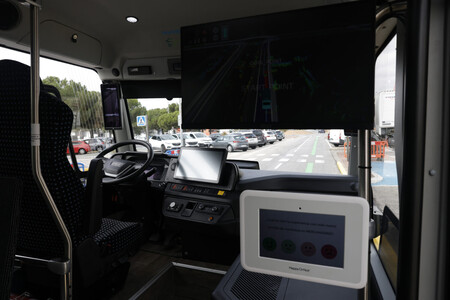
The e-CENTRO operates on a sophisticated system that utilizes 360-degree vision and continuous environmental analysis. This tech allows the minibus to navigate autonomously, planning its route and responding to obstacles within a defined area. Notably, while images show a person seated at the front, their role remains unclarified in official communications.
Technical Specifications
The electric e-CENTRO measures 6.6 meters in length and integrates a 110 kWh NMC Li-ion battery setup beneath the floor, allowing it to accommodate up to 32 passengers. The vehicle is powered by a DANA-TM4 engine, delivering 100 kW (with peak performance reaching 200 kW) and torque of 1,200 Nm. According to the manufacturer, the e-CENTRO can achieve a full recharge in 1.5 hours and employs a regenerative braking system that can recover up to 25% of energy while in urban transit.
Building a Smart City
The project’s goal extends beyond just autonomous vehicles. The City Council envisions these spaces as interconnected systems that combine physical infrastructure with sensors and telecommunications capabilities linked to the City Operating System. This array of technologies aims to monitor urban environments in real-time, providing data that enhances urban management precision. Additionally, a Smart City Interpretation Center is planned to educate the public on these technologies.
Collaborative Efforts and Investment Plans
This pilot project is part of the broader Mobilities for EU consortium, which is led by Madrid in collaboration with Dresden, Germany. This partnership includes 29 institutions from nine different nations, with testing also occurring in cities like Espoo, Gdansk, and Ioánnina, among others.
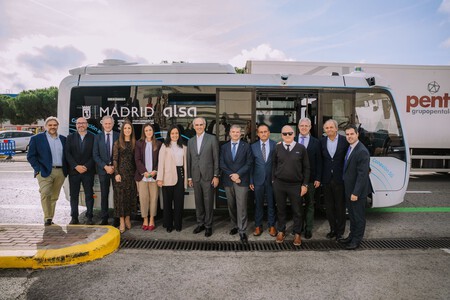
Supported by various transport operators, technology firms, and universities, the initiative features partnerships with notable entities such as Alsa, Ferrovial, SAP, and Volkswagen, all contributing to the advancement of sustainable mobility.
The City Council has earmarked more than €60 million for various projects as part of its Digital Transformation Strategy over the next five years. Among these is the smart urban spaces contract, with a budget of €7.5 million and an execution timeframe of 48 months.
Images | ALSA |