
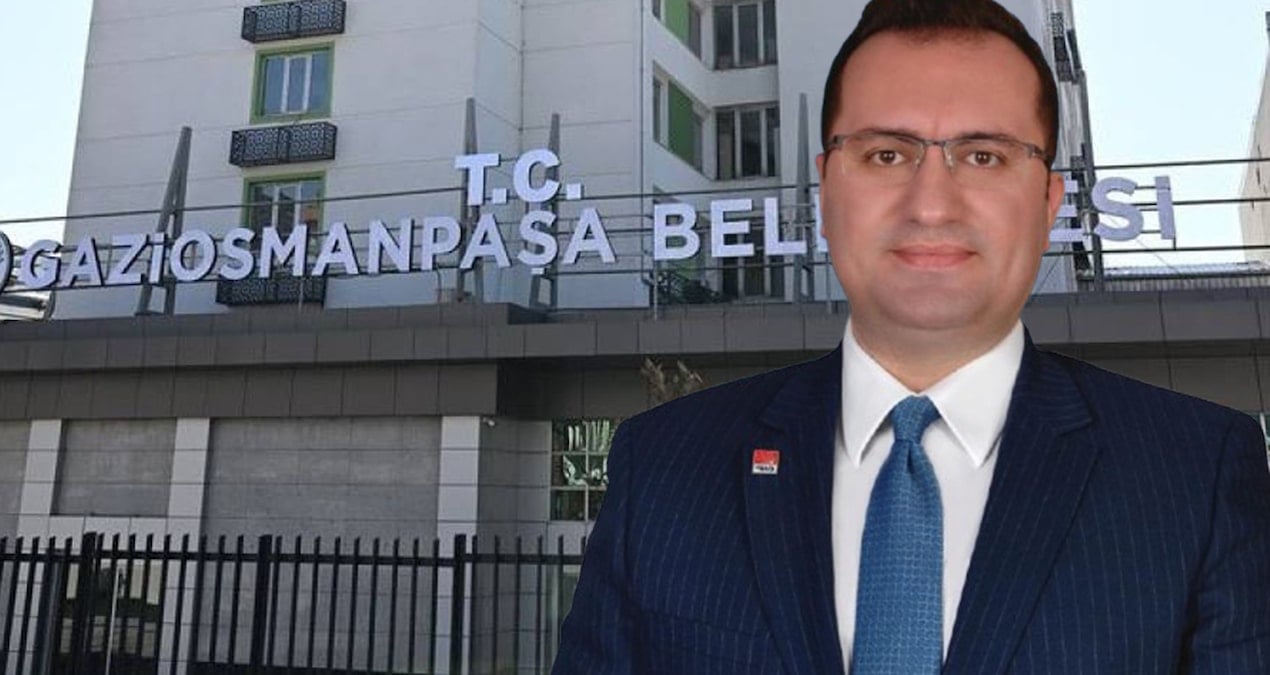
Recently, a significant political upheaval took place in Turkey as a fifth wave operation targeting municipalities governed by the Republican People’s Party (CHP) resulted in six arrests. Those apprehended include notable figures such as former CHP parliamentarian Aykut Erdoğdu , along with Hasan Akgün , the Mayor of Büyükçekmece, and Hakan Bahçetepe , the Mayor of Gaziosmanpaşa.
GAZİOSMANPAŞA AKP’YE Mİ GEÇECEK?
The arrest of Hakan Bahçetepe has caused a ripple effect in Gaziosmanpaşa , altering the political dynamics within the district. Following this unexpected development, it is anticipated that the Cumhur İttifakı (People’s Alliance) , which currently holds the majority in the Municipal Council, will take control of the municipality in the upcoming voting sessions.
During the March 31 elections , Bahçetepe narrowly defeated Hasan Tahsin Usta from the AKP, securing 40.44% of the vote against Usta’s 40.11% . However, the situation in the district’s municipal council tells a different story, revealing a more favorable perspective for the AKP.
In the municipal council elections, the AKP emerged as the leading party with 40.86% of the votes, while the CHP garnered 38.86% . Other smaller parties like the New Welfare Party (YRP) and the Democracy and Progress Party (DEM) received 6.31% and 3.94% of the vote, respectively. This overarching support for the AKP positions them strategically to potentially gain control of the municipality following Bahçetepe’s arrest.
The shifting alliances within Gaziosmanpaşa highlight a critical phase in Turkish politics, where municipalities are becoming battlegrounds for broader political struggles. While the CHP has traditionally been a stronghold in many urban centers, recent events signify a potential transformation in this narrative.
As we witness these dramatic shifts unfold, it remains essential to delve deeper into the implications of such arrests and their subsequent effects on local governance and political dynamics. The presence of strong leadership in local governance is essential for maintaining stability and addressing community needs, especially in districts as pivotal as Gaziosmanpaşa.
Local governance has always played a crucial role in Turkey’s political framework, and the current situation underscores the importance of political accountability and democratic principles. The potential transfer of power in Gaziosmanpaşa signifies not just a change in leadership but a shift in the political landscape that could resonate throughout Turkey.
Moreover, the actions taken against CHP municipalities raise questions regarding the freedom of political expression and the rule of law in Turkey today. Critics argue that such operations could be viewed as politically motivated actions aimed at suppressing opposition voices, thus threatening the fabric of democratic engagement in the country.
The ramifications of the fifth wave operation extend far beyond the immediate arrests; they pose a challenge to the foundational principles of democracy and local autonomy. As the AKP looks to capitalize on this turmoil, the CHP must strategize its response carefully, ensuring that it addresses not only the immediate political fallout but also the broader implications for its long-term viability as a political force in Turkey.
As these developments continue to evolve, they have important implications for the citizens of Gaziosmanpaşa and beyond. The public’s response to the ongoing political turmoil will ultimately determine the future trajectory of local and national governance in Turkey. How constituents react, and the steps taken by the arrested officials to secure their political future, will be closely monitored by observers both locally and internationally.
The forthcoming weeks will be crucial for the CHP and the AKP in navigating these treacherous political waters. Will the Republican People’s Party manage to rally its base in the face of adversity, or will the People’s Alliance solidify its grip on power amid these controversies? Outcomes in Gaziosmanpaşa could serve as a bellwether for upcoming administrative elections in various regions of Turkey.
In conclusion, the situation surrounding the CHP and its affiliated municipalities is rapidly developing, reflecting deeper issues within the fabric of Turkish governance. As political tensions rise, citizens and stakeholders alike must remain vigilant, advocating for their voices to be heard and for transparency and accountability in local politics. Only time will tell how these elements will converge to shape the future political landscape of Turkey.