
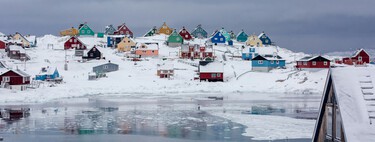
Greenland’s Rare Earth Challenge: The Road to Nowhere
The geopolitics of the 21st century has identified Greenland as an emerging focal point in global resource strategies. While President Trump’s administration aims to leverage Greenland’s significant reserves of rare earth elements—estimated at 1.5 million tons—geographical and infrastructural realities present a formidable obstacle. The ambitious plans are hindered by the stark lack of roads and supportive infrastructure needed for extraction, transforming any mining ambitions into a logistical nightmare.
The Infrastructure Imbalance
Greenland is a colossal expanse, roughly three times the size of Texas, yet it features only 93 miles (150 kilometers) of roads. Introduced under the Make Greenland Great Again Act in 2025, the urgency to seize control of Greenland has escalated rapidly. The Center for Strategic and International Studies (CSIS) has classified Greenland as a national security priority, pushing for further military and logistical commitments. However, without essential infrastructure—such as industrial-capable ports and robust power plants—any extraction effort remains largely theoretical.
Diogo Rosa from the Geological Survey of Denmark and Greenland emphasizes that establishing necessary roads and infrastructure for mining operations would require starting from scratch, including improvements to the limited Narsaq port, which currently handles merely 50,000 tonnes per year.
The Extraction Enigma: Eudialite
The geological challenges in Greenland do not end with infrastructure. The rare earth elements themselves are predominantly found in eudialite, a complex rock that presents unique extraction difficulties. Unlike other minerals like carbonatites—which have established extraction methods—there are no proven techniques for profitably extracting rare earths from eudialite.
Experts, including Javier Blas, characterize the U.S. optimism surrounding Greenland as merely an “optimistic PowerPoint.” The lack of successful mining ventures over decades attests to the prohibitive costs associated with extraction. As noted, the processing expenses could surpass $1 billion, overshadowing potential profit margins.
The Legal and Geopolitical Landscape
Complicating matters further is China’s significant influence over global rare earth supplies, controlling around 90% of the market. Chinese companies, such as Energy Transition Minerals, are involved in legal disputes over Greenland’s resources, following a uranium mining ban that threatened their investments. These legal intricacies create a geopolitical stranglehold, where the U.S. wishes to diminish Chinese influence but faces substantial barriers on multiple fronts.
Climate Change: A Mixed Blessing
Ironically, climate change—often viewed as a global threat—might offer some logistical advantages. The Arctic is warming at an accelerated pace, transforming previously impassable waters into navigable trade routes. The Polar Silk Road, which facilitates quicker shipping paths, highlights this change. However, increased accessibility does not address the lack of land infrastructure. Severe weather conditions in northern Greenland continue to force mining operations into hibernation for half the year, rendering profits a continual illusion.
The Costs of Control
Ultimately, efforts to exploit Greenland’s vast mineral wealth seem destined to collide with environmental regulations and a harsh geological reality. The Trump administration’s investment strategies may yield little in the way of immediate results, as the necessary groundwork remains unlaid. As Anthony Marchese succinctly states, any serious venture into Greenland’s mineral resources would demand billions and an extensive timeline.
In this clash of ambition and reality, one fundamental truth remains: the island’s most valuable treasure is safeguarded not by treaties or military presence, but by an infrastructure gap that makes immediate extraction virtually impossible.