
EU’s Bold Move Towards Sustainability
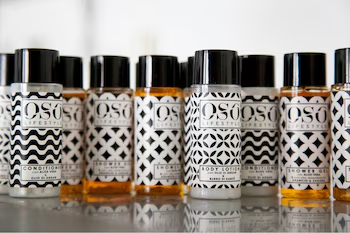
For decades, checking into a hotel meant encountering an array of small, colorful bottles of shampoos, gels, and lotions occupying the sink. However, this familiar sight is on the brink of becoming obsolete, thanks to a recent directive from the European Union aimed at eliminating single-dose packaging in hotels. This monumental shift marks a significant step forward in reducing plastic waste and reshaping the guest experience across the continent.
Understanding Regulation (EU) 2025/40
The recently approved Regulation (EU) 2025/40 signifies the start of a transformative phase in waste management. The EU’s goal is straightforward yet ambitious: to drastically diminish the amount of single-use packaging within the hospitality sector. Starting in August 2026, this regulation will be rolled out gradually across member states, culminating in a complete phase-out of traditional toiletry bottles by January 1, 2030.
Impact on the Hospitality Sector
The hospitality sector will experience one of the most significant shifts as this regulation takes effect. Hotels, restaurants, and other tourist accommodations will no longer provide hygiene items in individual packaging. Instead, refillable dispensers will become the norm in hotel rooms, drastically reducing the reliance on single-use plastic products.
Addressing Plastic Waste
The need for this regulation stems from alarming statistics; according to the Plastic Atlas, each European generates approximately 190 kilograms of packaging waste annually. Notably, 44% of all plastic consumed in Europe is designated for single-use containers. Regulation (EU) 2025/40 aims for a stepwise reduction of this waste: 5% less by 2030, 10% by 2035, and 15% by 2040, relative to 2018 levels.

What This Means for Travelers
For travelers, the transition represents a shift in common practices. The cherished tradition of pocketing those miniature bottles as souvenirs will cease, but this change also promotes greater ecological awareness. Guests will need to adapt to utilizing products from dispensers, which are subject to stringent hygiene and replacement standards, ensuring that quality remains uncompromised while reducing waste.
Beyond Hotels: A Holistic Approach
The EU is not stopping at hotel regulations; a comprehensive strategy is in place aimed at reducing the environmental impact of all consumer habits. By 2030, additional single-use plastics like fruit and vegetable bags and food containers will also face restrictions.
Changes in the Travel Sector
Another significant change will commence in 2027, shifting away from plastic used to wrap suitcases at European airports. By January 1, 2030, this will be limited, pushing travelers toward sustainable options like textile covers or luggage straps. Furthermore, the EU mandates that by 2029, 90% of plastic and metal beverage containers will require separate collection for efficient recycling.
A Vision for the Future
The European Commission is firm in its stance, warning that if plastic production and consumption habits remain unchanged, projections indicate more plastic than fish in the sea by 2050. The objective behind these regulations is not merely reduction, but rather a transformation of consumption patterns towards a circular economy, making recycling and reuse commonplace.