
| IN BRIEF |
|
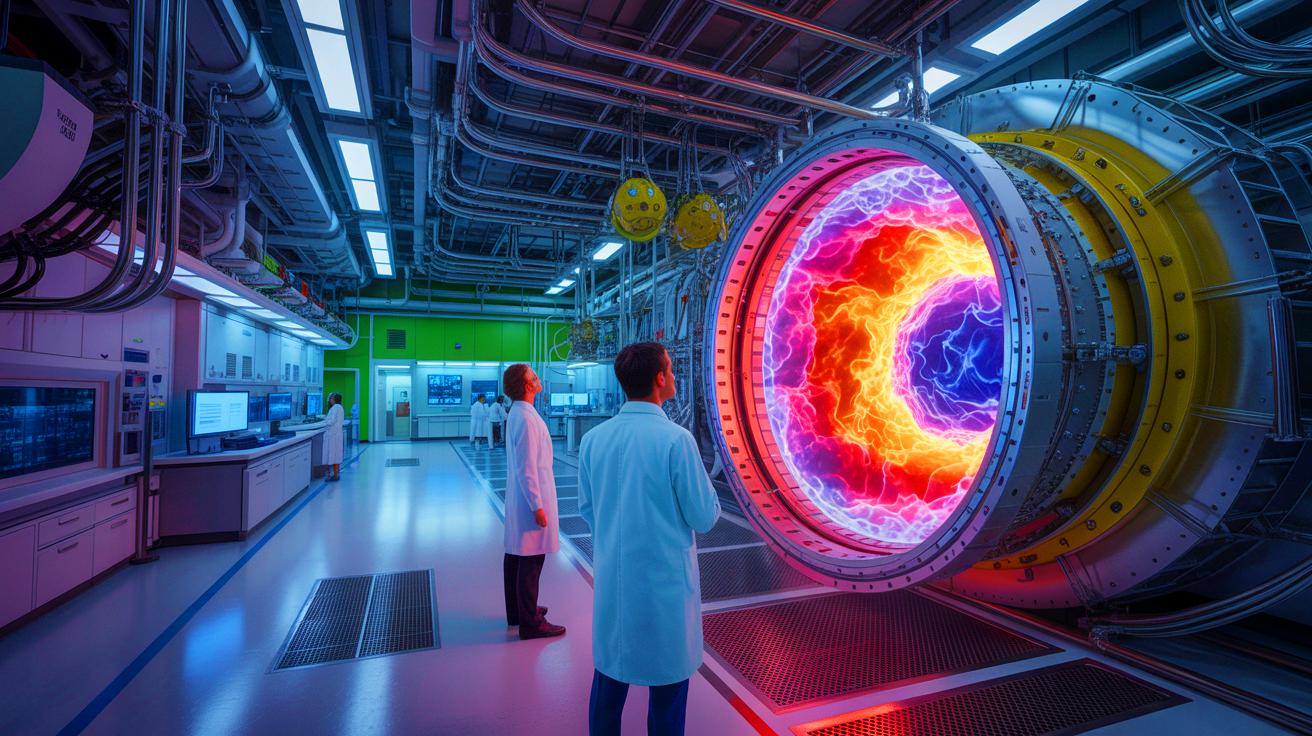
The Relativistic Heavy Ion Collider (RHIC) , located at Brookhaven National Laboratory in the United States, is set to experience its last moments of glory. Since 2000, this laboratory has enabled scientists to recreate and study quark-gluon plasma (QGP) , a primordial state of matter believed to have existed just after the Big Bang . In 2025, researchers are in the midst of data collection during the 25th and final series of experiments. These efforts not only enhance our understanding of the universe’s beginnings but also shape the next generation of physicists.
The Stakes and Objectives of the Final Series of Experiments
The last series of experiments at the RHIC focuses on gold ion collisions at an astounding 200 billion electronvolts . Scheduled to run until early June, these experiments aim to collect data with unmatched precision. Jin Huang , a physicist at Brookhaven Lab , explains that the RHIC has not only pushed the boundaries of nuclear science but has also fostered international collaboration among researchers. This final series of experiments is the heir to an unending quest for innovation and mentorship.
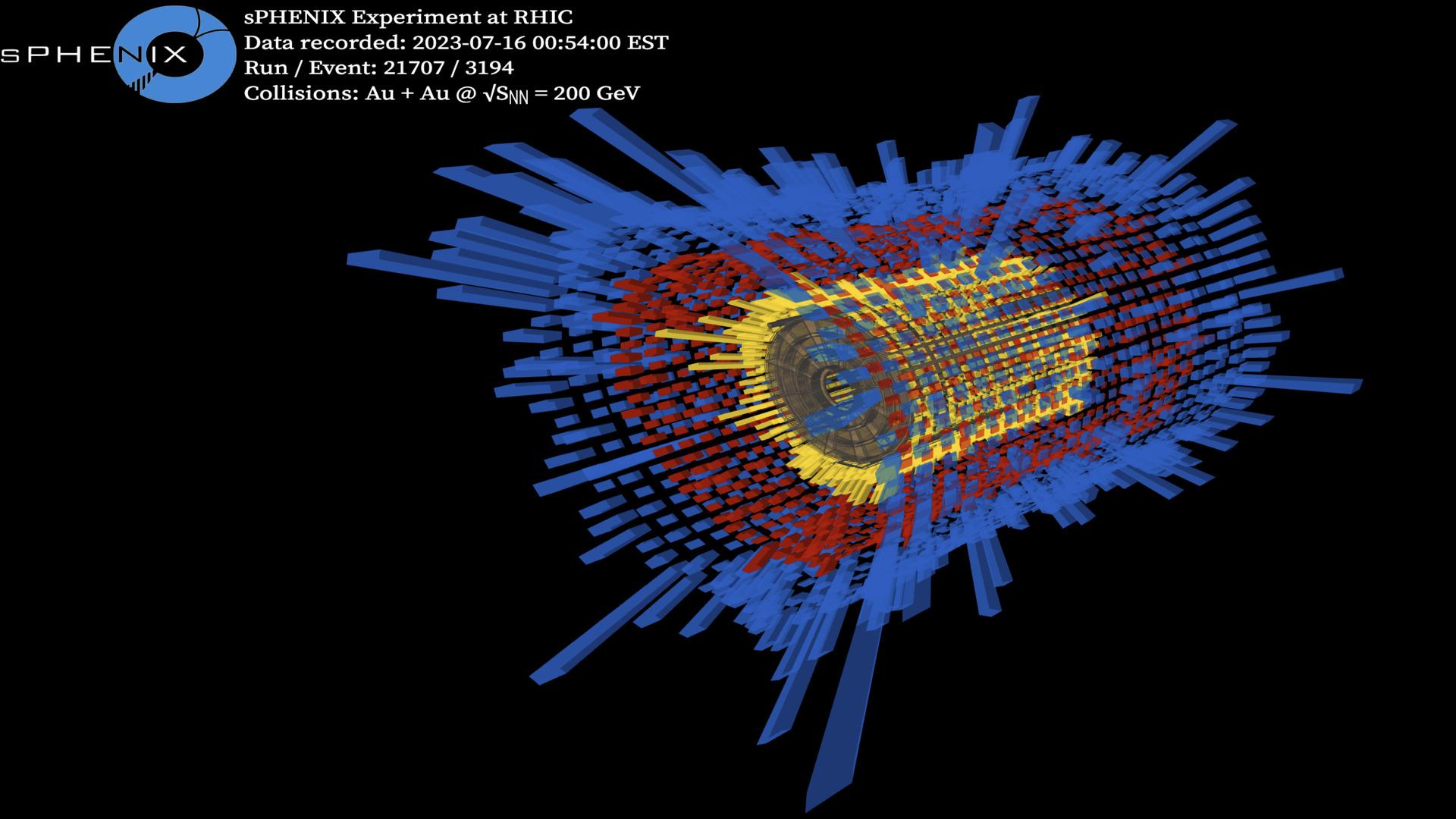
The STAR detector , after several years of enhancements, focuses on optimizing data collection from the collisions. The target is to gather an additional 10 billion events this year, on top of the 8 billion already recorded in previous series. Concurrently, the sPHENIX detector , utilizing a hadronic calorimeter, aims to observe 50 billion collisions , allowing for the analysis of energy displacement within the QGP.
“It was a flash hotter than the Sun”: this American laser generated more energy than it consumed
The Future After RHIC
After this final series of experiments, the RHIC will be transformed into a new facility, the Electron-Ion Collider (EIC) . This new collider aims to study cold nuclear matter , that which exists before collisions, utilizing electrons. The APEX tests conducted at the RHIC will be essential for overcoming design challenges of the EIC, particularly in the stabilization and precise alignment of ion beams . The technologies developed at RHIC will play a crucial role in this transition.
This transition promises new discoveries. Researchers hope that the results obtained at RHIC will provide a foundation for groundbreaking experiments at the EIC. While data collection at RHIC is coming to an end, the path to discovery continues, promising exciting results in the coming decade.
2025 Objectives Summary Table
| Objective | Details |
|---|---|
| Gold Ion Collision | 200 billion electronvolts |
| Data Collection | 10 billion additional events |
| sPHENIX Utilization | 50 billion collisions observed |
| Transition to EIC | Stabilization and alignment of beams |
A Look Forward
As the RHIC prepares to be replaced by the EIC, the scientific community is gearing up to explore new frontiers in nuclear physics. The connection between hot nuclear matter examined at RHIC and cold matter to be explored at EIC is pivotal for understanding the fundamental structure of the universe. Future discoveries could transform our comprehension of visible matter.
Researchers at Brookhaven are determined to continue their quest for answers to the profound questions of physics. As the chapter of the RHIC closes, a new one begins with the EIC, promising to revolutionize our understanding of the universe. What mysteries of the universe will the EIC uncover in the future?
The author utilized artificial intelligence to enhance this article.
Did you enjoy it? 4.4/5 (23)
General News – 2