
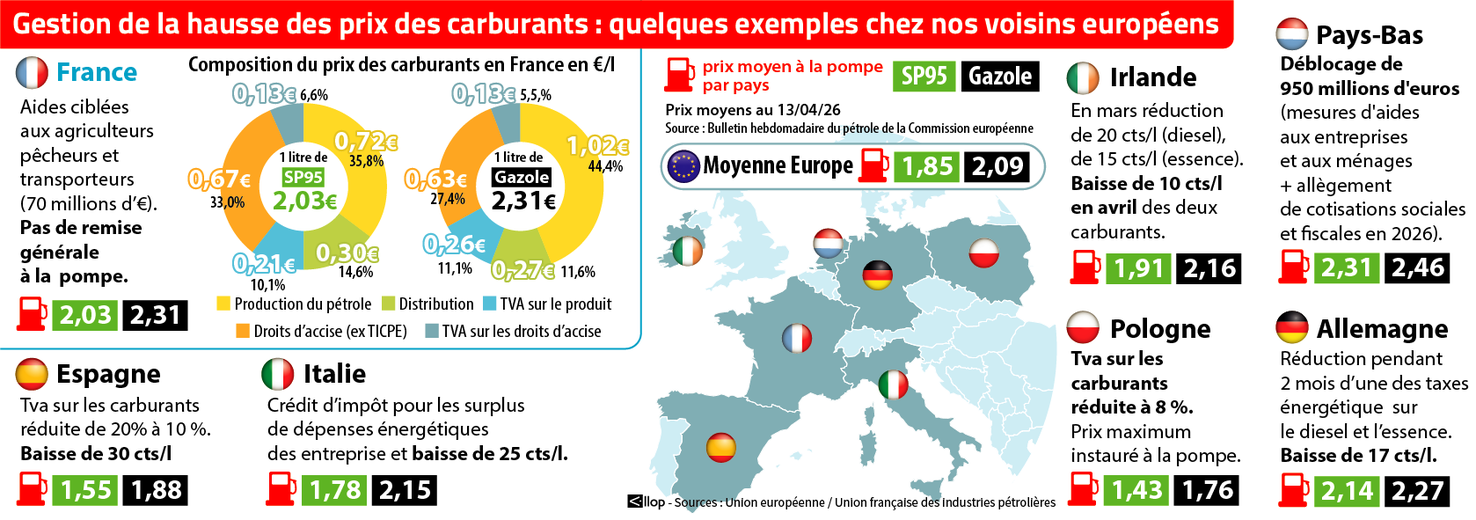
Fuel prices remain under high pressure in Europe. While Italy, Germany, and Spain are increasing tax cuts, France, hampered by a debt of 113% of GDP, continues to procrastinate and settle for helping out the most impacted professions. Until when?
As tensions rise in the Middle East, the subject of fuel prices is heating up throughout Europe. However, the government led by Sébastien Lecornu remains much more reserved when compared to its neighbors. Announced on April 21, a second phase of aid targets only the hardest-hit sectors—such as fishermen, farmers, truck drivers, and taxi operators—along with approximately 3 million workers deemed “heavy rollers.”
A 5 Billion Shield in Spain
The call for a reduction in fuel taxes in France has gained traction, especially from the National Rally party. In stark contrast to France, many neighboring countries have already acted. For example, since March 18, Italy has implemented a tax reduction of 25 cents per liter, which has been extended until May 2. Similarly, Germany has enacted a drop of 30 cents over two months at a cost of €1.6 billion.
Midi Libre – Antoine Llop
Spain has taken even more extensive measures, rolling out a comprehensive €5 billion shield that includes capping certain energy prices, providing direct aid to vulnerable sectors, and a significant tax reduction of up to 30% at the pump.
The Energy Shield Cost More than 110 Billion in 2023
In France, the scenario diverges distinctly from last year’s context during the Ukraine crisis. According to Hugo Larricq, general director of My Energy Broker, the previous fuel bonus and energy shield cost between €110 and €120 billion over two years, which accounts for about 4% of GDP. The French government cannot shoulder similar expenses anymore as it stands as one of the most indebted nations in Europe.
Countries like Spain and Italy have shown signs of economic recovery, with Spain reverting to 100% GDP after previously reaching close to 120% five years ago. In contrast, France is struggling under its current debt levels.
Drop in Consumption for a Month
In response to rising prices, some countries like Hungary and Poland have opted to fix their fuel prices at approximately €1.50 for unleaded and between €1.60 and €1.80 for diesel. Economists warn that such caps could lead oil suppliers to favor higher bidders amid shortages.
Facing criticism for maintaining high taxes, the French government highlights a reported 16% drop in fuel consumption in a month, which is said to reduce revenue by €100 million. Yet, this raises the question: how long can the government afford to wait before addressing the tax situation for all citizens?
Towards Another Yellow Vests Episode?
Hugo Larricq warns that the current scenario mirrors the unrest during the Yellow Vests movement, especially with the impending presidential election. The summer, characterized by a peak in travel and fuel consumption, is poised to test the government’s resolve.
Another potential route for alleviating concerns involves eliminating energy certificates, a suggestion from the heads of large retail chains. This option could provide about 15 cents off per liter but may jeopardize funding for energy transition projects like MaPrimRénov’, igniting further debate among environmental advocates.
An Increasingly Volatile Market
Looking ahead, the fuel market remains fraught with uncertainty. Larricq succinctly summarizes the situation in one word: “Volatility.” Since 2020, fuel price volatility has surged by 20-30%. Unlike prior years when OPEC effectively managed its surplus, the market now reacts sharply to any disruptions, such as the ongoing crisis in Iran, which has seen prices jump by 50% due to significant supply deficits.
The persistent risks associated with energy supply chains call into question the prospects for stabilizing fuel prices. Until geopolitical tensions dissipate—especially in key regions like the Strait of Hormuz—the hope for lower prices at the pump remains dim.