
Exploring Human Health in Space: The Artemis II Mission
Conducting experiments in space is complicated due to limited resources and even fewer study subjects. Sometimes, the experimenters have to be the subjects themselves. This is precisely what the crew of Artemis II will be doing for 10 days, delving into how the conditions of outer space affect human health while proving it on themselves.
Background: The Effects of Space on Health
It is well-documented that even short stays in space can impact human health. For instance, a recent astronaut on the International Space Station (ISS) experienced an unexplained loss of speech. Consequently, many experiments at the ISS focus on understanding how factors like microgravity, isolation, and cosmic radiation affect health. However, experiments conducted in low Earth orbit differ significantly from those that will take place on the Moon.
The Crew’s Mission
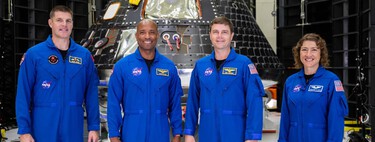
The Artemis II team, comprising Reid Wiseman, Victor Glover, Christina Koch, and Jeremy Hansen, has multiple missions during their 10-day journey. They will test the spacecraft’s functionality for future lunar landing missions, photograph the Moon’s far side, and ultimately serve as subjects for experiments examining space’s impact on health. This journey allows them to venture further than the confines of low Earth orbit.
Innovative Studies During the Mission
ARCHeR: Evaluating Psychological and Physiological Effects
The first study, called ARCHeR, will analyze how space affects sleep, stress, cognition, and teamwork among astronauts. To monitor these factors, the crew will wear activity bracelets, allowing for a data comparison with measurements taken on Earth before and after the mission. This comprehensive data will help understand the psychological strain of isolation and stress during long-duration missions.
Investigating Immune Health
Research conducted aboard the ISS showed that certain viruses, such as varicella zoster, are more likely to activate in space. These are typically dormant viruses that only reactivate when the immune system weakens. To investigate whether space affects immune responses, the Artemis II crew will collect saliva and blood samples before, during, and after their mission. Notably, dried saliva samples will be taken on specially designed paper, as refrigeration is unavailable in space.
Virtual Astronaut Technology: Shielding Against Radiation
Studying radiation’s effects on health is crucial, especially with future plans for lunar bases. While the Artemis II crew will stay safely inside a shielded spacecraft, experimentation will involve creating virtual avatars of each astronaut to test radiation effects. They will provide bone marrow cell samples that will be cultivated on specialized chips resembling USB sticks. These samples will be subjected to radiation exposure, aiding in understanding potential risks.
Implications for Future Missions
The experiments conducted on this mission aim to enhance the safety and well-being of astronauts in future lunar explorations. Insights gleaned from the research may yield solutions for managing sleep disturbances or developing protective suits against radiation exposure. With the AVATAR system, scientists could analyze radiation effects prior to actual missions, informing health decisions for astronauts and designing customized first aid kits.
This mission stands out as more than just a journey; it intertwines the roles of scientists and experimental subjects, paving the way for safer and more effective human presence in space. The Artemis II crew is not just venturing to the Moon; they are also advancing our understanding of human health in the cosmos.
Images | NASA | Emulate | Freepik