
From Melting Ice to Heat Waves: How Climate Change Hinders Research in Antarctica
Accelerated Transformation of Antarctica
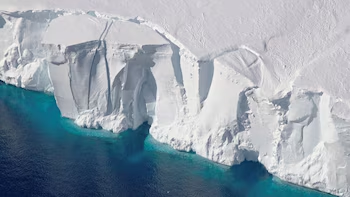
Antarctica, once seen as a stable, ice-dominated landscape, is undergoing rapid changes due to climate change. These alterations are not just seasonal; they reflect extreme environmental events that dramatically reshape both the ecosystem and scientific research opportunities. The rising temperatures and fluctuating weather patterns have prompted scientists to reconsider how they study this unique region.
Impact on Scientific Infrastructure and Operations
Extreme conditions affect not only the ice and oceans but also the infrastructure critical for logistical and safety operations. A study published in Communications Earth & Environment emphasizes the need for research operations to adapt to an increasing number of severe weather events. The repercussions of climate change create a pressing need for a reassessment of scientific methodologies and operational procedures in Antarctica.
Unprecedented Climate Imbalance
According to the World Meteorological Organization (WMO), the planet is experiencing the highest levels of greenhouse gas concentrations recorded and sustained warming of both atmosphere and oceans. The WMO’s “State of the Global Climate in 2025” report outlines a broad context of climate imbalance impacting significant ecosystems, including that of Antarctica.
Extreme Weather Events and Their Consequences
From 2015 to 2025, the eleven warmest years on record were documented, with Antarctic sea ice extent hitting one of its lowest levels since satellite monitoring began. The frequency and intensity of extreme weather events—such as heat waves and storms—are rising sharply. Data indicates that February 2023 and 2025 recorded shocking low levels of sea ice coverage.
These changes not only affect the Antarctic’s physical system but also deeply impact marine ecosystems. Species vital to the Antarctic food chain, such as krill, penguins, whales, and seals, face increasing risks due to the evolving conditions.
Adaptations in Scientific Research Stations
Research stations are particularly vulnerable to these alterations. Adaptations must include reinforcing infrastructures against flooding and intense rainfall. Coastal research bases may struggle with erosion, prompting modifications in their water supply sources.
Vulnerability of Air and Sea Operations
Landing strips and air operation sites are also at risk. For instance, operations at the Rothera base have faced delays of up to six weeks due to ice layer formation on runways. While reduced ice may improve marine access in some seasons, it simultaneously presents risks for accidents and the introduction of invasive species.
New Approaches and Technologies for Research
As rain becomes more common at sites like Rothera, new strategies are required for safe access to remote research stations. The urgency for innovative logistics will drive a shift toward incorporating autonomous technologies like drones and underwater vehicles. These tools can operate in hazardous conditions, enabling data collection without putting personnel at risk.
Enhancing Operational Efficiency
Technologies such as digital twins—virtual models that simulate ocean and ice dynamics—along with satellite data integration, can enhance scientific measurement accuracy. Such tools help optimize campaign planning and can reduce the overall carbon footprint by limiting the need for physical presence in remote areas.
A Need for Modern Mitigation Strategies
The challenges posed by climate change necessitate modern mitigation strategies, including the upgrading of infrastructure and materials. Future research bases must be designed with resilience against floods, storms, and coastal erosion in mind.
Conclusion: The Role of Global Cooperation
The Antarctic Treaty, established in 1959, aims to ensure peace, scientific exploration, and environmental protection in Antarctica. As climate change presents new challenges, the international community must adapt its governance structures to safeguard both the ecosystems and the safety of scientific operations in this unique region.
In a world where Antarctica transitions from a model of stability to one of unpredictability, the synergy of global cooperation and advancing technologies will be crucial. This collaboration will help maintain Antarctica as an indispensable natural laboratory for understanding planetary processes in the face of climate change.