
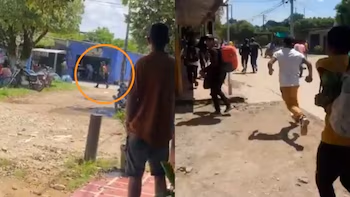
Humanitarian Crisis in Tibú: Frente 33 Responds
The Context of the Crisis
The municipality of Tibú, located in the Norte de Santander department, is currently grappling with a severe humanitarian crisis characterized by forced displacement of peasant families. This situation has drawn the attention of local authorities and humanitarian organizations, following reports of armed conflicts between the ELN and factions of the FARC dissidents.
Claims by Frente 33
Recently, the 33rd Front of the FARC dissidents issued a statement addressing allegations that they were blocking the vital road from Tibú to La Gabarra. This route is essential for humanitarian efforts, including medical missions aimed at assisting displaced communities. The group’s assertion came amidst escalating violence in the region, prompting concerns from various civil and human rights organizations.
Denial of Road Blockades
The Frente 33 claimed it is not obstructing the road, countering accusations that public health missions are hindered. Andrey Avendaño, a representative from the 33rd Front, stated, “It is not our policy… to harm the community.” He characterized the ongoing violence as self-defense against an aggression that has been forced upon them.
Impact on Medical Missions
In light of recent developments, the preservation of medical intervention in the area has been a focal concern. Avendaño emphasized that any claims regarding obstruction of medical vehicles are inaccurate. He remarked, “I have consulted with the units on the ground and what they say is that they are not… on the road.” This perspective highlights a broader issue where stable transportation channels are compromised due to conflict.
Rising Displacement Figures
Despite the claims made by the 33rd Front, ground reports indicate a surge in forced displacements due to violence. Recent data shows that at least 11 family units, totaling around 30 individuals, fled from Mineiro in rural Tibú to the city of Cúcuta seeking safety. This mass exodus contributes to an alarming statistic whereby over 87,000 people have been displaced in the region in recent years.
Official Responses and Calls for Peace
The Ombudsman’s Office has recognized this latest wave of displacement and demanded immediate humanitarian assistance for those affected. They have called upon armed groups, including both the ELN and the Frente 33, to de-escalate their hostilities, especially during a time when the community seeks stability and peace.
Conclusion
The persistent conflict in Catatumbo, marked by accusations and denials from armed factions, underscores a complex humanitarian crisis impacting thousands. As the situation continues to evolve, the need for robust humanitarian aid and peace-building efforts remains crucial. The international community’s involvement and local government initiatives will be paramount in addressing the dire conditions faced by those in Tibú and its neighboring regions.