
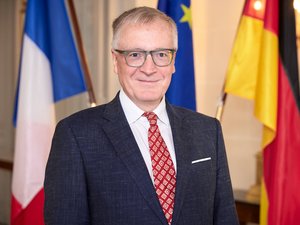
Franco-German Fortnight in Occitanie: A Commitment to Unity
The Franco-German Fortnight in Occitanie is poised to take place from April 2 to 16, with the German ambassador to France, Stephan Steinlein, attending the official opening in Montpellier. This year’s event emphasizes the critical relationship between France, Germany, and Poland, exploring their shared responsibilities, particularly in light of ongoing European challenges.
The Weimar Triangle: A Historical Perspective
As the discussions will revolve around the Weimar Triangle, which includes France, Germany, and Poland, it’s essential to understand the historical context. The countries have endured numerous tumultuous periods, especially in the 19th and 20th centuries. These experiences imbue them with a moral obligation to further the European project today, especially amidst geopolitical tensions like the war in Ukraine.
Steinlein articulated this responsibility succinctly: “Our three countries bear a particular responsibility for defending democracy.” The cooperation under the Weimar Triangle aids in addressing disinformation, especially that which originates from Russia, emphasizing the need for solidarity against common threats.
Strengthening Franco-German Ties
The relationship between France and Germany, as Steinlein pointed out, is more critical than ever, declaring that it is “the sine qua non condition for the advancement of our European project.” Recent polls reveal that 80% of Germans trust their French counterparts, showcasing a robust foundation of mutual confidence.
Carole Delga, the president of the Occitanie Region and a partner of the Fortnight, echoes this sentiment, stating that the event serves as a “concrete reality and an opportunity” for the youth of Europe. Given the growing international tensions, unity is paramount.
A World of Predators: Common Interests at Stake
Amidst today’s global landscape, marked by various challenges, Steinlein warns that “we must defend our common interests in a world of predators.” This assertion underlines the significance of maintaining Europe as a platform for peace and cooperation rather than conflict.
The Fortnight in Occitanie aims to bridge connections not merely among elites but among citizens from varied backgrounds. It emphasizes the role of civil society in fostering a collaborative spirit between the two nations, enhancing their ties beyond formal diplomatic channels.
The Role of Diplomacy: Facilitators and Translators
Discussing his role as an ambassador, Steinlein reiterated the necessity for diplomats to act as facilitators and translators. This dual function ensures that citizens from both nations engage directly, fostering understanding and collaboration. By facilitating innovation and sharing best practices, France and Germany are uniquely positioned to confront common challenges, such as climate change and an aging society.
Future Directions and Conclusion
Ultimately, the Franco-German Fortnight serves not only to celebrate a rich partnership but also to prepare for the future. Through continuous collaboration and dialogue, France and Germany can develop innovative solutions for their societies. It highlights that contact between citizens is essential in guaranteeing cohesion and advancing shared goals in an increasingly complex world.
In summary, the Franco-German Fortnight in Occitanie is a vital initiative reflecting broader European values. It underscores the importance of unity, collaboration, and mutual support among nations striving to maintain peace and democracy in a challenging global landscape.