
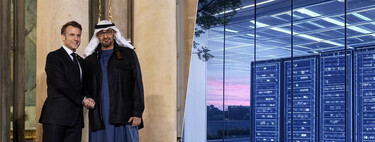
France’s Bold Move in Data Center Development
France is making significant strides in its quest to become a leading technology hub in Europe. An agreement between Emmanuel Macron, the French President, and Masayoshi Son, the CEO of SoftBank, marks a pivotal moment in this ambition. The plan outlines the deployment of up to 5 GW of computing capacity for AI data centers in northern France. This initiative directly challenges Spain, which has been a hotspot for hyperscaler investments in Europe.
Nuclear Power as a Catalyst
France leverages its robust energy infrastructure, particularly its nuclear power plants, to attract AI supercomputing projects. The initial phase of the SoftBank project involves an investment of €45 billion aimed at establishing data centers in locations like Dunkirk. The targets include a total computing capacity rise to 3.1 GW by 2031, eventually reaching the full 5 GW capacity.
Spain: The Data Center Paradise
In response to France’s aggressive moves, Spain has been closing significant agreements in data center investments, totaling over €22 billion. Major players like AWS, committing €15.7 billion in Aragón, and Microsoft with over €7 billion, are setting up operations in Spain. The country’s renewable energy production has proven to be a significant draw for these investments, giving it an edge in the sector.
The Stark Reality: Europe at a Crossroads
While both France and Spain are making headlines, the underlying reality is concerning. The data centers being built in both countries are primarily owned by foreign multinationals, such as Microsoft and Amazon. This means that, although Europe becomes a hotbed for technological investment, the actual benefits largely bypass local economies.
Contrasting Strategies: Spain vs. France
The differences in strategy between Spain and France are noteworthy. Spain’s approach focuses on welcoming hyperscalers like AWS and Microsoft that not only build but also operate their cloud systems, maintaining control over data flow. Conversely, France’s initiatives hinge on SoftBank, which typically functions like a real estate developer, constructing data centers to rent out to third parties.
Sovereignty Issues
Both Macron and Sánchez may promote the narrative of achieving sovereign AI through these initiatives, yet the reality suggests otherwise. The construction of these data centers seems to serve global tech firms more than local interests. While there may be opportunities for French AI companies to grow, such as Mistral, these initiatives do little to reduce reliance on foreign technology.
A Shifting Landscape
The traditional tech markets of Europe, identified by the acronym FLAP-D (Frankfurt, London, Amsterdam, Paris, and Dublin), are witnessing a shift as countries like France and Spain emerge as new contenders for decentralized infrastructure. Additionally, Nordic countries are also becoming appealing choices because of their cooler climates, which help with cooling data centers efficiently.
Future Challenges: Supply Chain Bottleneck
Despite the massive financial commitments on both sides, the future battle will likely revolve around access to hardware components. Currently, there is a memory crisis that has inflated costs significantly, leading to supply chain delays. This imbalance poses a risk to the timely execution and financial feasibility of new initiatives.