
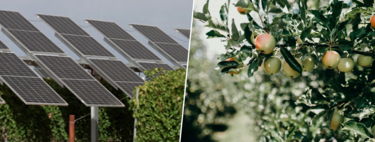
During the First Andalusian Congress on Agriculture, Energy, and Water held at the University of Almería, a vision for the future of agriculture emerged. Professor Ángel Carreño highlighted the revolutionary potential of integrating photovoltaic plates in greenhouses. He noted, “With just 1% shade from solar panels on the roof, all the energy needs of a greenhouse could be met.” Fast forward seven years, and this vision is crystallizing in a groundbreaking venture known as Dynamic Aquasave .
From the Plastic Sea to the Energy Sea. This innovative project is set against a backdrop like no other. NASA has recognized Almería’s “plastic sea” as one of the few human developments visible from space. According to the BBC , beneath its expansive 32,000 hectares of white plastic, approximately four million tons of produce are cultivated annually, fueling a hefty $5.1 billion export market that constitutes 40% of the province’s GDP .
Amidst this unique agricultural landscape, Dynamic Aquasave proposes to transform the plastic sea into an energy sea. The goal is to not only enhance food production but also harness renewable energy .
<img alt="The Basque Country cider is also measured in kilowatts: this is the new agrovoltaic project in Álava" width="375" height="142" src="https://i.blogs.es/1b107e/ps---plantilla-portadas-xtk/375_142.png"/>How Will It Work? The University of Almería, in collaboration with Barre Greenhouses , Technalia Technology Center , and Uual-Anecoop Foundation , spearheads the project with funding from CDTI. The agreement was signed in November 2024 and confirmed in February 2025 during the official proceedings of the Department of Engineering at UAL .
The innovative system will see the installation of transparent or semi-transparent solar panels atop the greenhouse structures. These panels, equipped with algorithms for auto-orientation, will serve dual purposes: providing dynamic shading to moderate excessive radiation and generating electricity concurrently.
Professor Diego Luis Valera illustrated this breakthrough in Diario de Almería , explaining, “Our system integrates photovoltaic generation with dynamic shading governed by algorithms. This has yet to exist on the market in a way that meets the distinctive requirements of greenhouses in southeast Spain.” The anticipated benefits are significant: up to 30% water savings , reduced labor intensity, a more stable microclimate, energy for self-consumption or sale, and improved working conditions within the greenhouses.
Forecasts for the project include the installation of a Dynamic Aquasave prototype at the Uual-Anecoop Foundation, with an additional greenhouse set up for yield comparisons. The experimental phase is set for fall 2025 and is expected to last for a minimum of two agricultural cycles.
The collaboration extends to the University of Córdoba, which is developing specialized software and hardware for the orientable panels. The merging of agricultural engineering , artificial intelligence , and renewable energy produces a unique offering on the global stage.
The Digital Layer. Dynamic Aquasave transcends merely solar energy. Valera elaborated in Diario de Almería that the project aspires to integrate an artificial intelligence layer into agriculture. This will involve sensors and automatic learning algorithms capable of predicting harvest dates and weights, thus optimizing irrigation and nutrient supply in real-time, thereby minimizing both the water and carbon footprints.
Furthermore, the equipment will employ passive microclimate systems— low-cost solutions designed to regulate temperature and humidity without energy consumption, promoting biological pest control, and reducing external inputs. The initiative also supports international research and transfer networks , ensuring that these innovations transition from the lab to real-world applications swiftly.
Challenges Ahead. Nonetheless, Almería’s agricultural landscape is not without its criticisms. While technology has the potential to alleviate various challenges, it cannot address every issue. No algorithm can singularly rectify the overexploitation of aquifers or the social dilemmas facing the workforce in Almería’s fields.
Research, as cited by the British environment , reveals that this growth was largely sustained through the unsustainable extraction of underground aquifers, some of which have been in deficit for over two decades. Moreover, 30,000 tons of plastic waste are produced annually. The newspaper El Salto has reported on the last challenge: migrant workers grappling with precarious living conditions, low wages, and excessively long working hours. Thus, while Dynamic Aquasave signifies a technological advancement, the Almeria model must also confront social and environmental challenges directly.
A Comprehensive Challenge. The discussion around solar panels in agriculture involves more than just technical improvements. Ensuring that the plastic sea evolves not only into a solar panel sea but into an agricultural area that embodies innovation, social justice, and environmental sustainability is critical. Only then can Almería transform from a mere agricultural green miracle into a leading global model of sustainable farming for the future.
Image credits: Kallerna and Unsplash