
The Legal Turmoil Surrounding Trump’s Tariff Powers
On Thursday, former President Donald Trump expressed his outrage over a recent court ruling that partially suspended some of the tariffs he had imposed in recent months. This decision by the U.S. International Trade Commission (ITC) raised eyebrows as it questioned the extent of power held by the executive branch in matters of trade.
On Wednesday, the ITC ruled that Trump had overstepped his authority by imposing non-targeted tariffs, which are typically the purview of Congress. This ruling came after several small businesses and a coalition of U.S. states challenged Trump’s tariff policies.
The court gave the Trump administration ten days to retract these tariffs, which affected countries such as Canada , Mexico , and China , as well as a 10% tariff imposed on nearly all imported goods regardless of origin starting in early April.
However, less than 24 hours later, a Circuit Court issued a stay on the lower court’s decision, allowing the tariffs to remain in place while the legal battle continues. Meanwhile, another court in Washington deemed the tariffs on Canada, Mexico, and China as “illegal,” stating they could not be collected, but paused its ruling pending an appeal.
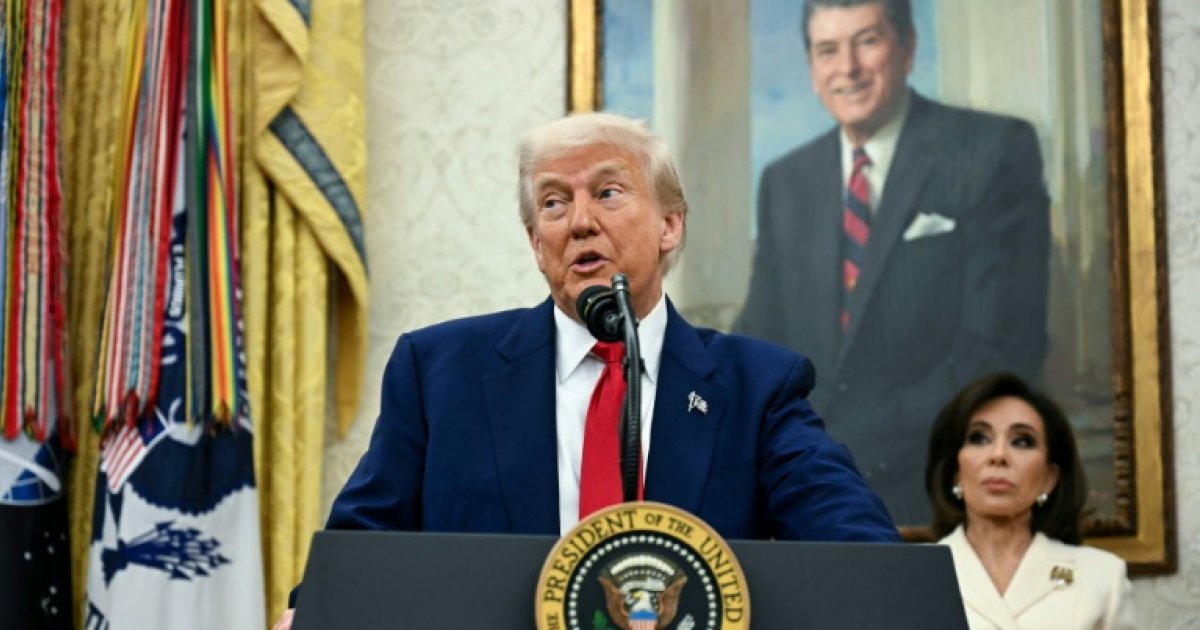
Recognizing the temporary nature of this legal reprieve, Trump took to his platform, Truth Social, to voice his discontent with the judicial decision. He criticized the ruling as “horrible” and accused it of being politically motivated, alleging the involvement of “leftist judges.”
Trump emphasized the importance of prompt intervention by the Supreme Court , stating, “The ruling implies that I need Congress’s approval for these tariffs. In other words, hundreds of politicians would have to sit in Washington for weeks, if not months, to decide what we should charge countries that treat us unfairly.” He expressed concern that maintaining the ruling would “completely destroy presidential power,” asserting, “The presidency would never be the same again!”
Notably, the initial ruling was welcomed outside the United States. Following the ITC’s decision, China called on Washington to “fully annul unjust unilateral tariffs.” Canadian Prime Minister Mark Carney hailed the suspension of what he labeled as “illegal and unjustified” tariffs but added that the trade relationship between the U.S. and Canada remains under threat due to other tariffs not covered by recent court decisions, affecting the steel, aluminum, and automotive sectors.
Judicial Reasoning Behind the Tariff Suspension
The ITC’s ruling can be attributed to its interpretation of the International Emergency Economic Powers Act (IEEPA) of 1977. The court found that Trump exceeded his powers by enacting an “unlimited surcharge on products from virtually every country,” stating that the president could only take necessary economic sanctions in response to an “extraordinary and unusual threat.” The judges emphasized that any interpretation granting unlimited authority over tariffs is unconstitutional.
In a written opinion accompanying the ruling, one judge remarked that it would lead to a “surrender of legislative power to another branch of government,” which contradicts the U.S. Constitution.
This ruling stemmed from lawsuits filed by an alliance of twelve U.S. states, including Arizona, Oregon, New York, and Minnesota, as well as a group of American businesses. They argued that Trump was claiming powers that belong strictly to Congress, igniting a significant debate about the limits of executive authority in tariff imposition.
Implications for U.S. Trade Policy
As the legal battle unfolds, the implications for U.S. trade policy remain significant. Tariffs have been a contentious issue, affecting not only international relations but also domestic markets. Small businesses and consumers are increasingly impacted by rising costs, leading to broader discussions about the necessity and efficiency of such measures in a globalized economy.
Trump’s aggressive trade policies were aimed at protecting American jobs and industries, but the judicial challenges raise questions about the balance of power in trade regulation. Critics argue that tariffs lead to retaliatory measures, creating a trade war detrimental to all parties involved. Proponents, however, maintain that such measures are necessary to level the playing field against unfair competition.
As policymakers and legal experts continue to dissect the ramifications of this ruling, one thing is clear: the delicate balance between executive power and legislative authority in trade matters is under intense scrutiny.
Published on May 30, 2023, AFP