
The Historic Achievement of Creating Liquid Carbon
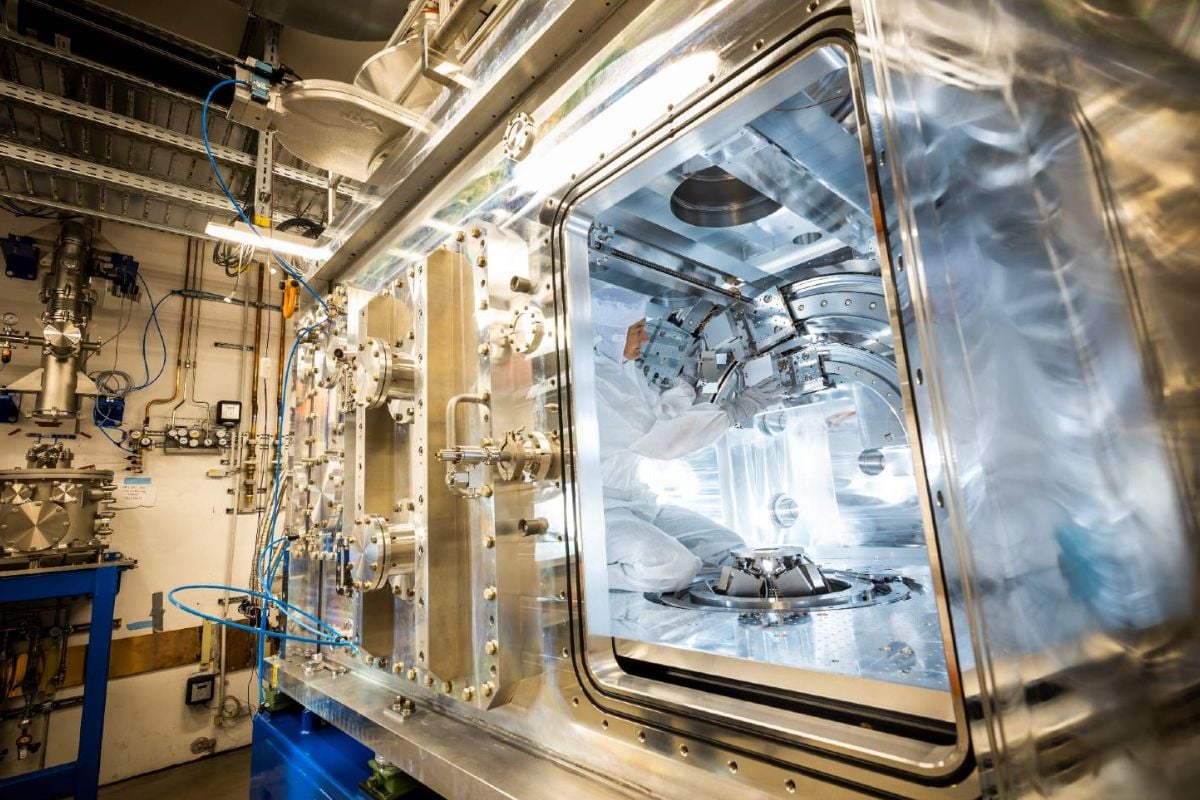
In a groundbreaking scientific advancement, researchers have successfully created liquid carbon in a laboratory setting for the first time in history. This remarkable feat was achieved by a team led by the University of Rostock and the Helmholtz-Zentrum Dresden-Rossendorf (HZDR), utilizing the state-of-the-art Dipole 100-X laser. This unprecedented development has the potential to significantly influence further research, particularly in the realm of nuclear fusion.
Understanding Liquid Carbon
Traditionally, carbon exists in solid forms such as diamonds and graphite, while its liquid form has eluded researchers due to the extreme conditions required for its synthesis. Previous attempts to create liquid carbon mandated temperatures exceeding 4,500°C accompanied by pressure levels reaching into the gigapascal range. To overcome these formidable challenges, researchers harnessed the capabilities of the DiPOLE 100-X facility alongside the mighty European XFEL (European X-ray Free Electron Laser). With ultra-short laser pulses measured in nanoseconds, researchers were able to compress and heat glassy carbon samples, achieving pressures up to 160 gigapascals.
The Dipole 100-X Laser: A Game Changer
The Dipole 100-X is a British laser developed by the Central Laser Facility (CLF) along with the University of Oxford. It is one of the most powerful laser systems globally, capable of delivering up to 150 joules per pulse at a wavelength of 1030 nm. Operating at a rate of 10 shots per second, this technological marvel is pivotal for experiments aimed at understanding matter under extreme conditions.
Unexpected Properties of Liquid Carbon
The experimentation led to unprecedented insights into the properties of liquid carbon, revealing its ability to form temporary molecular bonds much like water. This discovery offers important hints about the behavior of materials in the high-pressure environments prevalent at the cores of giant planets such as Neptune and Uranus.
Professor Dominik Kraus, the coordinator of the study, commented, "This is the first time we have been able to directly observe the structure of liquid carbon. We confirm the predictions made through simulations. It is a liquid of great complexity that presents unique properties."
Implications for Nuclear Fusion
The significance of creating liquid carbon extends beyond mere academic achievement. It could play a key role in the future of nuclear fusion reactors. Due to its extremely high melting point, liquid carbon can act as a moderator, effectively slowing down neutrons to sustain chain reactions. Furthermore, it may serve as a cooling agent, which is crucial in systems that need to manage substantial heat levels.
The processes involved in nuclear fusion are dependent on achieving and maintaining extreme temperatures and pressures. A better understanding of liquid carbon and its properties could lead to more effective reactor designs that are capable of withstanding these challenging conditions.
Published Results and Future Applications
The findings from this groundbreaking study were published in the prestigious journal Nature, clarifying previous uncertainties regarding the thermal properties of carbon. This elucidation sets the stage for more rapid and profound investigations in this field.
A Step Towards a Cleaner Future
This discovery epitomizes how fundamental physics can translate into practical applications. Once deemed inaccessible, liquid carbon has become a legitimate domain of research that could aid in paving the way for nuclear fusion, a promising source of clean, almost infinite energy.
While numerous challenges still lie ahead, the researchers have demonstrated that, with high-powered lasers and a touch of audacity, it is indeed possible to manipulate even the most elusive materials.
Pour la première fois de l’histoire une équipe a créé du carbone liquide en laboratoire.
Une équipe vient de réaliser un exploit qui semblait inaccessible aux chercheurs du monde entier depuis des années : créer du carbone liquide ! Une équipe dirigée par l’Université de Rostock et le Helmholtz-Zentrum Dresden-Rossendorf (HZDR) est parvenue à ce petit miracle scientifique en utilisant un laser britannique d’une puissance exceptionnelle : le Dipole 100-X. Cette première mondiale pourrait également avoir de fortes conséquences sur la recherche d’un autre “miracle scientifique” : la fusion nucléaire.
Lire aussi :