
Walking into a Starbucks and finding multiple patrons hunched over laptops is a familiar sight, especially in urban centers. The cozy atmosphere, functional design, and endless access to caffeine create an inviting environment for students and remote workers alike seeking a comfortable workspace . With spacious tables, ample power outlets, and fast Wi-Fi, these cafes have become a second home for many.
However, in South Korea , this trend has escalated to the point where Starbucks has taken notice. Tables displaying multi-device setups complete with printers and cardboard separators have become prevalent, causing the chain to implement changes. The intention? To restore balance and maintain a positive customer experience.
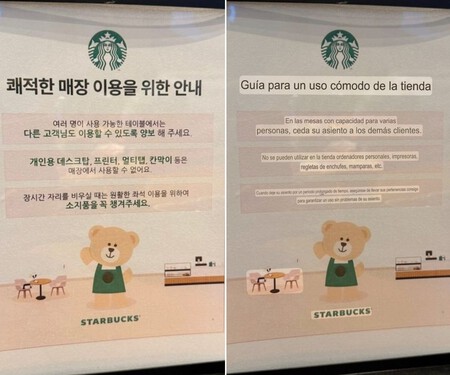
New Standards in South Korea. As reported by The Korea Herald, new regulations now prohibit equipment such as desktop computers, printers, and accessories that convert cafes into personal offices. Patrons are also advised against occupying multiple chairs or leaving belongings unattended for extended periods to “reserve” a table.
The original poster (left) illustrates the new guidelines, while Google Lens translated content (right).
In response, Starbucks employees have begun to monitor compliance with these new rules. A poster displaying the regulations has been installed in various locations, albeit with a cheerful bear illustration giving a deceptively friendly touch to an otherwise serious issue.
Understanding 카공족 (Kagongjok). The term 카공족 (Kagongjok) refers to a cultural phenomenon, literally translating to “the tribe that studies in coffee.” Combining the words 카페 (cafe) and 공부 (to study), this label is applied to those who spend substantial time working or studying in coffee shops like Starbucks. What began as a casual alternative to traditional study environments has now evolved into a cultural identity.
This rise of 카공족 raises an important question: Are these practices a healthy use of public space or a troubling overreach of personal ownership in shared environments?
Public Reactions. News outlets like The Donga Ilbo recently highlighted mixed sentiments regarding this issue. Seo Kyung-Duk, a professor at Sungshin Women’s University, pointed out the absurdity of a coffee shop resembling a private office. His astonishment was echoed by a confused foreign visitor who exclaimed, “How can anyone mark their territory in a public place like a cafe?”
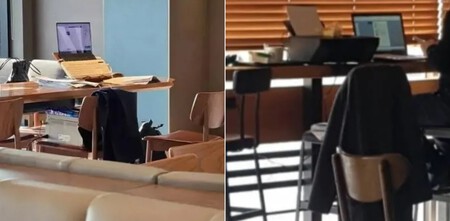
Visual documentation showcasing the typical scene of 카공족 in South Korea.
One observer noted that a person spent an entire three hours without returning to their table, thereby validating the claim that these setups can inhibit the flow of casual coffee drinkers seeking a place to relax.
Meanwhile, Asia Economy gathered reactions from online users, many of whom complained that inadequate seating was a common issue because of 카공족 occupying multiple chairs. “Do they think this is a ‘Study Café’ or what?” remarked one user sarcastically.
Why Now? Starbucks has not enacted these changes on a whim. The company emphasizes the need for a collective experience in its establishments. When large tables are monopolized by single individuals, or when patrons leave personal belongings behind as a method of reservation, it disrupts the balance between consumers who wish to sit down, purchase a drink, and leave.

From a business perspective, it’s crucial to maintain seating rotation in a cafe environment where every table matters. For instance, a solitary patron occupying a table for four hours with just one cup of coffee presents a significant loss in revenue. This situation mirrors challenges faced by coffee shops in cities like Barcelona , which have implemented their own strategies to combat table monopolization.
In conclusion, as Starbucks in South Korea adapts to emerging trends and customer needs, the balance between comfort and functionality remains vital. As more patrons turn cafes into their makeshift offices, the challenge will be to ensure that these beloved spaces can still serve their broader community.