
Harnessing Technology: The Role of Infrared Thermography in Professional Sports
Infrared thermography is emerging as a pivotal tool in the realm of professional sports, providing crucial insights into injury prevention and enhancing athlete performance. Companies like Themohuman, a Spanish enterprise at the forefront of this technology, have enabled elite teams such as Real Madrid, Atlético de Madrid, and Girona FC to incorporate infrared thermography into their training regimens.
Understanding Infrared Thermography
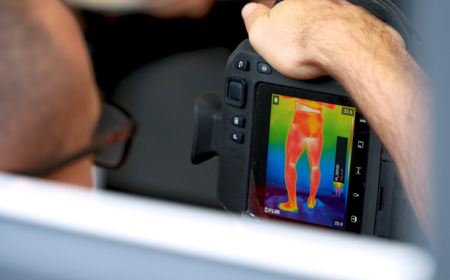
Infrared thermography encompasses the utilization of specialized thermal cameras paired with artificial intelligence software. This technology is adept at assessing the body temperature of athletes, which serves as a vital indicator of their physical condition. The process is straightforward: a thermal camera captures images of an athlete’s body, and advanced software employs artificial vision algorithms to recognize and segment the human figure into over 110 distinct body regions.
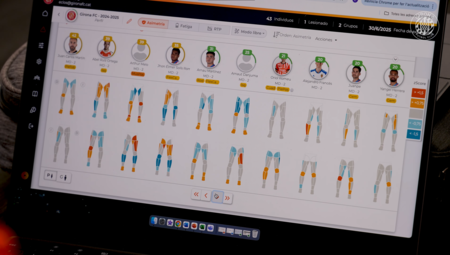
The essence of this technology lies in its ability to detect thermal asymmetries between symmetrical areas of the body. Notable temperature discrepancies—such as those between the left and right legs—can signal muscle overload, inflammation, or potential injuries. According to the firm, this entire analytical process is completed in under 30 seconds, generating detailed reports with insightful metrics and alerts.
Enhancing Precision in Injury Prevention
While medical thermography itself is not new, its automated application marks a transformative shift. Traditional thermogram analysis often relied on manual processes, consuming considerable time for professionals in interpretation and decision-making. The implementation of Themohuman technology has reduced analysis time to under 20 seconds, achieving a remarkable accuracy rate exceeding 96%.
Furthermore, the system doesn’t merely provide an instant snapshot; it establishes a robust history for each athlete. This historical data allows for the identification of trends and variations, which may easily go undetected in conventional physical assessments.
Real Madrid’s Integration of Thermography
Real Madrid has recently adopted this innovative technology under the guidance of Ismael Fernández, CEO of Thermohuman and newly appointed member of Xabi Alonso’s coaching staff. While the club previously utilized the system for its basketball and women’s soccer teams, it is now being integrated into the first team as part of a comprehensive strategy aimed at preventing injuries. This initiative will see Xabi Alonso combine thermography with other cutting-edge technologies, including drones for tactical analysis and advanced GPS tools.
Protocols Across Various Clubs
Different football clubs have diverse protocols concerning the application of thermography. Typically, regular assessments are conducted for both healthy players and those recovering from injuries. For instance, Girona FC performs evaluations following each match and two days prior to the next game, allowing for tailored training loads according to individual player needs.

Atlético de Madrid was a pioneer in LaLiga, embracing the Themohuman method during the 2017/2018 season. Meanwhile, clubs like Aston Villa have made weekly thermography assessments part of their strategies for managing player fatigue and recovery.
Other Notable Players in the Infrared Thermography Space
In addition to Themohuman, several other companies are offering infrared thermography solutions in sports. Prein, for instance, offers an AI-driven software for injury prevention, whereas Omniathlete, an Italian consultancy, boasts a track record spanning over twenty years. Portable monitoring systems can be found through solutions like Thermids, while thermal cameras and infrared sensors are provided by companies like Teledyne FLIR and Thermoteknix.
In the athletic domain, technologies like Petos GPS are also gaining traction in elite clubs, allowing for detailed performance tracking on an individual level.
The Paradigm of Sports Technology
The push for advanced technology has focused heavily on injury prevention, recovery monitoring, and managing player fatigue. According to Atlético de Madrid, their thermographic protocol has achieved a 70% reduction in muscle injuries since its implementation in 2018, illustrating its effectiveness. Furthermore, Themohuman’s studies validate a 90% reduction in low training days.
As sports technology continues to evolve, the pressure of rigorous match schedules places athletes at the threshold of their physical limitations. Although thermography has provided significant benefits for physical trainers, a small but growing chorus questions its efficacy in reducing injuries. Edu Pons, a former physical trainer at FC Barcelona and now a researcher, stresses that, while monitoring can assist in evaluating training loads, it should not be considered a catch-all solution. “Intensity and density have increased,” he notes, challenging the notion that these technologies alone will reduce injury rates. In the modern age of sports, mere technological advancement must go hand in hand with well-established physical training practices.
Cover Image: Girona FC and Real Madrid Exclusive