
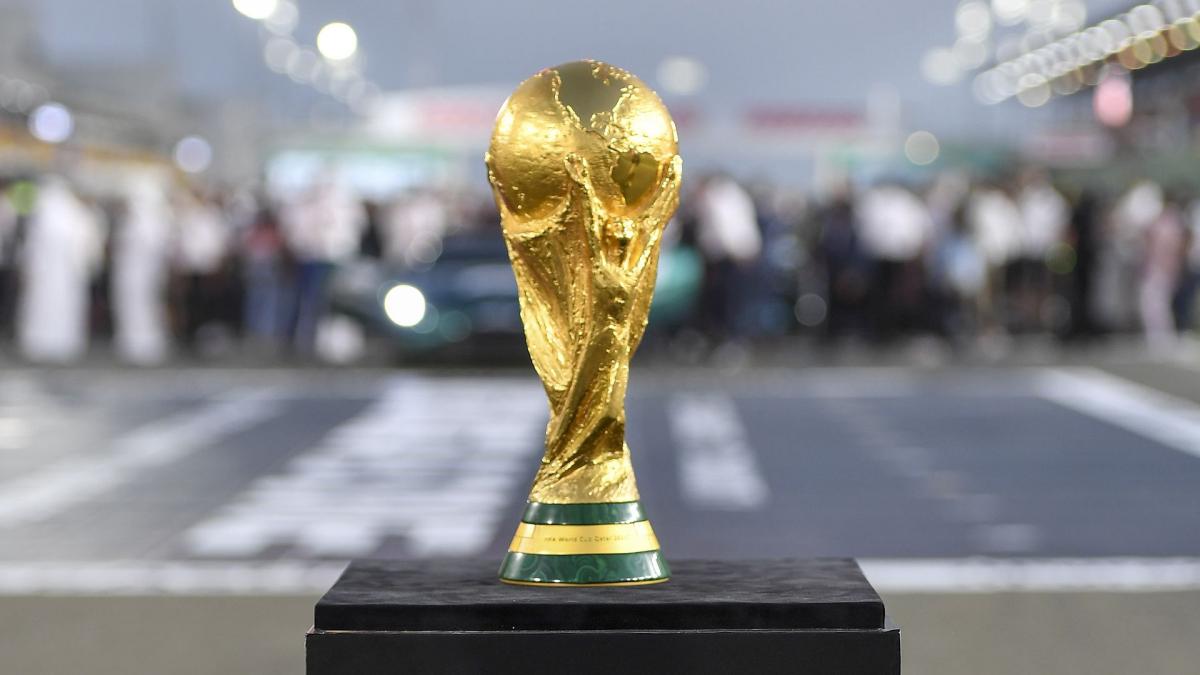
Is a 64-Team FIFA World Cup on the Horizon?
The future of football is undeniably exciting, with discussions surrounding potential changes to the FIFA World Cup formats already gaining traction. As it stands, the upcoming 2026 edition—set to take place in the United States, Canada, and Mexico—will feature an expanded format of 48 teams instead of the traditional 32. However, speculation is rife about the possibility of an even larger World Cup with 64 teams for the 2030 edition.
Recent reports from The Athletic reveal that FIFA is contemplating this radical shift in preparation for the centenary celebration of the World Cup. The idea is noteworthy because it hints at a drive to not only generate more revenue but also to engage more nations in competitive football on the world stage. It remains to be seen whether this initiative will be implemented, but the discourse certainly suggests a growing appetite for change.
South American Proposal for a Grand World Cup
In the past few days, a delegation from South America, featuring heads of state from Paraguay and Uruguay, alongside key members from Conmebol, presented a formal request to FIFA. Their ask? To explore the feasibility of hosting a 2030 World Cup with 64 participating teams. This is particularly significant as it marks the centennial of the very first World Cup held in Uruguay in 1930.
The concept is not entirely new; South American officials had broached the subject earlier this year during a FIFA Congress held in Paraguay. Alejandro Dominguez, the president of CONMEBOL, passionately urged attendees to “consider how we can celebrate this tournament in a way that meets the expectations of the football community.” Such calls for collaboration seem to have resonated with Gianni Infantino, FIFA’s president, who expressed openness to discuss fresh ideas regarding the format of the tournament.
Historical Context and Implications
The 2030 World Cup is poised to be a landmark event, as it will be the first edition to be organized across three continents—America, Europe, and Africa—spanning six countries. Argentina, Uruguay, and Paraguay will each host a few matches, while the bulk of the tournament will unfold in Portugal, Morocco, and Spain. This wide-reaching effort appears to strategically pave the way for Saudi Arabia to possibly host the 2034 World Cup, adhering to FIFA’s principle of continental rotation.
However, the South Americans believe that simply having a few matches in their nations is not enough. They are advocating for a revised format that would permit a broader range of match-ups, thereby enriching the tournament’s competitive quality and its appeal to fans worldwide. The proposal for 64 teams would create an opportunity for more nations to experience the thrill of the World Cup atmosphere, thus expanding the global footprint of the event.
Revenue and Worldwide Engagement
The financial implications of increasing the number of participating teams in the World Cup are significant. A larger pool of teams means more matches, which translates to more ticket sales, increased merchandise revenue, and potentially higher broadcasting fees. Business-wise, this model appears attractive not only to FIFA but also to local economies that benefit from tourism and the services industry during such large-scale events.
The ongoing discourse reflects a broader trend in sports management, where organizations are increasingly placing emphasis on widening participation and maximizing on-field action while ensuring profitability. By reshaping the structure of the World Cup, FIFA can cater to an ever-growing fanbase that yearns for more competitive football.
As discussions between FIFA and the South American delegation gain momentum, it remains to be seen if the governing body will yield to these requests. The notion of a 64-team format would certainly not only enhance the tournament’s excitement but also bring nations together in a celebration of football, a sport that transcends borders.
The potential for this change signifies a pivotal moment in the history of football. With Infantino at the helm, it is clear that FIFA is exploring all avenues to innovate and elevate the game to unprecedented heights, ensuring that football retains its status as the world’s favorite sport. The collective effort to align the aspirations of nations with the commercial objectives of FIFA will likely shape the prolonged future of the World Cup, leaving football enthusiasts worldwide eagerly awaiting the next chapter in this ever-evolving narrative.