

When the pandemic forced millions of Spaniards to work from home, many thought that nothing would be the same again. Companies had shown that it was possible and employees had found that they preferred to do it rather than waste hours of their lives in traffic jams or on public transport to their offices. And yet, six years later, the numbers tell a completely different story.
The 16th edition of the report State of the Labor Market in Spain 2025 by InfoJobs and Esade makes it clear: teleworking has not only stagnated in new job offers but has been declining for four consecutive years. As of 2025, remote work has hit a low that few anticipated.
A Setback That Is No Longer Punctual
The study reveals that when hiring for remote work peaked in 2021, 21% of vacancies published on InfoJobs included some form of remote work. However, this figure dropped to 11% in 2025, equating to 280,810 positions available for remote work. The persistent decline over four years indicates a structural trend, rather than a temporary correction in business culture.
The sharpest decline was witnessed between 2023 and 2024, with a drop of four percentage points in a single year. By 2025, there were three more points lost, placing these numbers below even the teleworking offers of 2020, during the height of the health crisis. Mónica Pérez, director of communication and studies at InfoJobs, notes that “many companies that embraced these models have backed off after facing issues related to productivity, team building, or cohesion.”
Official Data Insights
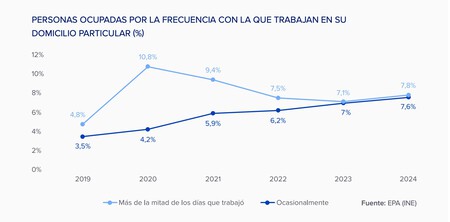
It’s crucial to highlight that the InfoJobs study focuses on new job offers, not positions that existed prior to this trend. Observing both phenomena reveals an intriguing contrast: while companies are decreasing teleworking options in new vacancies, data from the Active Population Survey (EPA) shows the real number of employees teleworking in Spain has continued to grow.
The latest consolidated data from 2024 indicate that 14.6% of employed individuals teleworked regularly or occasionally, marking the highest figure since the pandemic began. However, Spain still trails the European average. According to Eurostat, the EU average sits at 22.6% of employees taking part in some form of teleworking, while only 15.4% participate in Spain. Countries like the Netherlands and Sweden report figures exceeding 46%, highlighting a significant gap and underscoring the predominance of in-person work in the Spanish labor market.
Sectors That Make a Difference
The disparity in teleworking opportunities across sectors is significant and logical given the nature of each job. IT and telecommunications remain the most favorable for remote work, with 68% of vacancies offering this option. Following closely are the legal sector (59%) and finance and banking (51%).
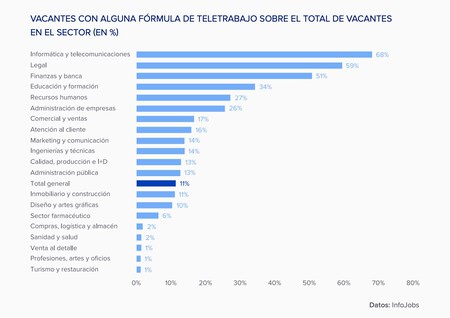
Conversely, sectors such as logistics, health, tourism, restaurants, and retail require an in-person presence, exhibiting minimal teleworking vacancies. The study indicates that company size has little bearing on remote work opportunities, showcasing that the sector of industry plays a more crucial role.
Geographic Disparities in Remote Work
The geographical distribution of teleworking also reveals striking differences. Madrid constitutes 40% of all remote job vacancies published in 2025, followed by Catalonia (19%), Andalusia (11%), and the Valencian Community (7%).
This trend is logical; Madrid and Barcelona host the majority of corporate headquarters, consulting firms, offices, and tech companies, which are most compatible with remote work. This pattern aligns with findings from the INE that highlighted post-pandemic spikes in teleworking, particularly in Madrid and Catalonia compared to other regions.