
Aston Martin’s Hopes Dashed at the Dutch Grand Prix: A Deep Dive into Zandvoort
Aston Martin came into the Dutch Grand Prix with sky-high expectations, yet expectations quickly became disappointment as Fernando Alonso finished the race in eighth position. After crossing the finish line, the two-time world champion expressed a profound sense of regret, saying, “It was a missed opportunity.” In a season where podium finishes have been elusive, Alonso’s performance left him with more questions than answers. What happened to the promising pace of the AMR25, which had shown potential just days before?
The Dutch Grand Prix held the promise of being a critical opportunity for Aston Martin to validate their impressive run at the Hungaroring just a month prior. The circuit’s twisty and tight layout was expected to suite the AMR25, and many hoped to see Aston Martin challenge not just the midfield, but take on heavyweights like Ferrari and Mercedes. During the second practice session leading up to the race, Alonso even outpaced the likes of Oscar Piastri and was a mere eight-tenths behind Lando Norris.
Conditions Shift and Performance Dips
However, the situation quickly went south. On race day, the temperature of the track soared to 34°C, a stark contrast from the cooler conditions seen during the practice sessions. This temperature change adversely affected the AMR25, known for its sensitivity to varying conditions. Furthermore, Alonso’s single attempt during Q3 was hampered by a gust of wind in Turn 10, costing him crucial time and forcing him to settle for a disappointing tenth place on the grid.
“Bad luck at the worst moment,” Alonso lamented, addressing the media after the race. His challenging day didn’t stop there; a poor start compounded his problems as he lost positions to Yuki Tsunoda, Alex Albon, and Andrea Kimi Antonelli. “We had good pace, but we were thwarted by unfortunate timing with the safety cars,” he explained. The first safety car deployment came just four laps after his undercut strategy had been put in motion, adding to his frustration.
Frustration and Missed Opportunities
As the race progressed, the chances of a points finish dwindled. Notably, during lap 41, Alonso made another pit stop and marked the fastest lap of the race at 1:13.734, showcasing the car’s potential once again. He executed three consecutive overtakes on drivers like Nico Hulkenberg, Franco Colapinto, and Gabriel Bortoleto. However, Alonso’s communication with his team reflected his annoyance. “You forgot about me during the first half of the race! Maybe you remember I’m here in the second half!” he quipped via radio.
Alonso’s visible frustration wasn’t just about strategy; he took issue with the overall pace as well. “We ended up behind a Williams and a Haas, which didn’t even make it past Q1,” he noted, pointing towards Alex Albon and Oliver Bearman. His reflections on the race made it clear that he felt the team’s execution did not match their potential.
Pit Stops and Future Challenges
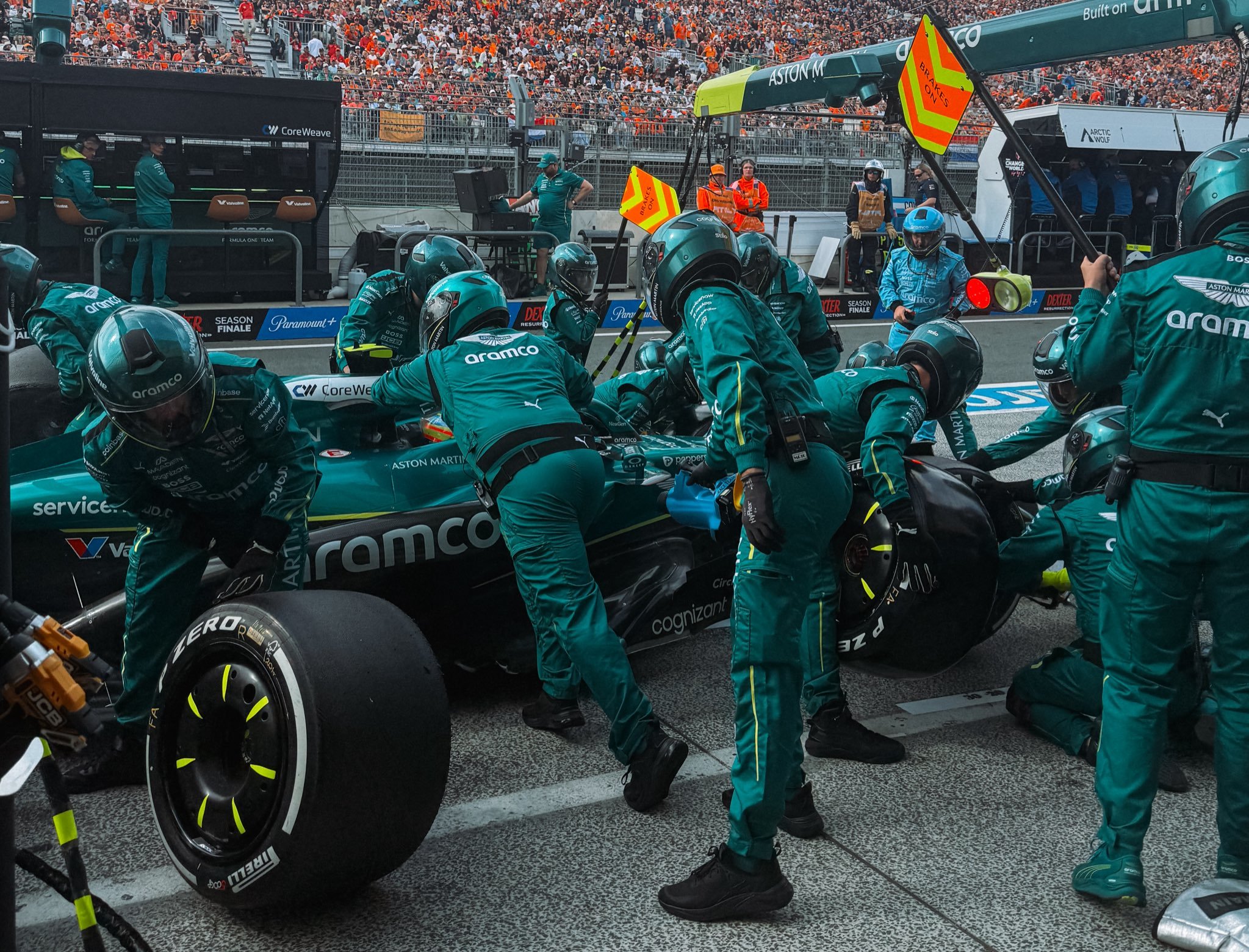
Inefficient pit stops further weighed down his performance, with Alonso losing 2.6 and 3.3 seconds during his two visits. “It’s been a bit of a miracle, and we probably didn’t deserve the points we were hoping for,” he concluded in the mixed zone at Zandvoort, a track where he has historically scored points in every appearance. As the team prepares for the Singapore Grand Prix, which is expected to present another set of challenges, Alonso remains hopeful, stating, “Let’s see if we can enjoy Monza despite our known difficulties at high speeds.”