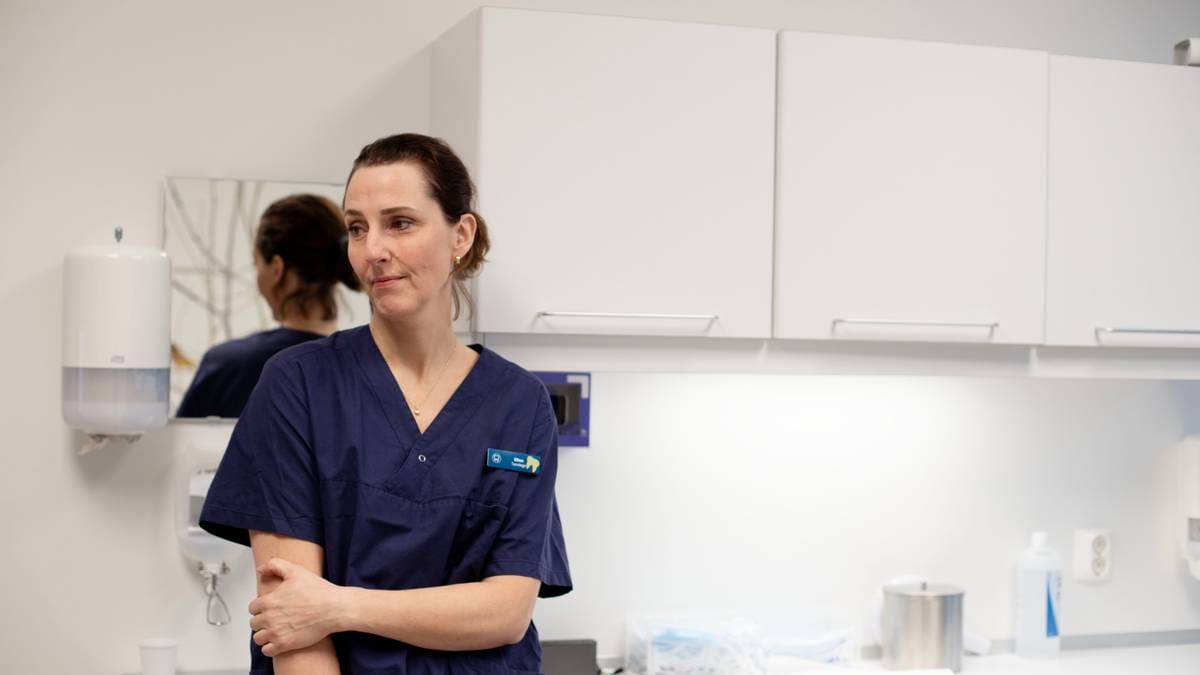
The matter in summary: The dental health reform will now also include young people between the ages of 25 and 28, which will lead to an even greater burden on the public dental health service. Clinic manager Ellen Holmemo at Øygarden dental clinic believes that all patient groups will receive a worse offer. It is also challenging to recruit new dentists to the public dental health service, as many choose private clinics that can offer better pay and working conditions. The president of the Norwegian Dental Association, Heming Olsen-Bergem, believes that young people will end up standing in a queue and not actually get an offer. The government has set aside NOK 100 million extra for the county municipalities to strengthen the public dental health service. The county council can potentially collaborate with private dental clinics to get rid of the queues, but there are challenges linked to price regulation. The summary is made by an AI service from OpenAI. The content is quality assured by news’s journalists before publication. – Everyone will lose from that. There will be queues and congestion. We will not be able to take it away. Clinic manager Ellen Holmemo at Øygarden dental clinic accepts patients “from cradle to grave”. Children, the mentally ill, drug addicts and the elderly with major dental health problems come here. Soon there will be even more. On 1 December, the governing parties and SV agreed on next year’s state budget. There, SV won approval for the dental health reform to also include young people between the ages of 25 and 28. But the public dental health service has already exceeded capacity, say both Holmemo and the Dental Association. – Everyone who uses us will get a bad offer, says Holmemo. Who gets a cheaper dentist? The dental health service consists of a public part that provides services to one part of the population. And a private part that offers services to the rest of the population. Children, people with mental retardation, elderly people with long-term illness and disability in institutions, drug addicts who receive certain health and care services and inmates in prison are among those who receive a free dentist. In addition, young people between the ages of 19 and 24 can use public dental health services, but pay a deductible of 25 per cent. Young people between the ages of 25 and 26 may also be entitled to a cheaper dentist, but they do not have a statutory right to the necessary dental care. Now the governing parties and SV have agreed that young people up to the age of 28 will also be under the same scheme as young people between the ages of 19 and 24. The scheme comes into force on 1 January 2025. But the offer will be enshrined in law on 1 July at the latest. Source: The Government, Health Norway, Directorate of Health – Blør competence She is disappointed and upset that the politicians are introducing this over the dentists’ heads. – Like the rest of Norway, we find out about it on the news. There just comes a decision that we have to deal with, without us knowing how to solve it, she says. Holmemo emphasizes that she thinks the idea is a good one: It is good that more young people should get cheaper dentists. But the law already comes into force on 1 January. There will then be around 83,000 young adults who have rights in the public dental health service. – We must get enough time and funds to solve the scheme. They haven’t done that now. We are underfunded, she says. Now young people between the ages of 25 and 28 will get a cheaper dentist at the public dental health service. Everyone will lose out, says clinic manager Ellen Holmemo at Øygarden dental clinic. Photo: Synne Lykkebø Hafsaas / news Can’t expand further She herself has employed nine dentists at the new clinic. All treatment rooms are full. She has no opportunity to expand further. Nor is it just about recruiting new dentists to the public dental health service. – We bleed expertise to the private clinics that can offer better pay, more freedom and easier work tasks, says Holmemo. County medical examiner Lathamini Murgesh in Vestland county municipality says that the counties have received significantly more patients in a short time – some counties have doubled compared to just a few years ago. – It is very challenging to deliver services to constantly new groups at short notice, she says. – Not a real offer President Heming Olsen-Bergem of the Norwegian Dental Association confirms that the capacity has been exhausted. The pressure is greatest in the big cities. – I think it will be a big problem to achieve this in practice. We risk that the young people will be left in the queue and, in reality, will not get an offer, he says. Now the plan is for the public sector to take care of the young people, who will now get cheaper dental bills. But if this is to be possible, the private clinics must remove the queues, he believes. – The dental clinics need long-term planning. They can’t do that with political stunts like this, says Olsen-Bergem. The president believes that the politicians should use the money for other groups, which have a greater need for a dentist. He points out that only 22 per cent of young people between the ages of 21 and 24 have used the offer of a cheaper dentist until now. – They don’t use the offer, so why not spend the money on those who need it more? he says. President Heming Olsen-Bergem of the Norwegian Dental Association says that the capacity in the public dental health service is particularly bursting in the big cities. Photo: Trond Stenersen / news Putting fresh money on the table – Many young people cannot afford to go to the dentist, have a higher rate of caries than the average population and go to the dentist less often than the average, says deputy leader and health policy spokesperson Marian Hussein in SV. An extra NOK 100 million has been set aside for the county municipalities. The new money will be used to expand and strengthen the public dental health service. – I hope that all the dentists out there apply for the money together with the county politicians, she says. Deputy leader and spokesperson for health policy Marian Hussein (SV) has set aside NOK 100 million for the county council to expand the municipal dental health service. Photo: Thomas Fure / NTB Can work with private companies Hussein says that there is nothing to prevent the county council from working with private dental clinics to get rid of the queues. This is already done in Trøndelag. The problem, she claims, is that there are large price differences at private dental clinics. – For that to work, it must be possible to regulate the prices, so that you get the same services at the same price, no matter where you go, like with the GPs, she says. The state has set prices for what an hour at the private dentist “is worth”. The Dental Association believes that the state has set much too low rates for the services. – It is difficult for the private sector to help, because they will lose out on these patients. No one will do that. They don’t want to break even, Bergem-Olsen replies. Hello! Thank you very much for reading the matter! Thinking of something? Do you have something on your mind that I should write about? I would be very happy to receive an email. Published 13.12.2024, at 05.40
ttn-69