
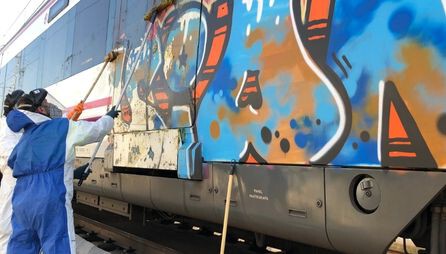
Renfe’s Battle Against Graffiti Vandalism
In March 2023, Renfe made headlines by sending out a press release marked with graffiti. This unusual approach aimed to highlight the significant costs associated with graffiti vandalism on trains. Renfe’s statement revealed that vandalism has escalated to cost over €25 million annually, contributing to service delays and cancellations. While the campaign generated curiosity, it has not effectively resolved the underlying issue.
The Rising Costs of Graffiti Removal
Recent estimates have shown a dramatic increase in the costs associated with graffiti removal. Renfe’s graffiti removal expenses are projected to exceed €32 million by 2025. This figure reflects both direct cleaning costs and indirect expenses, such as investments in security measures. Catalonia, in particular, has become a hotspot for this issue, with cleaning costs reaching €11.6 million in 2023 alone, amounting to approximately €32,000 per day.
What Has Happened?
Despite awareness campaigns and increased enforcement, Renfe remains challenged by persistent vandalism, particularly graffiti on its wagons and locomotives. The combination of cleaning and ensuring safety has proven to be an uphill battle.
The Impact on Services
Graffiti on trains not only incurs financial costs but also directly impacts the quality of service. Renfe has pointed out that obscured visibility on vital safety components can lead to operational delays. The unpleasant odors from spray paints can also irritate passengers. This situation underscores the frustrations experienced by travelers due to the repercussions of vandalism.
Renfe has not faced this problem alone; governmental bodies from Catalonia to unions in Galicia have voiced their concerns. In fact, graffiti on trains has hindered service expansion efforts, particularly on busy routes.
Scale of Vandalism
The extent of graffiti vandalism is alarming, with estimates suggesting that around 80,000 square meters of train surfaces may be affected in 2023. This puts significant pressure on Renfe, which reported requiring 15,000 hours of labor for graffiti removal. Despite these efforts, they have also foiled around 1,200 planned vandalism attacks in just one year.
Strategies for Prevention
Preventing graffiti vandalism has become a strategic priority for Renfe. Traditional measures such as increasing fines and law enforcement patrols have shown limited success. However, Renfe has pivoted towards technology-driven solutions. They have deployed drones to monitor and deter potential vandals, reflecting a marked investment in modern surveillance tactics.
Conclusion
Graffiti vandalism represents a significant challenge for Renfe, not just in terms of financial costs but also its impact on service efficiency and passenger experience. As the problem continues to escalate, the railway operator’s innovative use of technology to combat vandalism may play a crucial role in shaping a cleaner, more efficient rail system in the future.