

When buying cars at auction, many anticipate landing a deal, but nothing could prepare a recent buyer for the unsettling surprise that awaited them. After purchasing a Mercedes-Benz GLE 400, with a base price of around 100,000 euros, the new owner experienced a distinct issue: a smell akin to singeing every time they pressed the brake pedal. This prompted immediate action to investigate the vehicle’s strange behavior.
The “Eco-friendly” Brake System Mystery
Upon pressing the brake pedal, the owner was greeted with a burnt wood aroma, combined with significantly reduced braking performance—a concerning trait for a luxury vehicle. Alarmed, they promptly took the car to a workshop for inspection.
The mechanics uncovered a shocking truth: instead of conventional brake pads, the vehicle was equipped with wooden blocks that bizarrely fit the brake calipers’ space. To add to the absurdity, “Brembo,” a known high-end brake brand, was scrawled on them in marker.
Police Intervention and Investigation
This alarming discovery compelled local police in Ludwigsburg to investigate the baffling situation. They expressed their astonishment on social media: “You don’t see something like this every day: wood instead of brake pads! It’s ingenious, but dangerous.” Notably, officials clarified that this was not a case of counterfeit parts.
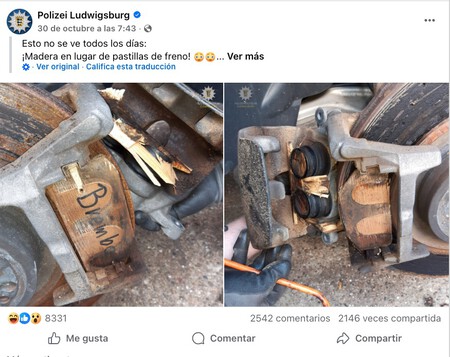
Tap on the image to go to the original message
Given the rise of counterfeit automotive parts—1.6 million were seized by law enforcement in collaboration with the brand in 2023 alone—it was essential to uncover the source of these wooden pads.
How Did Wooden Brake Pads End Up in a Luxury Car?
Investigations suggest that this peculiar incident likely stemmed from a mishap in a workshop. It’s not uncommon for mechanics to use wooden shims temporarily while replacing brake pads, especially after conducting maintenance like bleeding the brake system.
It seems that during the vehicle’s service, the shop may have needed to reposition it, inadvertently using the shims as makeshift pads. The car could still function due to this “trap,” as pressing the brake pedal is mandatory to start most vehicles.
Awkwardly, the oversight went unnoticed until the vehicle was auctioned off, leaving the buyer unaware of the impending dangers they would face. This embarrassment raises questions about the vehicle inspection process in place.
The Consequences of Negligence
The mishap is not merely bizarre but highlights significant negligence from the repair center. Driving with these wooden pads poses a considerable safety risk, potentially leading to catastrophic accidents. Ultimately, the incident serves as a crucial reminder about the importance of thorough vehicle inspections and ensuring that every part functions correctly before being sold.
In conclusion, while the allure of auction bargains can be enticing, due diligence is paramount. Ensuring the integrity of a vehicle’s components can mean the difference between a good deal and a hazardous surprise on the road.
Image | Mercedes-Benz