
Controversy Surrounding Israel’s Participation in Eurovision 2026
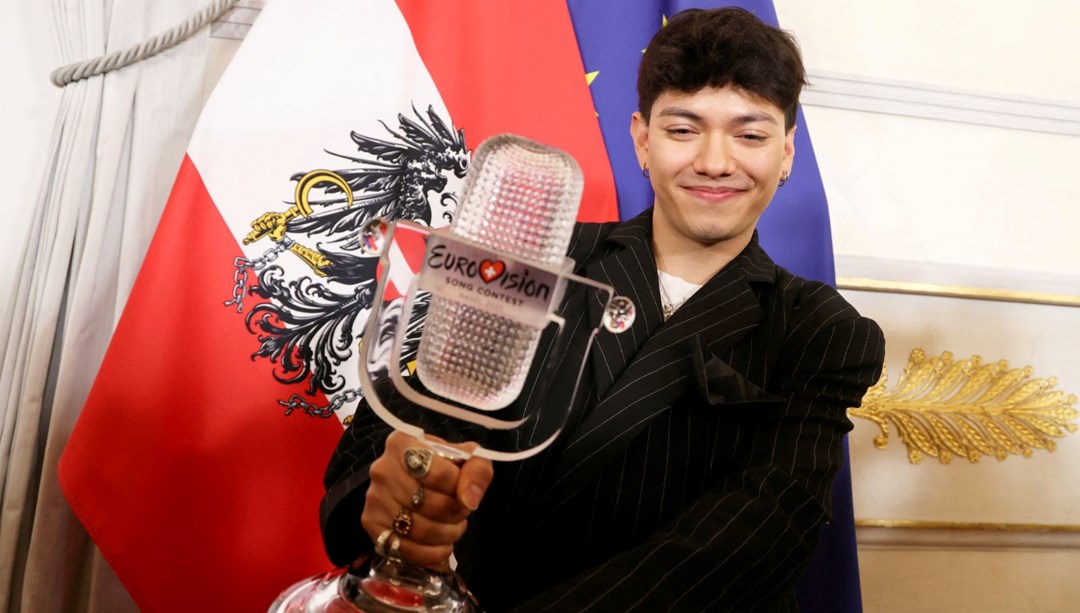
The renowned Austrian artist JJ has stirred significant conversation following his triumph in the Eurovision Song Contest. In a recent interview, he called for Israel to be excluded from the upcoming Eurovision, which will be hosted in Vienna in 2026. This statement comes in light of the ongoing conflict and humanitarian crises concerning Palestine.
Background to the Call for Exclusion
Before this year’s Eurovision competition, various groups advocating for Palestinian rights had sought Israel’s removal from the contest. These calls were rooted in anger over Israel’s ongoing military actions in the Gaza Strip, which have lasted for 19 months. However, these requests were largely dismissed by the organizing committee of the contest.
In an interview with the Spanish newspaper, El Pais, the 24-year-old JJ expressed disappointment over Israel’s participation, stating, “It is very disheartening to see Israel participating in the contest. I want the next Eurovision to be held in Vienna without Israel.” This statement reflects deep-seated tensions surrounding the event and has garnered attention not only in Germany but globally.
Insights from JJ’s Victory
Real name Johannes Pietsch, JJ achieved remarkable success with his performance of “Wasted Love,” which secured him the top spot over Israel during the Eurovision event held in Basel, Switzerland. His victory marks him as the third Austrian winner of this iconic competition, cementing his place in Eurovision history.
JJ’s remarks come as an echo of growing sentiments among certain European leaders. Specifically, the Spanish Prime Minister, Pedro Sanchez, recently suggested similar action, calling for Israel’s exclusion from cultural events like Eurovision due to its military actions in Gaza. This increasing alignment between politicians and artists may indicate a broader shift in public opinion concerning Israel’s international portrayals.
The Cultural Impact of Eurovision
Eurovision is not just a music competition; it is a cultural phenomenon that attracts over 160 million viewers each year. It serves as a platform for various countries to showcase their music and promote cultural diversity. This platform, however, also finds itself at the crosshairs of political discourse, as demonstrated by the calls for Israel’s exclusion based on its government policies.
Many artists and activists argue that such international events should not be held by countries that engage in practices deemed unethical or repressive. JJ’s comments also touch on the importance of accountability, suggesting that Eurovision should use its influence to promote peace and humanitarianism rather than simply serve as an entertainment event.
Calls for Transparency in Voting
In addition to the call for Israel’s exclusion, JJ emphasized the need for revamping Eurovision’s vote-counting system. He advocated for greater transparency in how votes are cast and counted, stressing that transparency is crucial for maintaining the integrity of the contest. “The voting process should reflect honesty in an event celebrated by millions. If we are calling for justice, we must uphold truth in every aspect,” he stated.
The complexities surrounding the Eurovision Song Contest have highlighted the crossroads between art, politics, and social issues. JJ’s statements underscore that art can be a form of protest and awareness, aimed at bringing light to pressing global issues.
Reactions from Different Quarters
The reactions to JJ’s statements have been mixed. Some in the media and the public have hailed his courage in taking a stand, viewing artists as moral beacons capable of initiating change. Others, however, believe that music and art should transcend political divides, arguing that excluding a country from Eurovision could counteract the unifying spirit the event aims to promote.
Critics argue that the competition should remain a space for artistic expression, detached from political controversies. This dialogue raises pertinent questions about the role of cultural events in today’s politically charged atmosphere.
Future Implications for Eurovision
As the date for the 2026 Eurovision approaches, the discussions sparked by JJ and others will likely intensify. Will the organizing committee reconsider how they engage with countries facing criticism? Could this lead to comprehensive changes not only in participation but also in the underlying framework of Eurovision itself?
Such debates will not only influence the future of the contest but may also reverberate through other cultural and entertainment spheres, as global audiences increasingly seek accountability and ethical representation in artistic realms. Critics and supporters alike will be keenly observing how these dialogues shape Eurovision and similar platforms in the years to come.
Overall, JJ’s statements mark a significant moment in the ongoing dialogue concerning art and politics, initiating tough conversations about inclusivity, ethics, and music’s role in international discourse. The cultural landscape remains intertwined with issues of global significance, and as art continues to reflect societal realities, events like Eurovision will find themselves at the forefront of this conversation.