
The Disappearance of Cerros de la Plaza Glacier
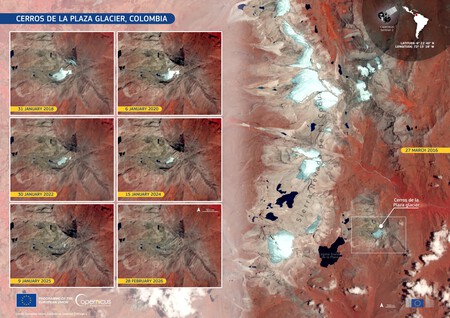
In March 2026, Colombia officially lost the Cerros de la Plaza glacier, as confirmed by the Institute of Hydrology, Meteorology and Environmental Studies. Situated in the Sierra Nevada de Güicán or El Cocuy, this glacier has vanished without surprise, marking a significant environmental shift. Once covering 5.5 square kilometers, it has been reduced to zero, a fate foretold by numerous warnings over the years.
Satellite Monitoring and Historical Context
The demise of this glacier has been meticulously documented through satellite imagery. The European Space Agency’s Copernicus Sentinel-2 satellites tracked its deterioration from 2016, revealing a decade-long decline that culminated in its complete extinction by 2026. In 2016, the glacier still displayed visible ice mass; however, by 2024, it fragmented into isolated patches, and by March 2026, it no longer existed as evident in the satellite images.
Historically, Cerros de la Plaza had been a significant geographical feature since the mid-19th century. Its noticeable decline began in the 20th century, accelerating dramatically in recent decades. According to the IDEAM, Colombia’s glacial coverage has decreased from approximately 347.9 square kilometers in the 19th century to merely 30.83 square kilometers by 2024, indicating a severe environmental crisis.
Ecological Implications
The loss of the Cerros de la Plaza glacier carries profound implications, particularly from a hydrological perspective. Glaciers serve as natural reservoirs, gradually releasing water during dry seasons when it is most needed. Their disappearance jeopardizes the ecosystem, impacting flora, fauna, and communities reliant on this vital water supply.
The glacier was home to various species adapted to high-altitude conditions. The International Union for Conservation of Nature highlights that the Colombian moors are among the most vulnerable ecosystems to climate change globally. The loss of glacier ice fragments habitats and threatens unique species, ultimately disrupting ecological balance that has existed for millennia.
Causes of Glacier Retreat
The retreat of tropical glaciers like Cerros de la Plaza is primarily driven by climate change. These glaciers are particularly susceptible to rising temperatures, as they experience warm conditions year-round and lack sufficient snow accumulation for recovery. The elevation of Cerros de la Plaza, close to 5,000 meters, also contributes to its vulnerability.
Further exacerbating this decline is the reduction in snowfall, which affects albedo—the reflective quality of surfaces. With less ice, the exposed rock absorbs more heat from the sun, accelerating the melting process. This vicious cycle leads to a sustained and irreversible degradation of glacial mass.
Looking Ahead
The fate of the Cerros de la Plaza glacier serves as a stark reminder of the environmental challenges facing not only Colombia but also the broader Latin American region, where glacier retreat is becoming a worrying norm. If current trends continue, it is feared that Colombia could lose all of its remaining glaciers by 2050, marking a significant shift in the region’s environmental landscape.
As the threats posed by climate change become more tangible, proactive measures and heightened awareness are essential to preserve what remains of these critical ecosystems.