
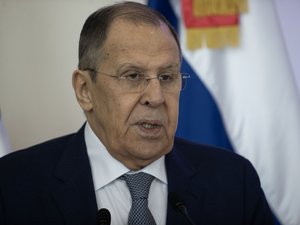
Sergei Lavrov, the Minister of Foreign Affairs of Russia, recently made controversial statements regarding Germany and Europe. Published in the government daily Rossïskaïa Gazeta on July 29, his remarks have sparked significant international dialogue and concern .
In his article, Lavrov claimed that “modern Germany and the rest of Europe are turning into a fourth Reich.” Such a declaration is particularly striking, especially in light of Germany’s rearmament initiatives and statements made by German Chancellor Friedrich Merz about enhancing the Bundeswehr, the country’s military forces. Lavrov noted, “The Chancellor called for transforming the German army into the most powerful conventional force in Europe, as had been the case before the two world wars.” This assertion links current geopolitical developments with historical precedents, highlighting the potential for a new arms race in Europe.
The Historical Context
These remarks come at a time when Europe is reflecting on its past, particularly the legacy of both World Wars. On the 50th anniversary of the signing of the Helsinki Final Act , Lavrov’s comments resonate with the ongoing tensions regarding national security and international relations . The Helsinki Final Act, established in August 1975, involved all European nations (excluding Albania), the United States, Canada, and the Soviet Union. At the core of this agreement was an emphasis on human rights , which today shapes the mission of the Organization for Security and Cooperation in Europe (OSCE) , headquartered in Vienna.
Lavrov’s critique of the European defense plan, articulated by European Commission President Ursula von der Leyen , further showcases his apprehensions. The plan involves an investment of around 800 billion euros intended to bolster security technologies across the continent. In the context of escalating tensions with NATO and the West, Lavrov’s perspective symbolizes Russia’s deep-seated adversarial sentiment towards what it sees as an encroaching military alliance.
Responses and Repercussions
The reaction to Lavrov’s statements has been mixed . Some leaders in Europe have labeled his comments as hyperbolic , aimed at stirring nationalistic sentiments rather than fostering constructive dialogue. Critics argue that saying Germany is reverting to a Nazi-like state ignores the vast changes in both the political landscape and the societal norms that have evolved since World War II. Germany , undoubtedly, has emerged as a strong advocate for democracy and cooperative international relations in recent decades.
On the flip side, defenders of Lavrov argue that his assessment captures a fear that is palpable among many who still recall the horrors of the World Wars. With the resurgence of militarism and nationalism in various parts of Europe, they believe Lavrov is tapping into a well-founded anxiety that merits consideration. Observers worry that such rhetoric may elicit an overreaction from European nations, potentially exacerbating tensions and leading to an arms buildup reminiscent of previous decades.
The Role of Media and Public Perception
Comments made by prominent figures in politics, like Lavrov, are often framed by the media within broader narratives about danger , defense , and diplomacy . The portrayal of Lavrov’s statements and Germany’s military enhancement initiatives may shape public opinion across Europe. In an age where information spreads rapidly, especially through social media, careful attention must be paid to the messaging surrounding these sensitive topics.
Moreover, as nations grapple with their own public sentiments and historical grievances, the reaction to Lavrov’s article will likely evolve. Public opinion could sway based on ongoing political developments, especially concerning Russian involvement in conflicts across Eastern Europe. It’s also important to understand how these narratives are constructed and deconstructed in the public realm, signaling to leaders how to engage, reassure, or confront each other.
In summary, Sergei Lavrov’s statements mark a significant moment in the current geopolitical climate. They serve as a reminder of the precarious balance between international security and history, prompting reflection and potentially influencing future military strategies across Europe. As the world watches closely, the implications of these words could resonate far beyond Russian borders, shaping relationships and actions for years to come.