
Europe’s Gas Reserves: The Role of Spain as Winter End Approaches
As Europe emerges from an unexpectedly harsh winter, gas reserves across the continent are at alarming lows. Countries like the Netherlands, Germany, and France face severe shortages, with reserves hovering around 12% to 21%. In stark contrast, Spain and Portugal embark on a different trajectory, boasting reserves of 56.87% and 76.7%, respectively. This article delves into the factors shaping this energy landscape, emphasizing Spain’s pivotal role.
The Context: Impacts of the Ukraine-Russia Conflict
The ongoing conflict between Ukraine and Russia, which ignited in 2022, has significantly intensified Europe’s push for energy independence from Russian gas. In response to the crisis, an emergency rule mandated by the European Union required member states to stockpile their gas reserves to 90% by the start of winter. However, flexibility in this target has been introduced for cost optimization, contributing to the lowest gas reserves seen in five years as the season comes to a close.
The Harsh Reality of a Cold European Winter
By mid-January, many European countries faced dwindling gas deposits, with levels falling below 50%. Should these reserves end the season at around 30%, Europe will need to inject approximately 60 billion cubic meters of gas—an amount equivalent to Germany’s annual gas consumption. Thus, refilling these tanks during summer becomes imperative, while also navigating a competitive market teeming with challenges from suppliers and geopolitical dynamics.
The Spanish Strategy: A Model of Resilience
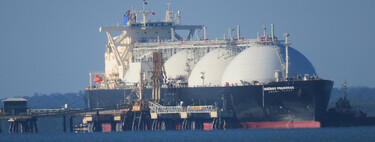
Spain’s gas storage system is built on a robust framework incorporating underground storage and liquefied natural gas (LNG) regasification. Remarkably, Spain accounts for 35% of the EU’s total LNG storage capacity. This expansive infrastructure enables Spain to import gas from a diverse array of sources, with the United States supplying 44.4% of its total gas. The flexibility offered by its seven LNG regasification plants secures supply even amidst unforeseen challenges.
Conservative Management Amidst Rising Demand
At the beginning of the winter season, Spain adopted a conservative approach by prioritizing reserves during the coldest months—January and February—when demand spikes. This prudent management significantly paid off as gas consumption surged by 10.2% in January compared to the previous year, primarily driven by a 30% increase in gas used for electricity generation due to lower contributions from renewable sources.
Spain: An Energy Hub for Europe
Spain’s superior infrastructure allows it to transcend mere consumption; the nation has emerged as a crucial energy hub, redistributing gas across Europe. This advancement provides both geopolitical and economic advantages, especially given Spain’s unique geographical location.
Potential Risks on the Horizon
While widespread shortages in Europe are not anticipated, localized risks remain evident. Historical precedents from years such as 2016, 2017, 2019, and 2022 illustrate that Spain has managed to avoid significant supply issues. However, global LNG demand in the upcoming summer could increase costs and complicate Europe’s replenishment efforts. The current geopolitical climate, especially with the Strait of Hormuz’s closure and diplomatic tensions between Spain and the U.S.—its primary gas supplier—adds to the uncertainty surrounding future gas acquisition.
Spain’s ability to navigate these complex challenges could have broader implications for Europe’s energy stability. As countries prepare for the warmer months ahead, the focus remains on securing an adequate gas supply against a backdrop of fluctuating demand and geopolitical hurdles.