
Europe has been striving for years to gain weight on the world map of semiconductors. The objective goes beyond merely increasing chip manufacturing; it aims to reduce dependence on supply chains concentrated outside the continent and to reclaim leadership in advanced technological processes. In a similar fashion, the United States has also intensified its efforts to draw investments, factories, and jobs pertaining to strategic technologies. This industrial race recently witnessed a significant development: one of the largest American companies in the sector is betting billions on expanding production within Europe.
That company is Intel, which has announced an investment of 5,000 million euros to expand and modernize its Leixlip complex in Ireland. The principal aim is to boost production of the Xeon 6 processors and certain upcoming Xeon products crafted with the Intel 3 technology, the most advanced process currently produced in Europe. However, this move comes after Intel scrapped its industrial projects in Germany and Poland. While the European Union reinforces its production capabilities, readers are left to decipher just how significant this investment truly is.
More Capacity in Ireland, But a European Chain Still Incomplete
The core of Intel’s plan does not involve constructing a new factory or expanding the clean room. Instead, it focuses on better equipping Fab 34, with an aim to upgrade existing facilities and extend the automated network that transports wafers through various stages of the production process. This strategy is intended to improve the fluid integration of different campus modules, consequently enhancing overall efficiency. Intel claims to have started this program in early 2026, though it remains vague about when the improvements will be fully realized. The anticipated outcome is a higher manufacturing volume utilizing Intel 3 without needing additional space.
Fab 34 commenced large-scale production in 2023, transforming Leixlip into Intel’s main advanced manufacturing center in Europe. The facility originally operated with Intel 4 technology, later incorporating Intel 3 for its Xeon processors. Both technologies employ extreme ultraviolet lithography (EUV), enabling the creation of smaller, more complex structural designs on wafers. Upon its launch, Fab 34 became the first factory in Europe to utilize this advanced technique for high-volume production.
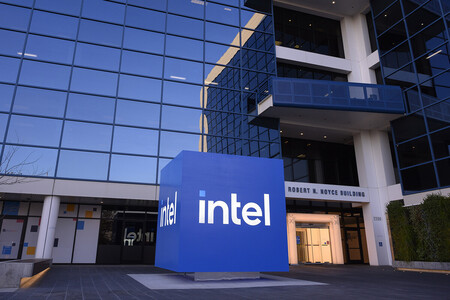
Main entrance to the Robert N. Noyce Building, Intel headquarters in Santa Clara, California
This anticipated increase in production capacity is a response to the rising demand for server processors and infrastructure related to artificial intelligence. While GPUs and accelerators often steal the spotlight, data centers still require CPUs to manage general workloads and maintain the platforms on which specialized systems operate. The Xeon processors are integral to that framework, and increasing the volume of Intel 3 will allow for better market supply without waiting for a new facility to be constructed.
Intel’s investment comes on the heels of a significant financial pivot surrounding Fab 34. In 2024, Apollo invested $11.2 billion, acquiring 49% of a joint venture associated with the facility. However, Intel kept ownership and operational control. In April 2026, Intel repurchased that stake for $14.2 billion, just months before reaffirming its commitment to the Irish infrastructure.
Intel’s European ambitions were initially far more extensive, envisioning Fab 34 as part of a connected chain involving wafer production in Ireland, alongside two advanced factories in Magdeburg, Germany, and an assembly and testing facility in Wrocław, Poland. This ambitious infrastructure was designed to cover various essential stages necessary for converting a wafer into a finished processor. However, these projects were postponed in 2024 and ultimately abandoned a year later as Intel recalibrated its investments in alignment with market demand.
This brings us to the 5,000 million euro asterisk attached to Intel’s announcement. Although Europe will see an increase in advanced wafer manufacturing, it will not possess the完整 framework that Intel originally pledged to construct in the EU. Main assembly and testing operations will continue to anchor themselves in the United States and Asia, especially after the cancellation of the planned Polish facility meant to cover such stages. While the expansion in Leixlip curtails some reliance on external supply chains, it does not by itself transform Xeon production into a fully European operation.
Images | Intel
In Xataka | SK Hynix is betting that the memory cycle is dead. He proves it by doing just what always killed him.