
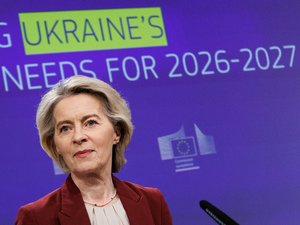
The European Commission wants to use Russian assets to finance Ukraine’s war effort.
EU’s Financial Strategy for Ukraine
The European Commission has put forth a critical plan to support Ukraine amid its ongoing conflict with Russia. Two options have emerged to raise 90 billion euros over the next two years: utilizing frozen Russian assets or borrowing from international markets. Among these options, the Commission leans toward a “reparations loan” that would allow Ukraine to benefit from the Russian sovereign assets currently frozen in Europe as a result of the invasion.
However, Belgium, which holds the majority of these frozen assets, has raised substantial concerns regarding this approach. They argue that the implications and logistics of this proposal have not been sufficiently addressed, complicating the potential implementation of this financial support strategy.
Pressure as a Tool Against Russia
Ursula von der Leyen, President of the European Commission, expressed a clear stance: “Since pressure is the only language the Kremlin responds to, we can also increase it.” According to her, escalating the costs for Russia’s war efforts is paramount, and the proposed reparations loan offers a viable pathway to achieve this goal.
Russia has responded with warnings that utilizing these frozen assets would amount to theft. Nonetheless, the European Commission asserts that the mechanism won’t be classified as confiscation. Instead, it aims to structure this financial support as a loan, which Ukraine would only need to repay contingent upon Moscow fulfilling its reparations obligations.
Complexities and Alternatives
The situation is further complicated by a Washington-backed 28-point plan to resolve the conflict in Ukraine, which includes creating a joint U.S.-Russian investment vehicle utilizing a portion of these frozen assets. In a positive twist, von der Leyen communicated with U.S. Treasury Secretary Scott Bessent regarding the European Commission’s intentions for the reparations loan, and it seems to have been received favorably.
To proceed with this initiative, the European Commission must secure the support of at least 15 out of 27 EU member states, representing a combined population of at least 65%. This threshold poses a strategic challenge, as differing political sentiments among member states could impede progress.
The Role of Hungary
As an alternative to the frozen asset strategy, the Commission has identified borrowing through the EU budget as another option. However, this route demands unanimity among member states, a significant hurdle particularly given Hungary’s Russia-friendly government, which has historically opposed previous funding initiatives for Ukraine.
In summary, the European Union’s approach to financing Ukraine’s war effort is marked by complex logistical and political realities. While the feasibility of utilizing frozen Russian assets presents a promising solution, significant hurdles remain that require careful navigation. The ongoing dialogue between EU leadership and member states, particularly concerning Hungary’s stance, will be crucial as these financial strategies develop.