
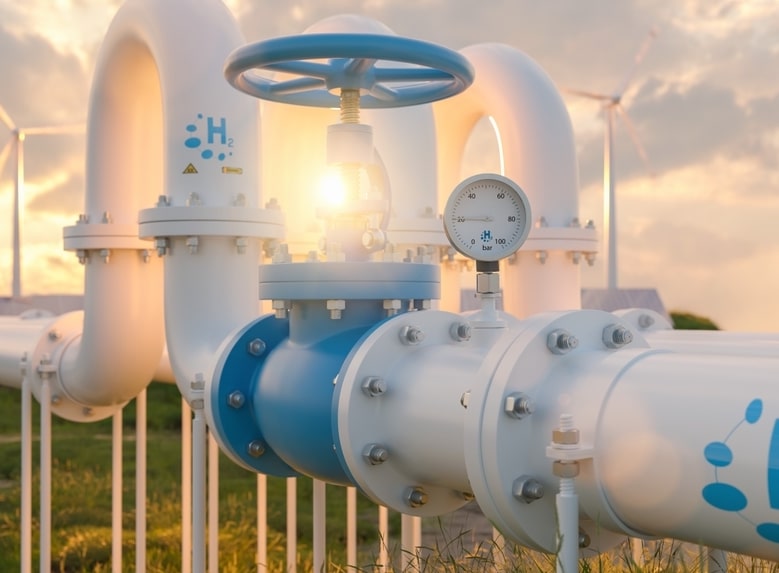
Understanding the Future of Renewable Hydrogen Storage: The HyPSTER Project
The Rise of Hydrogen as an Energy Source
Hydrogen has emerged as a promising alternative energy source within the green energy dialogue. This lightweight, clean fuel offers the potential to store renewable electricity, providing a viable solution for energy storage challenges. However, the primary hurdle resides in its storage capabilities. The newly launched HyPSTER initiative, which stands for Hydrogen Pilot STorage for large Ecosystem Replication, represents an ambitious approach to tackle this issue.
Located at the Étrez site, this project seeks to inject hydrogen into an underground salt cavern to withdraw it as needed. Following extensive technical planning, the actual implementation began in late 2024, and the initial results are promising.
The Project Overview: Achieving Large-Scale Hydrogen Storage
HyPSTER aims to explore the practical feasibility of storing hydrogen in an underground saline cavern. Three tons of hydrogen were injected into a former gas storage cavern at a depth of 800 meters below the surface. This project involved a complex series of one hundred cycles of injection and extraction, carried out over a period of four months.
The results affirm that it is indeed possible to store hydrogen within a saline cavern. Mylène Poitou, Deputy Director of Industrial Projects at Storengy, has emphasized the project’s significance: “We have demonstrated that it is possible to store hydrogen in a salt cavern.” The total cost of the program stands at €15.5 million, with a third funded by the European Union, making it an attractive opportunity for the industry.
Salt Caverns: The Ideal Storage Solution
The question arises: why choose salt caverns over other storage mediums? The answer lies in their reactivity and effectiveness. Salt caverns present an exceptional degree of impermeability, offering precise pressure control and the ability to react swiftly to changes in demand. Charlotte Roule, Vice President of Hydrogen at Engie, articulates this point effectively: “This is a very different use, and the salt cavern accommodates it well.”
Unlike traditional porous rock reservoirs, salt caverns provide a rapid storage solution, which is vital as our energy consumption patterns evolve. Many experts believe that the modular nature of these caverns allows for effective management of intermittent consumption, effectively acting as the missing link between electrolysis—typically a high electricity consumer—and an overloaded electrical grid.
A Sustainable Strategy for the Future
Engie views this initiative as a strategic advantage in a rapidly evolving market. As predicted, the hydrogen market is expected to multiply by 2035, with a significant increase in storage demand. The energy company plans to gradually convert its gas infrastructure to meet this inevitable demand. Charlotte Roule has highlighted the growing importance of hydrogen storage: “The need for hydrogen storage will be extremely significant by 2035.”
However, the path to successful mass adoption is fraught with challenges. The cost of renewable hydrogen remains prohibitively high, which poses a barrier to widespread implementation. Engie emphasizes the necessity to “minimize costs,” focusing efforts on lowering expenses as part of its long-term strategy.
Moreover, the absence of a clear regulatory framework poses another challenge. Engie has stressed, “It is crucial to clarify the regulations surrounding hydrogen storage.” Expectations are high for a European legislative framework to emerge by 2032-2033. Until then, industry stakeholders proceed cautiously, navigating the complexities of regulatory uncertainty.
The Role of Hydrogen in Europe’s Energy Independence
Europe is banking on hydrogen to play a central role in promoting energy independence. However, without proper regulations, a feasible market cannot be established. There remains a widespread belief that robust regulation could catalyze investment and development within the sector, leading to a more sustainable energy future.
Investing in innovative hydrogen storage technologies such as HyPSTER will be essential if Europe hopes to harness green hydrogen’s potential fully. As advancements in storage solutions progress, they offer the possibility not only to support an isolated energy landscape but also to facilitate broader integration into existing networks.
In conclusion, solving the complexities surrounding hydrogen storage requires a multi-faceted approach. HyPSTER’s pioneering initiative serves as a significant step in understanding and developing sustainable storage solutions that could redefine energy consumption and storage in the green energy sector for years to come.
Le 15 septembre 2023, sur le site d’Étrez, dans l’Ain, Engie a officiellement lancé HyPSTER, le tout premier démonstrateur de stockage d’hydrogène renouvelable en cavité saline. Porté par Storengy, sa filiale spécialisée dans le stockage souterrain de gaz, ce projet vise une ambition claire, rendre possible le stockage massif d’hydrogène vert, enjeu capital pour la transition énergétique.