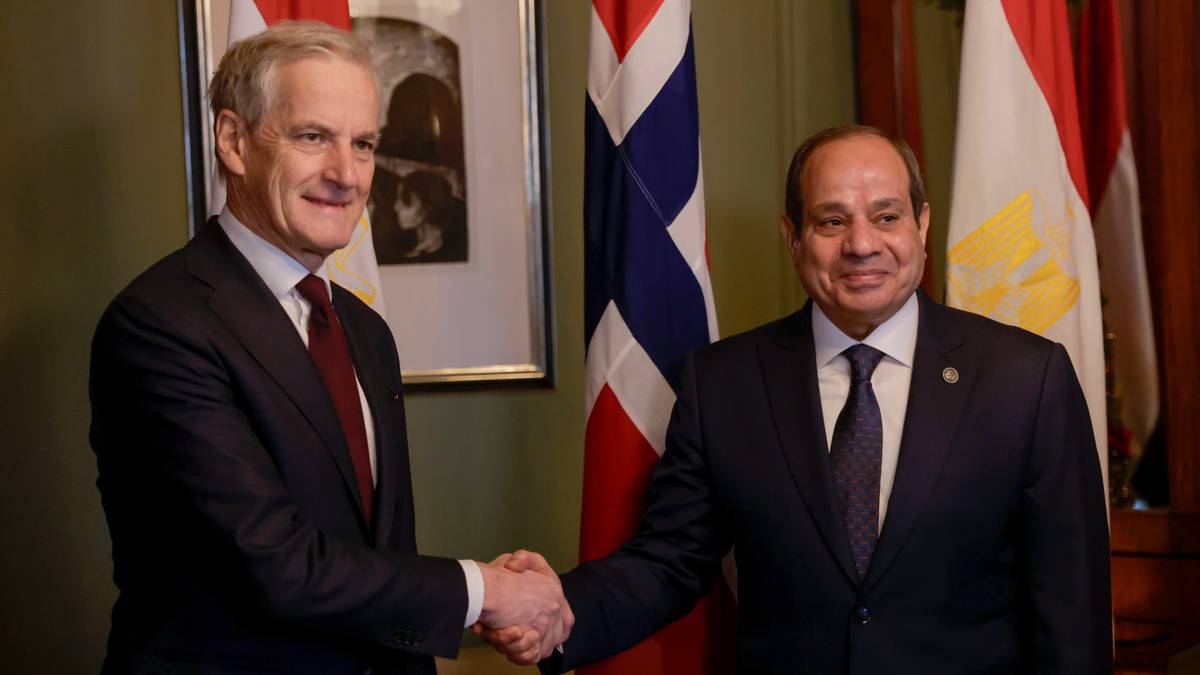
Even before he became president, Abdel Fattah al-Sisi was described as brutal, without democratic inclinations and “secretive”, according to the Reuters news agency. In the years since, few say they have had a different impression of the former field marshal and intelligence chief who seized power in Egypt in 2013. On Monday he will visit Norway. In addition to Støre, Sisi will meet Foreign Minister Espen Barth Eide (Ap), King Harald and Crown Prince Haakon. It is the first time an Egyptian leader has made an official visit. Egypt’s Foreign Minister Badr Abdelatty and Foreign Minister Espen Barth Eide (Ap), with Prime Minister Jonas Gahr Støre (Ap) in the background. Photo: Jonas Been Henriksen / NTBEgypt’s Foreign Minister Badr Abdelatty and Foreign Minister Espen Barth Eide (Ap), with Prime Minister Jonas Gahr Støre (Ap ) in the background. Photo: Jonas Been Henriksen / NTB It is happening at the same time as violent upheavals are underway in the Middle East: In the meeting with journalists, Sisi was tight-lipped. He would neither say anything publicly, nor answer questions from journalists. Thus it was the Prime Minister who had to speak out. Protesters had gathered outside the representative residence. “Sisi is a little bitch”, says this poster. Photo: Jonas Been Henriksen / NTB Want a hand in the game Egypt is the Middle East’s most populous country with over 100 million inhabitants. In the 1950s and 1960s it was a heavyweight in the region. But in recent times, development has slowed down. The economy has slowed down. Nevertheless, Egypt “plays an important role in several processes for peace and conflict resolution”, said the Foreign Ministry in a press release before the visit. Among other things, it would be an opportunity to discuss the wars in Gaza, Ukraine and Syria. Crown Prince Haakon (left) and King Harald (right) receive al-Sisi in an audience at the castle. Photo: Jonas Been Henriksen / NTB Syria was probably another item on the agenda, which was sent out before the rebels’ surprising victories. – I think all the surrounding countries are now positioning themselves to influence the situation in Syria, says Jonas Gahr Støre to news. One main interest At the head of Syria’s rebels is the Islamist group Tahrir al-Sham (HTS). But several groups have “extremist views”, according to Støre: – What kind of role do you think Egypt can play? – I think it is the contact with the other countries in the Arab world to agree on how they should deal with it, says Støre. – The mood is probably characterized by deep unease about what will be the next step. The Prime Minister makes no secret of the fact that Egypt probably has one main priority: – Egypt must first and foremost pay attention to Egypt and make sure that Egypt’s interests are safeguarded. Støre believes that Egypt wants stability, especially while the civil war in neighboring Sudan rages on. Arrests and death sentences Abdel Fattah al-Sisi was chief of defense when he seized power in Egypt in the summer of 2013 and deposed the country’s democratically elected president, Mohamed Mursi. A few weeks later, the Rabaa massacre became a symbol of what would become Sisi’s regime. It is estimated that around 1,000 civilians protesting in the capital, Cairo, were slaughtered by the security forces. Mursi died in prison six years later. It has not gone unnoticed that Norway invites an authoritarian leader to visit who is known for ruling with an iron fist and brutally cracking down on political opponents. – Sisi has tightened up violently, John Peder Egenæs of Amnesty International told NTB before the visit. – There are thousands of political prisoners. Large groups have been sentenced to death, and there is even less room for expression than there was. Amnesty chief John Peder Egenæs says that Egypt’s president has tightened his grip on power. Photo: Silje Haugen Myrseth Støre admits that Norway and Egypt have “different values in different social systems”. But he says that the political cooperation is good, and that there is good dialogue about the conflicts in the Middle East. – And then we have a very exciting energy collaboration, where Norwegian renewable companies come in and invest in renewable power, hydrogen and ammonia in Egypt, says Støre. – It is very promising. Both for the climate work and for business cooperation. Interested in abroad? Listen to the foreign affairs editor’s podcast: Published 09.12.2024, at 15.46
ttn-69