
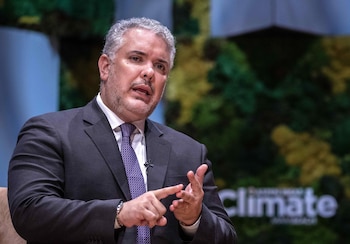
The former Colombian president Iván Duque has publicly defended the innocence of his predecessor Álvaro Uribe , recently convicted and sentenced to twelve years of house arrest for bribery and procedural fraud. Duque has voiced his concerns over what he describes as ” serious irregularities ” throughout the legal process against Uribe, calling for international community intervention in addressing these alleged injustices.
In a joint statement with nearly 28 former presidents from the Freedom and Democracy Group and the Idea Group , Duque appealed to organizations within the Inter-American system and the United Nations Organization . He underscored the need for urgent attention and action regarding the alleged violations of due process and human rights that have marked Uribe’s legal trials. “We have sent a communication highlighting the irregularities that have arisen in the judicial proceedings against Álvaro Uribe Vélez,” Duque stated, emphasizing the necessity for these issues to be recognized on an international level.
The communiqué outlines accusations against the Colombian judicial system, including the ” illegal interception of private communications,” “selective leaks to the media,” and reliance on ” unreliable testimonies .” It also mentions an “untimely change” in the Attorney General’s Office ’s position regarding Uribe’s case, which has raised suspicions about the integrity of the proceedings. The signatories of the statement insisted that these procedural anomalies warrant immediate international oversight to ensure justice.
Duque and his counterparts are urging the activation of the fundamental rights outlined by both the inter-American and international human rights conventions . They demand that the Colombian state provide detailed, transparent information regarding the procedural standards applied in Uribe’s case and any corrective measures taken. Their messages highlight not only the protection of Uribe’s rights but also the need for adherence to the principles of due process that are supposed to uphold justice.
Central to this plea is a deep concern regarding what the signatories characterize as a ” structural historical pattern ” of injustice within the Colombian judicial system. They argue that the conviction of Álvaro Uribe could set a dangerous precedent that undermines the credibility of both the universal and inter-American systems for protecting human rights . The risk of such precedence poses a threat to the integrity of legal processes in other cases moving forward.
This predicament has unfolded in the wake of a Bogotá judge’s announcement on Friday that culminated in Uribe’s conviction. He was sentenced to twelve years of house arrest after being found guilty of witness tampering and procedural fraud . However, Uribe was acquitted of a separate bribery charge, suggesting that the case against him carries complexities that necessitate further analysis and investigation.
The origins of this controversy trace back to 2012, when Uribe accused senator Iván Cepeda of seeking false testimonies against him regarding links to paramilitary groups in Colombia’s Antioquia region. Initially, it seemed that Uribe was the victim, but the tide turned as evidence surfaced indicating that former president’s legal team might have attempted to manipulate witnesses. Consequently, the narrative shifted, placing Uribe under scrutiny and reclassifying Cepeda as a victim in the legal saga.
Many observers are watching closely as the unfolding events challenge the integrity of Colombia’s judicial framework and the broader implications they hold for democracy and human rights in the region. As Duque and other former leaders rally for Uribe’s cause, their call to action resonates widely, urging a crackdown on corruption and irregularities that could potentially derail justice in Colombia. The international community’s response to these allegations will be pivotal in determining whether justice is upheld or further eroded in this historic case.
The ongoing discourse around this legal battle serves not only as a reflection of Uribe’s controversial legacy but also as a poignant reminder of the broader challenges to the rule of law faced in Colombia. As the situation progresses, the demand for accountability and transparency remains a crucial element in the pursuit of justice not just for Uribe, but for the integrity of Colombia itself.