
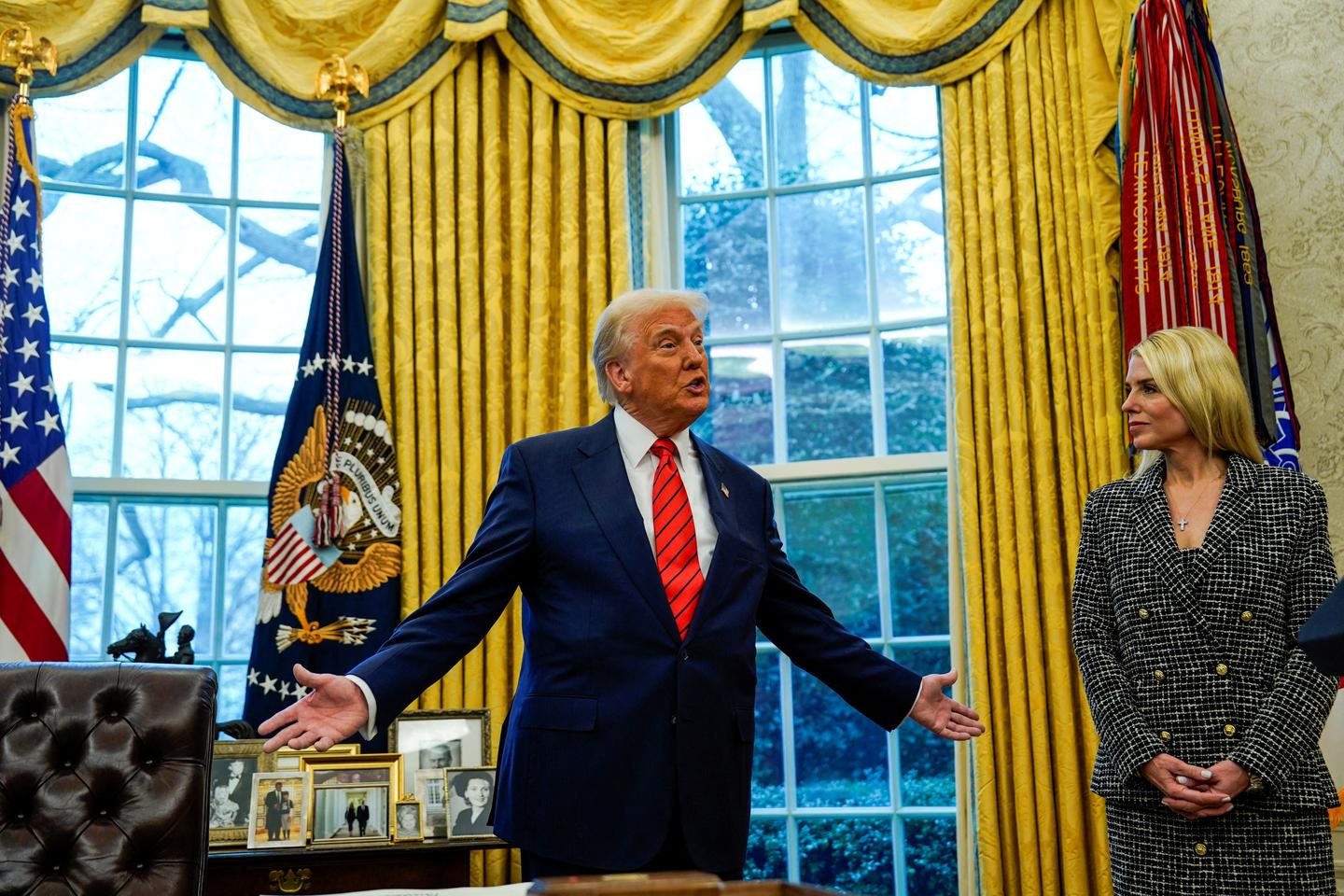
The text has been used three times in American history, still in wartime, and for the last time to intern Japanese during the Second World War. President Donald Trump invoked a law of 1798 on Saturday March 15 to fight the Venezuelan gang Tren of Aragua, saying that the United States was “invaded” by him.
Donald Trump published this proclamation a few hours after a Washington federal judge has, as a preventive basis, prevented the president from using the law on foreign enemies (Alien Enemies Act).
This law is a text used in wartime which allows the American president to arrest or expel citizens of an enemy nation. Created in 1798, it was used during the Anglo-American war of 1812, during the First World War and especially during the Second World War, when 120,000 Japanese and American-Japanese were interned in the United States.
Donald Trump, who has a very hard speech on immigration and had raised the use of this law during his presidential campaign, wants to use it to fight against members of the Venezuelan gang Tren of Aragua who operate on American soil.
Uncertain implementation
In Official communicationthe White House estimated, on Saturday, that he had links with the Venezuelan president, Nicolas Maduro. “This has produced a hybrid criminal state which is committing an invasion and a predatory foray into the United States”is it written in the presidential press release. According to the same source, the Minister of Justice, Pam Bondi, has been sixty days to make the presidential declaration effective.
Will be likely to be expelled and deported to all the Venezuelan members of the Tren of Aragua over 14 years old who are not permanent residents in the United States or binationals.
But the implementation was still uncertain since the ACLU human rights organization announced on Saturday in a statement that, following a legal actions, a federal judge had preventively, and temporarily, blocked the measure. According to The Washington PostACLU said that it would ask him to extend the order to all migrants who may be expelled under the law, with the risk of being expelled without having been heard by a court.