
The Impact of the “Take It Down Act” on Digital Privacy
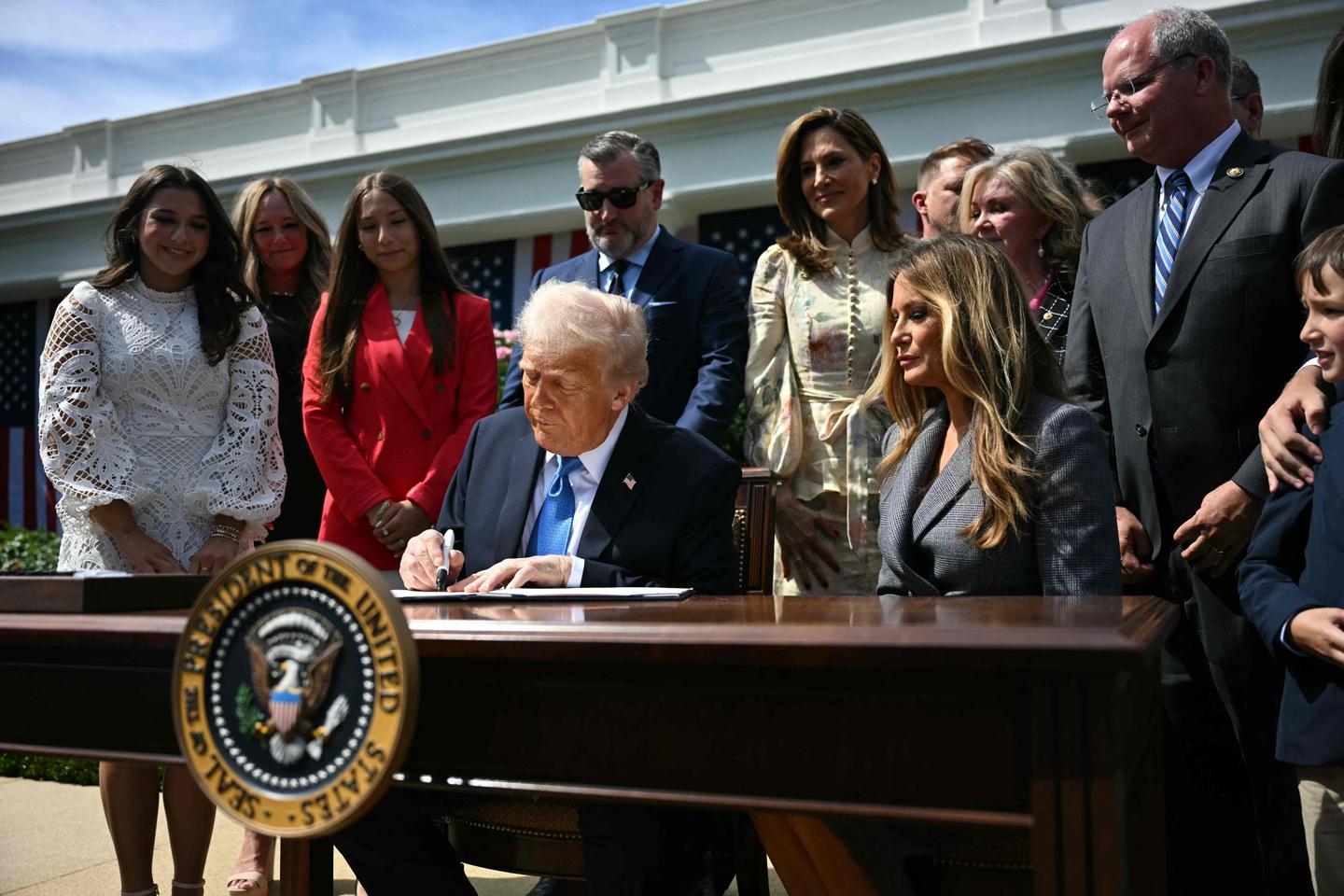
On **May 19, 2025**, US President **Donald Trump** signed into law the **”Take It Down Act,”** which criminalizes the sharing of **non-consensual pornographic images** and **deepfake content**. This legislative measure responds to the alarming rise in the dissemination of explicit images created without the consent of those depicted, particularly affecting vulnerable populations like young girls and women.

The **legislation** has significant implications for how digital privacy is maintained in the age of **artificial intelligence (AI)**. By imposing criminal penalties, including up to **three years in prison**, for those who share explicit images without consent, it aims to deter the growing trend of **”revenge porn.”** Additionally, it establishes civil liabilities for platforms that fail to act swiftly—within **forty-eight hours**—to remove such harmful content.
Scope and Effectiveness of the “Take It Down Act”
The **”Take It Down Act”** is noteworthy as it stands as the first **federal law** designed to combat the unauthorized distribution of sexually explicit images. This law received considerable bipartisan support and indicates a concerted effort by lawmakers to address a digital age dilemma that increasingly affects **young women**, particularly public figures like **Taylor Swift** and political leaders such as **Alexandria Ocasio-Cortez.**
Young women and girls are disproportionately victimized by non-consensual sharing of explicit images, often leading to significant emotional and psychological distress. The **First Lady**, Melania Trump, noted the importance of this legislation in protecting young Americans from invasive cyber behavior, stating, “This legislation constitutes a decisive step in our efforts to protect each American against attacks on their image or identity.” During the announcement, she shared harrowing stories, including that of a **teenage girl** from Texas, who was a victim of deepfake harassment.
The Role of AI in the Creation of Deepfakes
With the rise of AI technologies, creating hyper-realistic **deepfake videos** and images has become disturbingly easy. This advancement has led to a surge in the production of explicit content featuring unsuspecting victims, escalating the urgency for protective legal frameworks. Experts like **Renée Cummings**, a criminologist from the University of Virginia, have pointed out that although state laws exist—for example, in **California and Florida**—the enactment of this federal law marks a significant stride towards combatting the alarming trends in digital harassment.
However, Cummings also expresses caution regarding the implementation of this law, emphasizing that its success hinges on **rapid enforcement** and the establishment of **severe penalties** for violators. She advocates for laws that are adaptable to the quickly evolving landscape of digital threats, highlighting the importance of balancing victim protection with the preservation of **freedom of expression** on the internet.
Concerns about Censorship
While the **”Take It Down Act”** represents a crucial step in combatting the exploitation of individuals through non-consensual imagery, it also raises concerns about potential **censorship**. Advocacy groups, such as the **Electronic Frontier Foundation**, stress that well-intentioned laws must not compromise civil liberties. They argue that vague definitions and inadequate safeguards could facilitate unintended censorship, thus stifling legitimate discourse and expression online.
The risk of government overreach in enforcing this law is a pressing concern. Critics urge lawmakers to craft legislation carefully to ensure that it protects victims without infringing upon the rights of **law-abiding citizens** and online platforms. As these discussions unfold, the ongoing debate emphasizes the need for a careful balance that upholds individual rights while pursuing justice for victims of digital exploitation.
Conclusion
The passage of the **”Take It Down Act”** signifies a pivotal moment in the fight against **non-consensual pornography** and the misuse of **deepfake technology**. As we navigate this complex digital landscape, it is imperative that stakeholders—lawmakers, advocates, technology companies, and the public—collaborate to create effective and just solutions that empower victims while safeguarding the principles of **free speech**. The impact of this legislation will unfold over time, and it will undoubtedly shape the future of **digital privacy** and **social media ethics** in America.