
Trump Confirms Phone Conversation with Maduro
Context of the Call
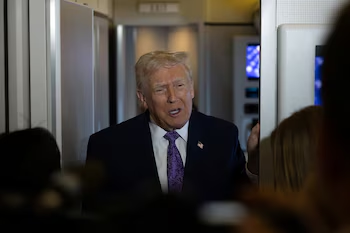
U.S. President Donald Trump has confirmed that he spoke with Nicolás Maduro, the Venezuelan leader, during a recent press briefing aboard Air Force One. Trump’s acknowledgment of the call comes in a period marked by rising tensions and diplomatic pressure from Washington concerning Venezuela’s political situation.
Details of the Conversation
When questioned about the conversation, Trump stated, “The answer is yes,” affirming the interaction took place. However, he refrained from elaborating on the specifics of their discussion. He characterized the call as “very complicated” but chose not to label it as either successful or unsuccessful, saying simply, “It was a phone call.”
Rising Tensions between the U.S. and Venezuela
The confirmation of this conversation aligns with a broader strategy from the Trump administration to escalate its stance towards Maduro. Sources have indicated that the U.S. intends to intensify military actions if Maduro fails to relinquish power. Secretary of State Marco Rubio accompanied Trump during this briefing and reportedly communicated these threats directly to Maduro.
Denials of Negotiation Talks
In response to various media reports suggesting a potential negotiation for a transition of power, a spokesperson for the administration dismissed these claims as “an invention.” This indicates a firm stance against providing any diplomatic room for maneuvering for the Maduro regime despite diplomatic overtures.
Opposition Response
Venezuelan opposition leaders, including Edmundo González Urrutia and María Corina Machado, have voiced hopes for a significant change in power, aiming for a democratic and peaceful transition. Their sentiments reflect the ongoing crisis in Venezuela, marked by political strife and humanitarian issues.
Trump’s Stance on Venezuelan Airspace
During his address to the media, Trump also expressed that Venezuelan airspace should be considered closed, as he claimed the Maduro government does not classify the U.S. as a “friendly” entity. He added that many individuals entering the U.S. from Venezuela were affiliated with “prisons, gangs, and drug trafficking networks.” However, when asked if this characterization suggested imminent military action, Trump advised against interpreting his words beyond face value.
Discussions on Maduro’s Exit
Additionally, Republican Senator Markwayne Mullin acknowledged that the U.S. had extended an offer for Maduro to leave, stating, “We gave him the opportunity to leave. We told him he could go to Russia or another country.” Mullin emphasized that the aim of the administration is to apply pressure without deploying troops in Venezuela, focusing instead on protecting U.S. borders.
Military Operations Near Venezuela
As diplomatic dialogues unfold, military operations are also intensifying. The U.S. has been reinforcing its naval presence in the Caribbean and Eastern Pacific, conducting selective operations against vessels as part of a broader strategy against drug trafficking, allegedly linked to the Venezuelan government.
Conclusion
The interaction between Trump and Maduro reflects the complex and evolving dynamics of U.S.-Venezuela relations. With threats of military action and ongoing diplomatic maneuvers, the situation remains fluid and continues to develop, underscoring the urgent need for resolution in Venezuela’s protracted crisis. News in development…