
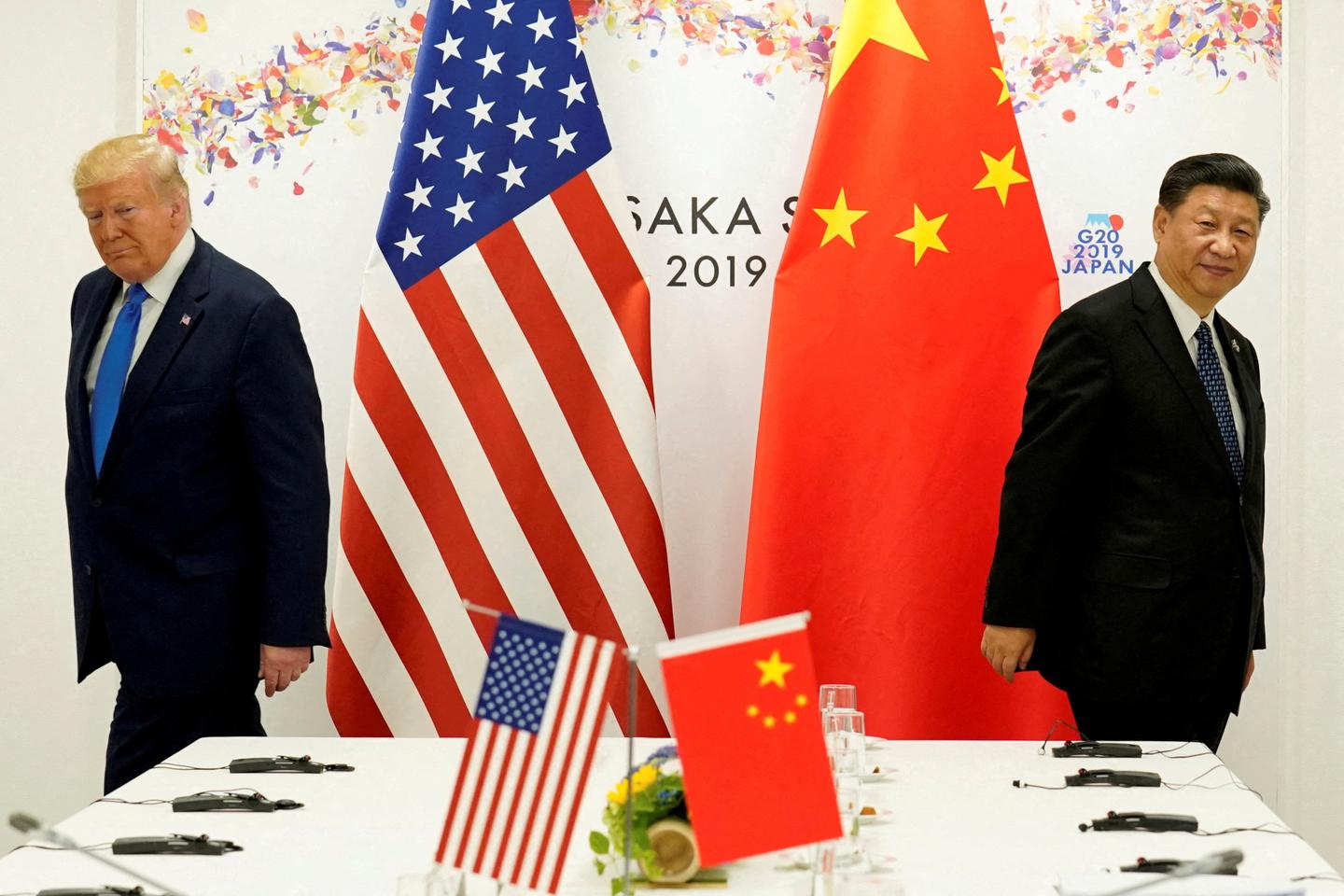

On June 6, 2025, Donald Trump announced that new Sino-American trade talks would take place in London on the upcoming Monday. This unprecedented move aims to establish a comprehensive “agreement” addressing the ongoing tariff conflict between the two nations.
Sharing details via his platform, Truth Social, Trump disclosed that the American delegation would include several key officials: Treasury Secretary Scott Bessent , Commerce Secretary Howard Lutnick , and Trade Representative Jamieson Greer . He confidently stated, “This meeting should go very well.”
This meeting marks the second engagement between American and Chinese negotiators since Trump’s return to the presidency. The first encounter, held in Geneva on May 10 and 11, was pivotal in temporarily halting the trade war that has had significant implications on both economies.
Bessent and Greer were also part of the American team that previously negotiated a tariff reduction from 145% to 30% on Chinese goods, in return for a similar decrease in tariffs by Beijing, which dropped from 125% to 10% on products from the United States. This agreement was structured to remain in place for 90 days.
The Escalation of Tariffs
The two countries entered a tariff escalation shortly after Trump announced, earlier in April, new “reciprocal tariffs” imposing at least 10% tariffs on all goods entering the U.S., regardless of origin.
As a result of these measures, Chinese imports faced an additional 34% surcharge on top of the 20% tariffs applied to combat the flow of fentanyl , a potent opioid contributing to a major health crisis in the U.S. This scenario resulted in a significant increase in the existing tariffs positioned prior to Trump’s 2016 election.
China retaliated with equivalent tariffs, setting off a cycle that saw rates soar to 125% and 145% for their respective goods, severely diminishing trade flows between the world’s two largest economies.
Recently, Trump reiterated allegations that China has not adhered to the terms agreed upon during the de-escalation of tensions. This claim stems from reports indicating that Beijing has been slow to issue new export licenses for essential materials like rare earths, crucial for semiconductors and the automotive industry.
In a twist of events, the American President managed to hold a phone conversation with Chinese President Xi Jinping on Thursday. This dialogue represented a crucial opportunity for both leaders to discuss the contentious trade issues directly for the first time amidst mounting tensions. Trump described the conversation as ending on a “very positive” note, while Xi expressed a desire for both nations to “correct the course of the big ship of Sino-American relations.”
Such statements reflect the urgency on both sides to stabilize their relationship, which extends beyond mere trade and delves into critical aspects of geopolitical influence. The outcome of the upcoming talks in London will be pivotal, potentially setting a new course for international trade dynamics.
Economic relations between the U.S. and China are complex, characterized by interdependence and conflict. Navigating these intricate ties requires careful diplomacy, as both countries play crucial roles in the global economy. The forthcoming meetings signify an attempt to reconcile differences and foster a collaborative approach in resolving long-standing disputes.
As these negotiations unfold, the world watches closely, understanding that the repercussions of any agreements or failures could resonate throughout global markets, affecting not only bilateral trade but also international economic stability.