
Global Competition in Air Defense Systems
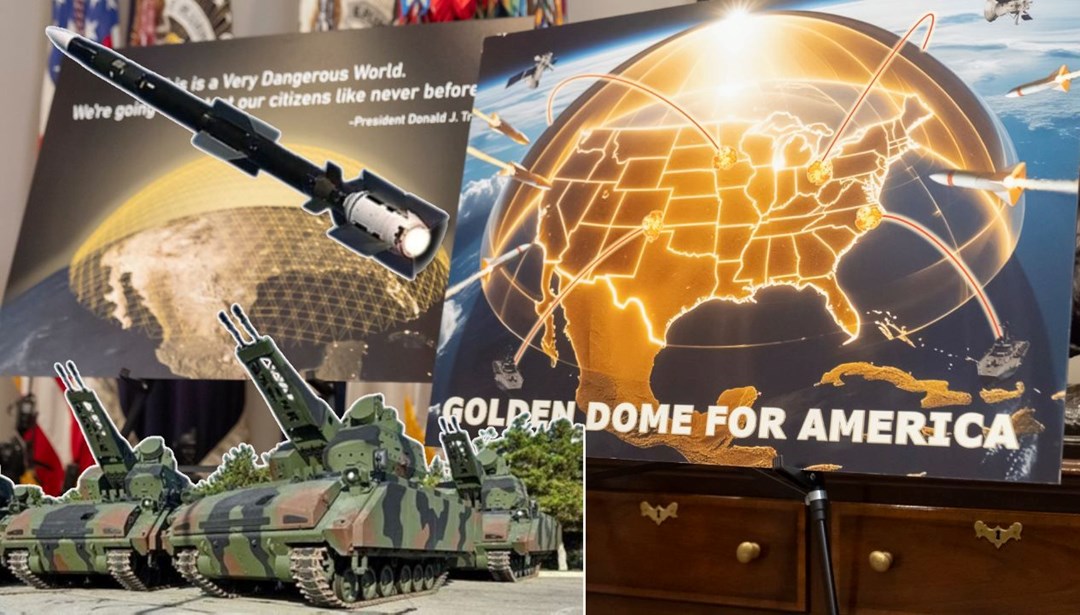
With the announcement of the Golden Dome air defense system by U.S. President Donald Trump, the global arena of air defense has entered a new phase. Nations are mobilizing extensive resources to upgrade their military capabilities, particularly in the realm of air defense systems. This article examines various systems being developed or currently in use worldwide.
Military Spending Surge
The chaotic and tumultuous global landscape has led many countries, particularly superpowers, to pour astronomical investments into their defense industries. According to the Stockholm International Peace Research Institute (SIPRI), military expenditures globally reached $2.72 trillion in 2024, representing a staggering 9.4% increase from 2023. This increase marks the largest annual rise since the end of the Cold War, showcasing a significant shift in defense priorities.
Importance of Air Defense Systems
Air defense systems remain pivotal in these military strategies. Only a few countries, including Turkey, have developed their air defense systems, while others either utilize foreign technologies or rely on more primitive solutions. The growing need for effective air defense underscores the potential threats nations face, leading to the enhanced focus and investment in these systems.
The Golden Dome Initiative
Trump officially announced the Golden Dome system, described as a multi-layered defense initiative against ballistic, hypersonic, and cruise missiles from land, sea, and even space. Scheduled for completion within three years and projected to cost around $175 billion, the system aims to ensure unparalleled protection against threats that could emerge from anywhere on the globe, including outer space. The U.S. currently utilizes systems like THAAD and Patriot PAC-3 as part of its air defense arsenal.
Israel’s Iron Dome
Conversely, Israel’s contributions to air defense cannot be overlooked. The Iron Dome, developed by Rafael Advanced Defense Systems and Israel Aerospace Industries, is designed to intercept short-range threats. Operational since 2011, it has the capability to neutralize incoming artillery and rockets fired from distances of 4 to 70 kilometers. The system employs solid-fuel missiles, each capable of destroying threats shortly after detection, showcasing its effectiveness in real-time defense.
Turkey’s Steel Dome
In Turkey, the newly developed Steel Dome system represents a significant advancement in national defense. This locally designed system is described as an "integrated architecture" that can operate across various altitudes. The project involves key players like ASELSAN, ROKETSAN, TÜBİTAK SAGE, and Makine ve Kimya Endüstrisi (MKE), aiming to provide comprehensive counter-threat capabilities.
Advanced Turkish Defense Capabilities
The Steel Dome project anticipates addressing diverse threats using different types of missiles. The Turkish Armed Forces already include systems such as Korkut for low-altitude threats and the HİSAR-O system for both low and medium-altitude challenges in their inventory. Furthermore, EQ-4 drone support enhances operational capabilities, making Turkey’s air defense progressively formidable.
Russia’s S-400 System
Looking east, Russia’s S-400 missile system dramatically enhances its air defense strategy. Capable of targeting all types of aerial platforms, from manned to unmanned aircraft, it can engage both cruise and ballistic missiles. The S-400 boasts an impressive range of 400 kilometers, effectively securing airspace up to an altitude of 30 kilometers. With the ability to engage 80 targets simultaneously and lock onto two missiles for each, it showcases remarkable defensive capacity.
Emerging Technologies and Improvements
Additionally, Russia employs short to medium-range systems like Tor, Pantsir, and Buk for its layered air defense structure. Plans are underway for the introduction of S-500, which promises advancements in defensive capabilities and further development of effective air defense.
China’s HQ-19 Anti-Ballistic Missile System
On the Asian front, China’s response to threats posed by systems like the U.S. THAAD is embodied in its HQ-19 Anti-Ballistic Missile System. This system is designed to neutralize ballistic threats both within and outside the atmosphere and is currently in operation with the People’s Liberation Army. The HQ-19 features an effective range of 3,000 kilometers, solidifying its status as a critical component of China’s defense.
The UK’s Sky Sabre System
Finally, the United Kingdom’s Sky Sabre provides a formidable short to medium-range defense system, known operationally as Land Ceptor. Commissioned in 2020, it emphasizes flexibility and precision. A multi-dimensional radar system allows for the detection of various aerial threats, including low-flying UAVs. The Sky Sabre can direct 24 missiles at individual targets simultaneously, showcasing its advanced command and control capabilities.
Conclusion
As nations worldwide escalate their military budgets and capabilities to address emerging threats, the Golden Dome, Iron Dome, Steel Dome, and systems like the S-400 and HQ-19 illustrate a robust global arms race in air defense. The fusion of technology and military strategy could redefine national security paradigms, compelling countries to remain vigilant and innovative in their defense strategies.