
The Story Behind the Discovery
Centuries after the catastrophic eruption of Vesuvius in 79 AD, archaeological discoveries continue to unearth poignant stories from the buried city of Pompeii. Among the latest findings is a remarkable account of a doctor who attempted to escape the volcanic disaster clutching a briefcase that may have held his medical instruments. This intriguing tale underscores the human experience during one of history’s most infamous natural disasters.
Scientific Investigation Unveils New Insights
Recent research represents a culmination of over sixty years of archaeological work. Strikingly, this discovery arises not from new excavations but from a scientific reinterpretation of materials excavated in 1961 by renowned archaeologist Amedeo Maiuri. As archaeologists sift through artifacts recovered in the Garden of the Fugitives, they continuously unravel personal stories encapsulated in the very objects that inundated the lives of these long-gone citizens.
Identifying the Doctor
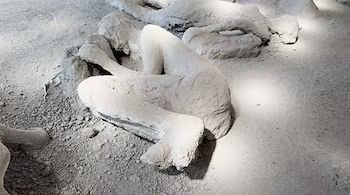
Among the fourteen molds of individuals found trapped in ash, detailed analyses have revealed significant artifacts hidden within one mold, including a small organic box. This box contained metallic elements, a cloth bag with bronze and silver coins, and an assortment of items that indicate the presence of a medical kit. Such findings prompted diagnostic tests utilizing X-rays and computerized tomography scans, uncovering a slate slab and small surgical instruments within the artifacts.
A Tapestry of Lives Interrupted
The significance of these findings transcends mere historical curiosity. The interdisciplinary research involving archaeologists, restorers, and medical experts crafts a narrative of interrupted lives. As Gabriel Zuchtriegel, the director of the Archaeological Park, articulates, “Even two thousand years ago, there were people who did not limit their practice of medicine to consultation hours..” This statement not only pays homage to the victim but highlights the enduring dedication of medical professionals throughout history.
The Broader Implications
This discovery invites reflections on the nature of medical practice and the enduring commitment of healthcare professionals, even in dire circumstances. The doctor’s decision to carry his instruments during the eruption speaks volumes about the human spirit and the responsibility that comes with the medical vocation. Zuchtriegel dedicates this discovery to all healthcare workers today, acknowledging their “deep sense of responsibility and service to the community.”
Conclusion: A Legacy of Humanity
The story of this Pompeii doctor echoes through time, symbolizing resilience, dedication, and the unforeseen challenges faced by those trying to preserve life. As archaeologists continue to explore and interpret these rich narratives, they remind us that history is not just about dates and events—it’s about the people who lived through them, their struggles, and their enduring legacies.