
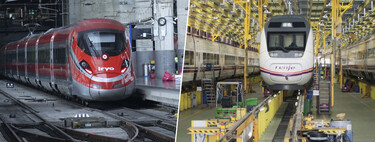
The Ongoing Iryo-Renfe Saga
The Iryo-Renfe soap opera continues to captivate the rail industry. With each passing day, new statements are issued, and the tensions between the two companies escalate. As it stands, Iryo encounters continuous roadblocks, struggling to gain access to Renfe’s workshops—despite directives from the CNMC (Spain’s National Commission on Markets and Competition) clearly indicating otherwise. Renfe maintains its stance, asserting that it is not obligated to comply.
The Latest Developments
In Renfe’s most recent response to inquiries from Xataka, the company labeled the CNMC’s directive as having a “disproportionate impact” on its operations. They further claim that the required adaptations to the workshops pose a “technical impossibility” and would take them a full year to implement. For now, access to the workshops remains firmly shut for the Italian operator, although Renfe acknowledges the significance of complying with the CNMC’s directives as they evaluate the next steps to take.
The Light vs. Heavy Maintenance Dilemma
At the core of the conflict lies a crucial question: Will Iryo’s required maintenance at Renfe’s workshops be classified as “light” or “heavy”? The liberalization of Spain’s rail network already indicated that Renfe would eventually have to share its maintenance facilities with competitors like Ouigo and Iryo for routine checks. However, the issue is compounded by vague definitions in regulatory texts, such as Directive 2012/34/EU and standard EN 15380-4:2021, regarding what constitutes light maintenance. Renfe argues that many of the operations proposed by Iryo would necessitate dismantling parts of the train, thus falling into the realm of heavy maintenance, which is not permissible under the current understanding.
Do the Stakes Justify the Conflict?
Perspectives on the seriousness of the situation diverge significantly:
- Iryo’s Position: They maintain that the required operations would only occupy 7% of Renfe’s infrastructure. They argue that maintenance schedules are organized weeks in advance, implying the issue is ultimately about logistics, not capacity.
- Renfe’s Position: Contrarily, Renfe insists that accommodating Iryo’s requests would significantly disrupt its own operations. They estimate that Iryo’s use could take up 10% of their capacity, necessitating the withdrawal of approximately 1.2 million seats, leading to a projected loss of 60 million euros.
The Regulatory Backdrop
The CNMC continues to support Iryo. Following a complaint regarding Renfe’s refusal to grant access to its workshops, the regulator intervened, demanding compliance. This resolution was contested in the National Court, which upheld the CNMC’s decision as a precaution while both parties await a detailed evaluation of the case.
The Implications of Sending Trains to Rome
A stark point of contention is the necessity for Iryo to send trains to Rome for scheduled maintenance. This requirement could ground the affected trains for up to two months, thereby severely impacting their ability to provide service. However, the same regulatory body insists that previous instances in France where Iryo was compelled to transport trains for maintenance corroborate the need for adherence to operational regulations.
The Future of the Workshop War
In conclusion, the ongoing tensions between Iryo and Renfe showcase the complexities of a transitioning rail market in Spain. With the CNMC’s stance favoring Iryo, Renfe’s reluctance to fully open its workshops is a noteworthy focal point. As regulatory scrutiny intensifies, only time will tell how these disagreements will resolve and shape the landscape of Spain’s rail services.
Photo credits: Sergioorozco96 and Renfe.