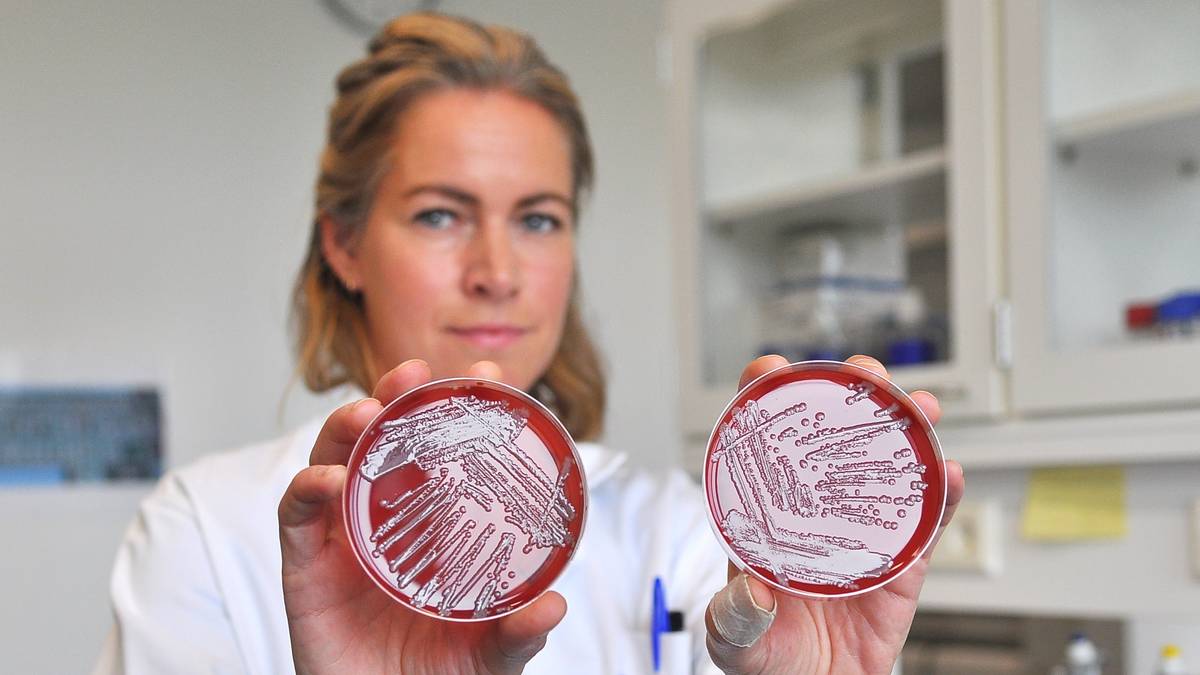
The matter in summary Researchers at NMBU have found bacteria and viruses on plastic surfaces in both purified and polluted wastewater. The bacteria and viruses that survive on plastic are not sufficiently cleaned in the treatment plants. Disease-causing bacteria such as E.coli and Listeria as well as noro- and adenovirus have been found on plastic in, among other places, the Lierelva, Norway’s most polluted river. Researchers have examined both treated and untreated waste water from Norway’s largest treatment plant, Veas, and found plenty of microplastics with disease-causing bacteria. Plastic pollution of waste water can help protect disease-causing viruses and bacteria through the treatment plants, and contribute to increased spread in the environment. Without effective wastewater management and the proper management of plastic waste, wastewater can act as a source of transmission of disease-causing viruses and bacteria into the food chain. The summary is made by an AI service from OpenAI. The content is quality assured by news’s journalists before publication. – This could be potentially dangerous, says researcher Ingun Lund Witsø at the Norwegian University of Environmental and Life Sciences (NMBU), Veterinary College. She talks about the new discoveries: Bacteria and viruses that survive on plastic – which now turn out to also survive in treatment plants. Plastic pollution in Norwegian rivers was mapped earlier this year. Earlier this autumn, Witsø and the other researchers found disease-causing bacteria on plastic in the Lierelva, Norway’s most polluted river. Plastpath Plastpath is a research project that deals with how plastic pollution can help to spread food- and water-borne bacteria and viruses, and cause more disease in people. Through the Plastpath research project, researchers at NMBU Veterinary College have examined the occurrence of microorganisms attached to plastic surfaces from both treated and untreated wastewater. These latest findings have been published in the research publication PLOS One on 6 November. The project is a collaboration between the Veterinary College at NMBU, NTNU in Ålesund, NOFIMA and VEAS. Can cause serious illness in humans Now the researchers have examined purified and polluted wastewater from Norway’s largest treatment plant, Veas. They receive waste water from the residents of Oslo, Bærum, Asker and parts of Nesodden. The bacteria and virus findings will be analyzed by the researchers. Photo: Henning Rønhovde / news The treatment plants must remove pollutants from the water. Studies now show that there are plenty of bacteria/viruses in purified waste water as well. – This is important knowledge that must be taken seriously by the authorities and the industry, says senior process engineer Pia Ryrfors at Veas. The researchers found these bacteria on plastic in purified waste water Listeria monocytogenes Escherichia coli Norovirus Adenovirus viable isolates of Klebsiella pneumoniae Acinetobacter spp The bacteria can lead to intestinal diseases, respiratory infections, bloodstream infections, vomiting and diarrhoea. – All of them can cause serious illness in humans, reports Witsø. Spreads bacteria and viruses into the food chain Clear findings both before and after the water was purified show that disease-causing bacteria survive on plastic through the purification process. That gives cause for concern. – Plastic pollution of waste water can help protect viruses and bacteria through the treatment plants, and contribute to increased spread in the environment, Witsø explains. In short, this means that wastewater can be a source of viruses and bacteria entering the food chain. According to the researchers, it could be a possible threat to human health. Researcher Ingun Lund Witsø studies the findings in the lab. Photo: Henning Rønhovde / news – We know that waste water goes through several cleaning processes. Much of the plastic and bacteria that enters the facility is removed. Nevertheless, we found bacteria in the purified water. It was surprising, admits Witsø. – Is it dangerous? – The water is released into the environment afterwards. This means that bacteria and viruses can be spread to areas where they would not normally be. Wastewater is used, among other things, for irrigation in agriculture. The findings surprise the treatment plant Pia Ryrfors is a senior process engineer at Veas. She says they follow strict official requirements for the purification of phosphorus, nitrogen and organic matter. She says that they are aware that they are unable to remove all microplastics. – What is new for us is that bacteria and viruses survive better on plastic than on other particles. The microplastic problem should really concern everyone. says Ryrfors. Several studies show that there are also plenty of microplastics in the treated waste water at Veas. The process plant is 42,000 square meters in size, and is located in the mountains near Slemmestad in Asker. Photo: Veas The cleaning process at Veas has three stages: The mechanical cleaning removes rubbish, sand and gravel. The chemical cleaning cleans most particles, phosphorus and organic material from the waste water. The biological purification removes nitrogen, but also more phosphorus, particles and organic material. Senior process engineer Pia Ryrfors at Veas. Photo: Veas Every second, every day, all year, Veas receives and cleans an average of 2,500 liters of waste water. They do not have cleaning requirements for infectious substances and microplastics. They still remove a good part of these through the cleaning process. – In 2023, we removed over 95% of the particles in incoming wastewater. A previous survey shows over 90% removal of microplastics, points out Ryrfors. Read the full answer from Pia Ryrfors at Veas here: Answer from Veas about the discovery of bacteria/viruses in purified waste water – When the researchers say that “this could potentially be a threat to human health”, what do you answer? – Veas releases purified waste water at a depth of 40 metres. It is thus stored in depth. The saline water in the Oslo Fjord also contributes to a further reduction of infectious agents. The treatment plants comply with a number of requirements from the authorities, and adapt to changes in these. In general, the attitude in the sewage industry is that pollution should be taken at the source, not at the treatment plants. The public can help us at the treatment plants by not throwing plastic, rubbish and environmental toxins into the toilet or sink. – Can we trust the treatment plants in Norway? – The treatment plants exist to protect health and the environment against the potential for damage in waste water. Here at Veas, samples are taken of inlet and outlet water every day to document that we comply with the authority’s requirements, and we do so by a good margin. – Are the findings shocking or sensational? – The treatment plants reflect what happens in society, and what happens in our catchment areas ends up at the treatment plants. If the public uses medicines or drugs, residues of this end up in the treatment plants. Information about diseases in the public can be traced in the waste water. It is perhaps not shocking that new research provides more answers, but this does confirm that the spread of microplastics appears to have many unfortunate consequences. No requirements for cleaning micro-pollution Section leader in the Marine and Industry Department at the Norwegian Environment Agency, Cecilie Kristiansen, comments on the findings as follows: – Today’s sewage directive and Norwegian sewage regulations set cleaning requirements that are linked to reducing the risk of over-fertilisation. This means that the waste water must be cleaned of organic matter and nutrients. The regulations must prevent pollution, including littering and sedimentation. She says that there are currently no specific requirements for the cleaning of micropollutants. Section leader in the Marine and Industry Department, Norwegian Environment Agency, Cecilie Kristiansen. Photo: Fartein Rudjord – The EU has recently adopted a revised sewage directive that also includes micropollutants. Processes about the EEA agreement and implementation in Norway are at a political level. – A little more frightening The researchers have clear evidence that bacteria/viruses that stick to plastic can have a greater ability to survive. Researcher Ingun Lund Witsø says: – I hope that people become a little more aware of the additional consequence of plastic pollution after these findings, says Ingun Lund Witsø. Photo: Henning Rønhovde / news – They are better protected against cleaning agents and antibiotics. They are more difficult to get rid of simply. Something the research now confirms. And it doesn’t stop there: – We are now surveying what antibiotic resistance exists among the bacteria we have found. It is a growing problem in the world that people should be concerned about. There is also a result that is a bit more frightening, I think. Published 15.12.2024, at 19.16
ttn-69