
| EN BREF |
|
The 2025 finance law aims to revolutionize the operation of speed cameras in France. This initiative goes beyond simple speed monitoring, integrating new functionalities provided by artificial intelligence. It reflects the government’s strategic commitment to significantly enhance road safety. However, this move has sparked reactions from motorist associations, raising concerns about the implications of such technologies. Debates are expected to intensify as questions arise about the effectiveness and underlying goals of these new measures.
Ambitions of the 2025 Finance Bill
The 2025 finance bill proposes a budget allocation of €46.3 million for the maintenance and installation of new cameras. This decision includes a 4% increase in the number of automatic speed cameras, growing from 4,000 to 4,160. These figures signal a clear intention to intensify road monitoring in France. This marks a significant initial step towards implementing next-generation cameras capable of detecting much more than mere speed. This approach illustrates the government’s proactive effort to adapt road safety tools to current technological advancements.
With such investments, the state hopes not only to improve safety on the roads but also to decrease accident rates. Emphasis is placed on using advanced technologies, such as artificial intelligence, to optimize the performance of speed cameras. These measures signify a genuine evolution in managing road safety, shifting towards a more technological and preventative approach.
New Features of the Speed Cameras
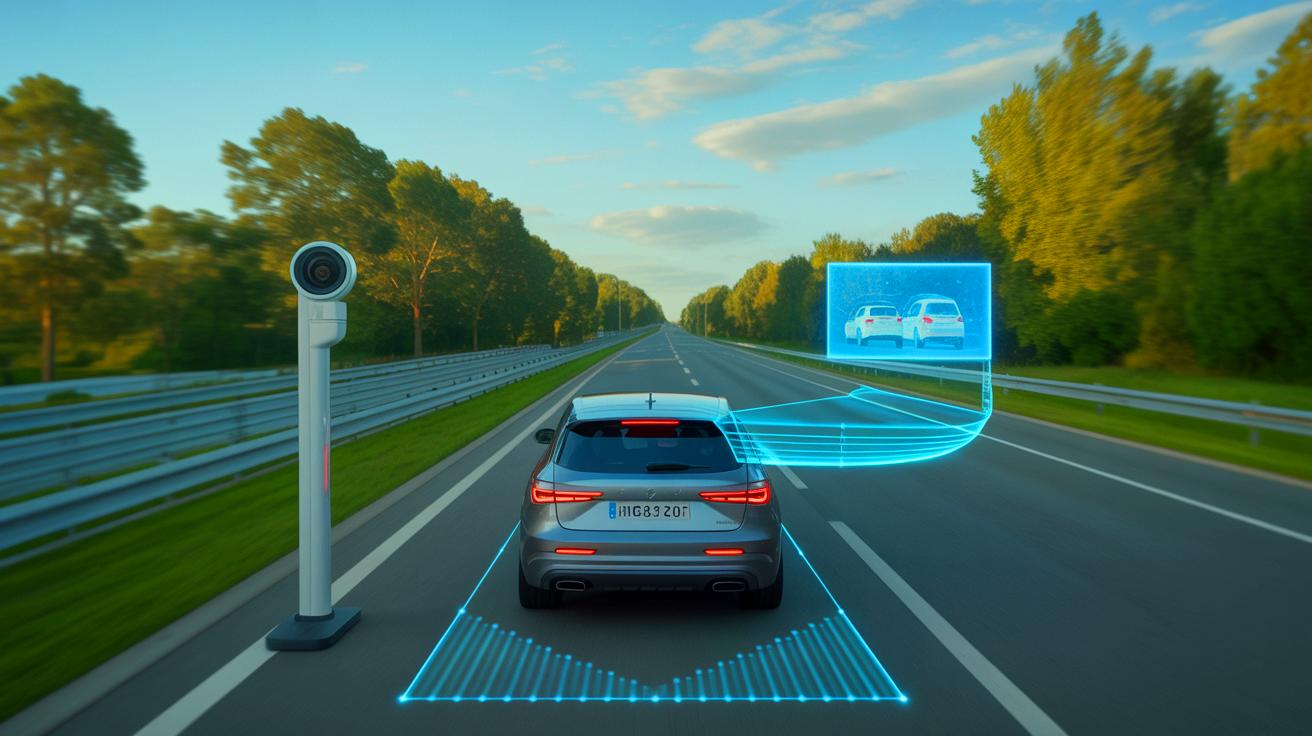
The next-generation cameras will no longer be limited to detecting speed violations. By integrating artificial intelligence, they will identify additional infractions, such as failure to maintain a safe distance between vehicles, non-use of seatbelts, and using a mobile phone while driving. This enhancement in the capabilities of speed cameras marks a significant advancement in automated traffic enforcement.
By adopting these innovative technologies, the government aims to not only bolster road safety but also to deter dangerous behaviors. However, this approach raises questions regarding the reliability and fairness of these systems. Critics focus on the risk of unjust penalties, particularly in complex situations where automation may overlook nuances of an infraction. Thus, the implementation of AI in this context requires optimal precision to ensure a fair and effective application.
Criticism from Motorist Associations
In response to these innovations, the association “40 million motorists” has voiced its dissatisfaction. They condemn the increasing reliance on automatic fines as excessive. They argue that a return to traditional road checks conducted by law enforcement would provide better prevention of dangerous behaviors. The association also criticizes fines of €135 and the loss of three points on the driving license associated with new infractions detected by AI.
Their primary concern is the reliability of this technology. They point to scenarios where a driver could be unfairly penalized for failing to maintain a safe distance when influenced by the sudden maneuver of another vehicle. This situation highlights the potential biases of these automated systems. Broadly, the association questions the true objectives of these cameras, suggesting they are more financially motivated than aimed at enhancing safety.
Technology in the Service of Safety or Economics?
The debate surrounding the use of artificial intelligence in automatic cameras reveals a tension between road safety and economic considerations. Critics of these devices raise important questions regarding their actual effectiveness and the underlying motivations for their deployment. While the expressed intention is to enhance safety, some perceive it as a way to generate additional revenue through fines.
This controversy underscores the necessity of balancing technological innovation with social justice. Authorities must ensure that these devices genuinely serve the public interest, improving road safety without unjustly penalizing motorists. This challenge prompts essential questions about the future of road safety policies in France and the impact of new technologies in this domain.
As the project advances, it is crucial to continuously assess the real impact of these new technologies on road safety and social justice. Can technological advancements truly reconcile safety and fairness, or do they risk creating new forms of injustice on our roads?
The author has utilized artificial intelligence to enrich this article.
Did you enjoy this? 4.5/5 (20)