
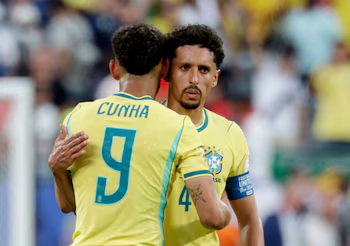
Pale Debut: Brazil’s Underwhelming Start at the 2026 World Cup
Brazil’s first match in the 2026 World Cup against Morocco at MetLife Stadium ended in a disappointing 1-1 draw, leaving fans and analysts alike with mixed feelings. Despite Vinicius Jr.’s equalizer, the performance raised alarm bells regarding the national team’s form and strategy, drawing parallels to Brazil’s disastrous 1-7 loss to Germany in 2014.
Defensive Lapses and Early Criticism
The match highlighted glaring defensive vulnerabilities, particularly with Gabriel Magalhães, who has recently seen limited action. After a mistake that allowed Morocco’s Ismael Saibari to score, doubts about the team’s defensive organization intensified. This prompted harsh critiques from media outlets like Esporte Balloon, which stated, “Vini saves a Brazilian team that generates more concern than enthusiasm in its debut in the World Cup.” It’s clear that the team’s weak performance raised internal questions about preparation and coordination.
Analyzing the First Half
The first half was widely criticized as one of the weakest performances in World Cup history for Brazil. Analysts pointed to a lack of dynamism in the midfield and significant gaps in the defense. As one columnist noted, “the first half was described as the worst start for the national team in the World Cup since 7-1 for Germany.” This set a disappointing tone, further compounded by a seemingly lackluster attitude from several key players, including Casemiro, who received a below-average rating of 4.5.
Second Half Revival but Persistent Concerns
After halftime adjustments by coach Carlo Ancelotti revitalized the team, leading to Vinicius Jr.’s equalizer. Although this moment provided a temporary sense of optimism, it didn’t mask the ongoing issues that persisted throughout the game. Columnists from GLOBE agreed on the need for improvement, citing struggles with defensive solidity and offensive creativity that could hinder Brazil’s progression in the tournament.
A Silver Lining?
Despite the pessimistic assessment of the match, some critics offered a more tempered view. Carlos Eduardo Mansur from GLOBE suggested that the draw could still be a valuable point in the context of group standings. As Brazil moves forward in the World Cup, maintaining a level-headed approach will be crucial, especially with upcoming matches against Haiti and Scotland.
Upcoming Challenges
Brazil’s next match against Haiti on June 19 and the closing fixture against Scotland on June 24 will be critical tests. Both matches present an opportunity for the team to address the issues highlighted in the draw against Morocco and regain confidence going into the knockout stages. The current situation demands immediate attention to the defensive lapses and the creation of a more cohesive midfield.
Social Media Reactions
The lackluster performance also ignited a flurry of memes and reactions across social media, offering an ironic commentary on fans’ expectations versus reality. They serve as a reminder of the high bar set for a historically successful national team, and the pressure is mounting as Brazil navigates this turbulent start.
In conclusion, Brazil’s opening match at the 2026 World Cup was marked by defensive errors and inconsistent play, evoking memories of past disappointments. As the team looks to rebound in its upcoming matches, the focus must be on shoring up its weaknesses and finding a rhythm to satisfy both fans and critics alike.