
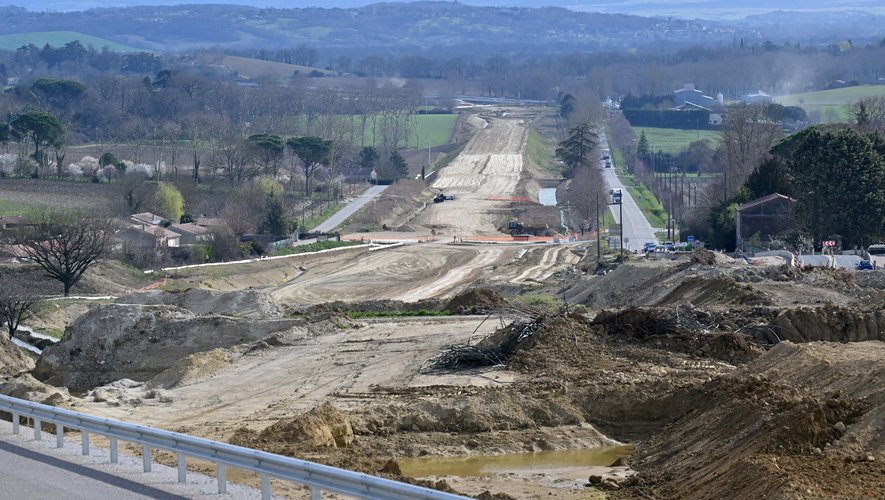
A69 Highway Construction Set to Resume: Key Updates
Overview of the A69 Project
The A69 highway, connecting Castres and Toulouse, has faced numerous challenges, including legal disputes and environmental concerns. Despite these setbacks, authorities have announced that construction will resume in mid-June. This article outlines the latest developments, responses from key stakeholders, and the broader implications of this decision.
Government Announcement on the Resumption of Work
In a recent statement, the Ministry of Transport emphasized that the restart of construction would occur gradually, considering the complexity of the necessary steps involved. They noted that upcoming weeks would allow for not just the recommencement of work but also for a replanning of operations to determine a new service date efficiently.
Implications for Economic Stability
The government recognizes that halting the project resulted in significant socio-economic fallout, particularly in the Castres-Mazamet region. The interruption not only jeopardized local businesses but also posed safety risks near the construction site.
Responses from Local Economic Leaders
Several local economic stakeholders have expressed their reactions to the announcement, underscoring the project’s importance for regional development.
Michel Bossi’s Perspective
President of the Chamber of Commerce and Industry of Tarn, Michel Bossi, welcomed the decision as a recognition of the project’s socio-economic importance. He remarked, “This decision affirms the detrimental socio-economic impact that a prolonged halt would have inflicted on the area. We now return to a positive dynamic benefiting the businesses in the Castres-Mazamet basin.”
Sébastien Bruyère’s Concerns
The president of the Chamber of Agriculture of Tarn, Sébastien Bruyère, highlighted the need for corrective measures. He stated, “The resumption will enable us to finalize solutions for farmers affected by the A69, including restoring accessibility and irrigation networks, as well as mitigating flood risks.”
Guy Bousquet’s Caution
Conversely, Guy Bousquet, president of Via 81, expressed cautious optimism. He noted, “Experiences in the past have taught us to be careful; however, it is positive news that common sense has prevailed, promising a better economic future for the Castres-Mazamet area and its residents.”
Environmental Concerns Raised by Activists
Not all responses were positive. Environmental activist Thomas Brail, founder of the National Tree Surveillance Group, expressed his outrage over the decision. Accusing the senator Philippe Folliot of dishonesty, Brail stated, “This is an environmental failure. If even one piece of machinery enters the site, I will initiate a hunger strike for the second time.”
Government Support for Structural Development
Philippe Tabarot, the Minister of Transport, reaffirmed the government’s commitment to the A69 project, calling the decision to resume work a significant relief. He emphasized: “The work stoppage risked the security of both the installations and public safety near the site. The government supports this structural project for Tarn, which is essential for local development.”
Local Politicians’ Reactions
The announcement elicited varied reactions from local politicians.
Philippe Folliot’s Delight
Senator Philippe Folliot expressed joy upon the administrative court’s decision, emphasizing that common sense had finally prevailed. He declared his commitment to ensuring that the A69 project – which has garnered democratic support from local citizens – proceeds without further delays.
Christophe Ramond’s Relief
The president of the Departmental Council of Tarn, Christophe Ramond, reacted strongly to the announcement. He stated, “The A69 will be able to continue its route! The project is already 70% complete, and it is urgent to finish. This decision is a genuine relief for everyone involved.”
Jean Terlier’s Approval
Similarly, Jean Terlier, the deputy of Tarn’s third constituency, referred to the court’s ruling as “an excellent piece of news,” stating it marks a significant step forward for the project.
Financial Implications of Project Delay
The stoppage of the A69 construction has incurred controversial daily costs for the concessionaire, reported to be around €180,000 per day. This financial impact adds urgency to the project’s resumption.
Challenges Faced by Commuters
As construction resumes, local drivers have been facing increasingly more complicated routes. While the project aims to ease traffic congestion in the long run, the current state of journey routes between Verfeil and Castres remains fraught with obstacles, including fluctuating speed limits, heavy traffic, and ongoing construction zones.
Legal Backing for the Project
The Administrative Court of Appeal justified its ruling based on significant public interest and the necessity for environmental exemptions to facilitate the construction. Their assessment deemed that existing arguments against the project lacked merit, further legitimizing the construction plans.
Conclusion
The decision to resume construction of the A69 marks a pivotal moment for both economic stability and infrastructural development in the Tarn region. While the government and local leaders have largely welcomed the news, environmental activists remain vigilant. The project not only holds economic importance but is also a litmus test for balancing developmental needs against environmental considerations.
“Les travaux reprendront à partir de mi-juin”, indique le ministère des Transports
Dans son communiqué, le ministère des Transports précise : “Compte-tenu de l’ampleur des étapes nécessaires à cette reprise, les travaux reprendront à partir de mi-juin de manière progressive. Les prochaines semaines permettront, outre la reprise des travaux, une nouvelle planification des opérations permettant de définir, dans les meilleurs délais, une nouvelle date de mise en service”.