
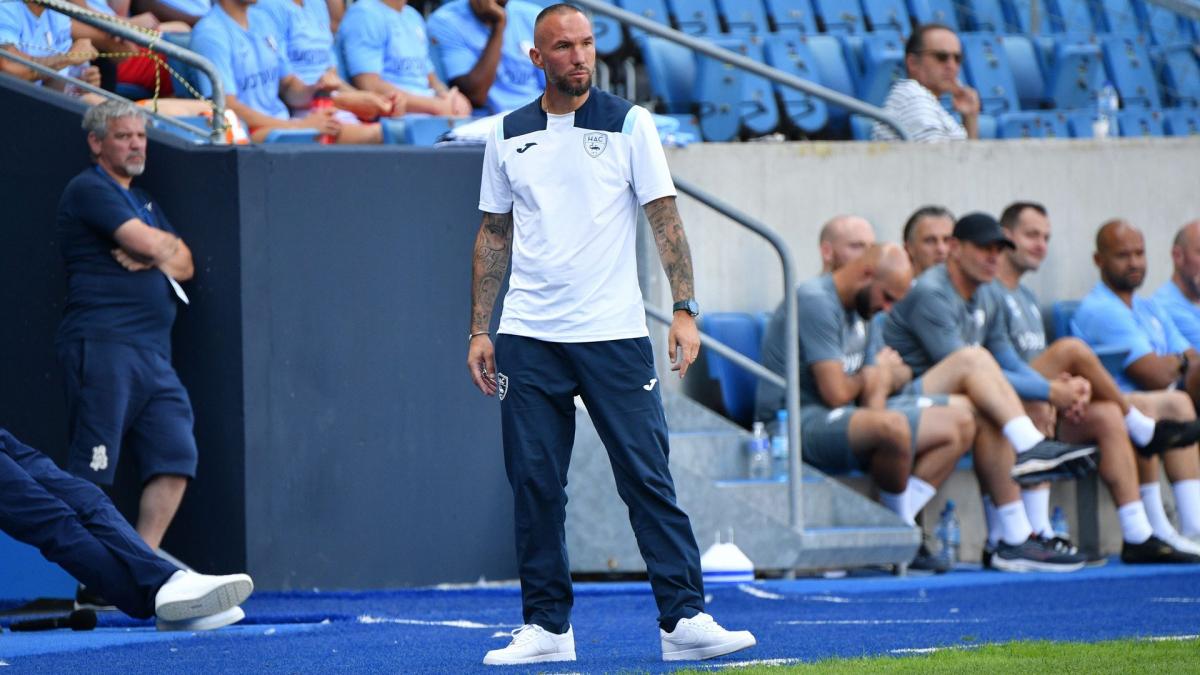
Didier Digard’s Indignant Response
Didier Digard, the head coach of Le Havre, recently stirred up significant controversy after the match against Toulouse, which ended in a 0-0 draw. Following the game, Digard expressed profound disappointment regarding an incident involving Toulouse player Aron Dönnum, who made an inappropriate gesture toward Le Havre’s Samuel Ebonog. This gesture was widely interpreted as having racist connotations, igniting an important discussion about discrimination in football.
Emotional Outburst and Future Considerations
In a post-match interview, Digard declared, “If we leave it there after this gesture, football will be without me. I am too far from this society and what we allow to happen today.” These words raised questions about his future in the sport, suggesting that such incidents could push him to reconsider his career. He passionately voiced his frustration, emphasizing that football should be a realm of integration and harmony, free from discrimination.
In a follow-up interview with L’Équipe, Digard clarified his emotional reaction. He emphasized, “If this type of event could push me to stop playing football? No. There, it was taken up, we don’t accept everything.” His words indicate a commitment to maintaining the integrity of the sport while ensuring that it remains a welcoming environment for all players.
Analyzing the Gesture
When addressing the contentious gesture made by Dönnum, Digard was careful with his words. He did not outright label it as racist but stated, “If this gesture was necessarily discrimination or racism? No, I never said that.” Instead, he pointed out that regardless of intent, such behavior has no place on the field. It is crucial to foster a culture of respect and understanding in sports, and Digard’s comments reflect a larger concern about the normalization of inappropriate behavior in football.
Digard continued by saying, “I simply said that this gesture could not be on a field. I responded that if it’s not racism, it’s at least humiliating and demeaning.” His comments serve as a reminder that the impact of actions goes beyond intentions, emphasizing the need for accountability and respect among players.
Looking Ahead
In light of the incident, Digard expressed his willingness to discuss his future with club president Roussier, particularly as his contract is set to expire in June. His comments signal a potential shift in focus as he weighs his options, balancing his principles with the realities of coaching in a challenging environment.
Conclusion
Didier Digard’s strong words following the incident with Aron D(HWND)øð are a wake-up call for the football community. His commitment to maintaining football as a sport of inclusion and integration is crucial in today’s society, highlighting the ongoing battle against discrimination. As the discussion continues, it is clear that the integrity of the game must be upheld for the benefit of players and fans alike. The world of football stands at a crossroads, and leaders like Digard are essential in guiding it toward a more inclusive future.