
Controversies Surrounding French National Team’s Preparations for World Cup Qualifiers
As tensions simmer between Paris Saint-Germain (PSG) and the French Football Federation (FFF), the national team must quickly adapt as they prepare to face Iceland at the Parc des Princes . With the upcoming match being crucial in their quest for qualification to the 2026 World Cup , the absence of key players has heightened scrutiny and controversy surrounding the team’s dynamics and injury management protocols.
The recent injuries to two pivotal players, Désiré Doué and Ousmane Dembélé , have sparked a furore over the coordination of medical decisions between club and country. Doué is expected to be sidelined for about four weeks, while Dembélé’s recovery could stretch to eight. The implications of these injuries extend beyond the pitch, raising questions about the collaboration between PSG and the national team’s medical staff.
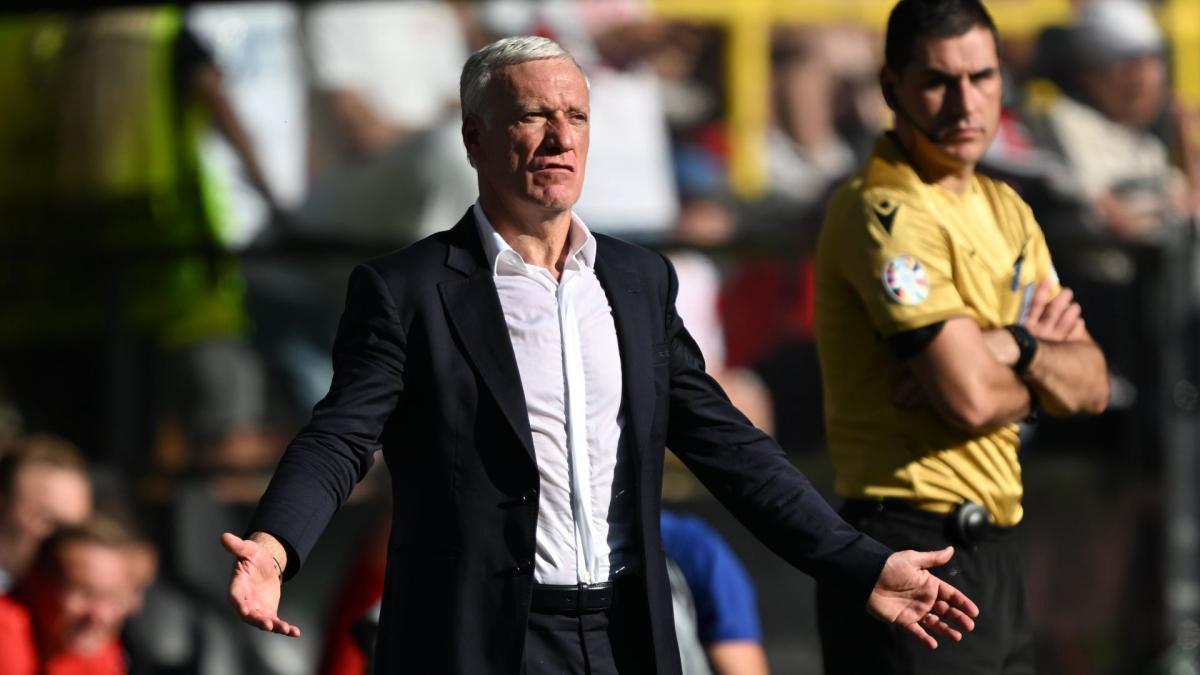
In light of this controversy, national coach Didier Deschamps was questioned at a recent press conference. He defended his position, claiming that he operates within the existing protocols. “I am a coach; I don’t know which protocol I am supposed to discuss. What happened is unfortunate, and I’m sad to lose two important players for tomorrow’s match,” he stated. Deschamps’s comment underscores the complexities inherent in international football, particularly regarding player availability and injury management.
Didier Deschamps Stays Firm Amid Controversy
Fostering a calm atmosphere, Deschamps attempted to downplay the dispute, insisting that PSG does not serve as the national team’s rival. “This concerns two PSG players; unfortunately, PSG is not our opponent. We have our interests and it’s normal for tensions to exist. The protocol mandates that all players report their injuries to Clairefontaine ,” he explained, asserting that if players aren’t fit to report, there is little that can be done.
Despite the ongoing debates surrounding injuries, the coach affirmed that he remains confident in his squad’s capabilities. He also confirmed the inclusion of Bradley Barcola , another PSG talent, despite the recent upheaval. “You need to be serious; it’s my responsibility to make decisions. I always consider the conditions around players, but ultimately the decision-making power lies with the authorities,” Deschamps concluded.
Implications for PSG and Other Clubs
Deschamps highlighted the importance of player recovery times, emphasizing that they have decreased significantly in recent seasons. This has made the relationship between national teams and professional clubs increasingly complex. Both PSG and clubs across Europe will need to adapt to these evolving circumstances, discussing injury management and player fitness more transparently.
As the national team gears up for the match against Iceland, the responsibility now lies with the players who are fit to take the field. The pressure mounts not only from the expectations of national pride but also from the growing scrutiny of how injuries are handled within the club systems. The French national team’s performance will inevitably reflect on their capability to manage these situations effectively.
With the match fast approaching, fans will be eager to see how the squad adjusts, particularly in light of the absence of Doué and Dembélé. They will also be watching carefully to assess whether the tensions between club and federation impact the players’ performance on the pitch. The dynamics of international football continue to present challenges, and how they are confronted will be pivotal as the French team looks to secure another victory in their qualification campaign.
In conclusion, the collision of interests between clubs and national teams adds a layer of complexity to international football. Didier Deschamps’s steadfastness and decision-making will be instrumental as France confronts Iceland in their bid to remain on course for World Cup qualification. Only time will tell if the French squad can overcome these hurdles and deliver on the grand stage once more.