
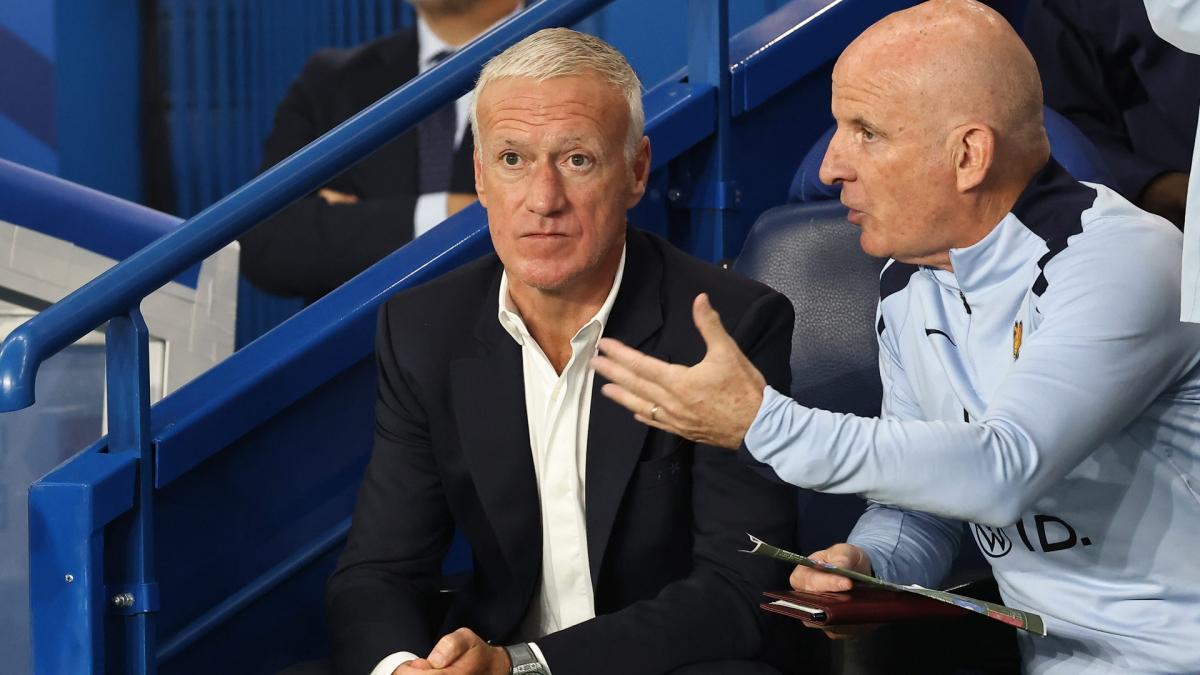
Didier Deschamps Discusses PSG Relationships Amid National Team Selections
The dynamics between national teams and club responsibilities have always been a topic of intense discussion within the world of football. Recently, Didier Deschamps, the French national team coach, navigated this terrain with sophistication, especially in light of injuries to key players Ousmane Dembélé and Désiré Doué. His decisions have sparked debate but reiterated his commitment to a selection process based on professionalism and thoroughness.
At a press conference held on Thursday, Deschamps confirmed that he is set to engage other Paris Saint-Germain (PSG) players during the upcoming national team rally. Despite the recent controversies surrounding injuries, he expressed no need for direct communication with PSG management regarding his selection strategy. He emphasized a structured protocol that ensures a collaborative approach between the national team and clubs when it comes to assessing players’ fitness.
Deschamps stated, “I didn’t have to chat with PSG or another club. There are protocols set up, with exchanges before the choice in my lists between medical staff. This has been the case since the start of the week. Some may not be 100% but may be available for the national team. We do things conscientiously and professionally. There is no zero risk.”
Deschamps’ comments resonate with the tension often found between club and country responsibilities, which has been exacerbated by injuries and other issues. Media scrutiny frequently intensifies during national team selections, especially when high-profile players are involved.
One of the centerpieces of this discussion is the Paris Saint-Germain football club, which has produced a multitude of very talented players, like Lucas Hernandez and Bradley Barcola, who have been included in the national team roster. The decision to rely on these players reflects Deschamps’ trust in their capabilities despite the absence of stronger figures like Dembélé. Injuries can change the dynamics significantly, and club coaches often find themselves wrestling with the implications when their star athletes report for national duty.
Deschamps did not shy away from addressing concerns that may arise regarding player readiness and fitness levels. His approach underscores a dedication to collaboration, wherein open lines of communication with both medical staff and the players are essential for effective selections. It’s a balance between acknowledging the physical limitations of players and making tactical decisions that will benefit the team as a whole.
Another aspect that Deschamps highlighted is the necessity of pleasure in football. He discussed how interactions with players are crucial to understand their physical and emotional states. An athlete’s personal feelings are often overlooked amidst the metrics of performance, but Deschamps maintains that players’ sentiments can offer insights that statistics alone cannot provide.
In an era where injuries can derail a team’s chances on the field, finding players who can step up to the plate is crucial. The reliance on Hernández and Barcola serves as a testament to PSG’s depth in talent and Deschamps’ ability to adapt to circumstances swiftly. Each selection reveals layers of tactical flexibility that Deschamps navigates proficiently.
Moreover, the football community is keenly aware of how political and public perception can shape a manager’s decisions. The spotlight on Deschamps reveals not only the difficulties he faces but also the passion and resilience required to lead a national team.
As broadly recognized, the relationship between national teams and clubs has often been fraught with tension. The competitive nature of football has intensified this relationship, calling for greater understanding and better communication channels. While clubs aim to safeguard the well-being of their players, national teams seek to field the best possible squad to represent their countries on international platforms.
Deschamps remains optimistic about harnessing the potential of each player, prioritizing their overall well-being while focusing on the task ahead. The upcoming international fixtures present challenges, but also opportunities for players like Hernandez and Barcola to prove their mettle, supporting Deschamps’ vision of a competitive national team.
In the complex theatre of football where loyalties often clash, Didier Deschamps exemplifies the essence of effective communication and leadership. He bequeaths confidence in his selections and assures that the emotional and physical readiness of players is prioritized. At the core of his statements, it’s clear that football remains a beautiful game, capable of uniting players and fans alike, even amidst challenges.