
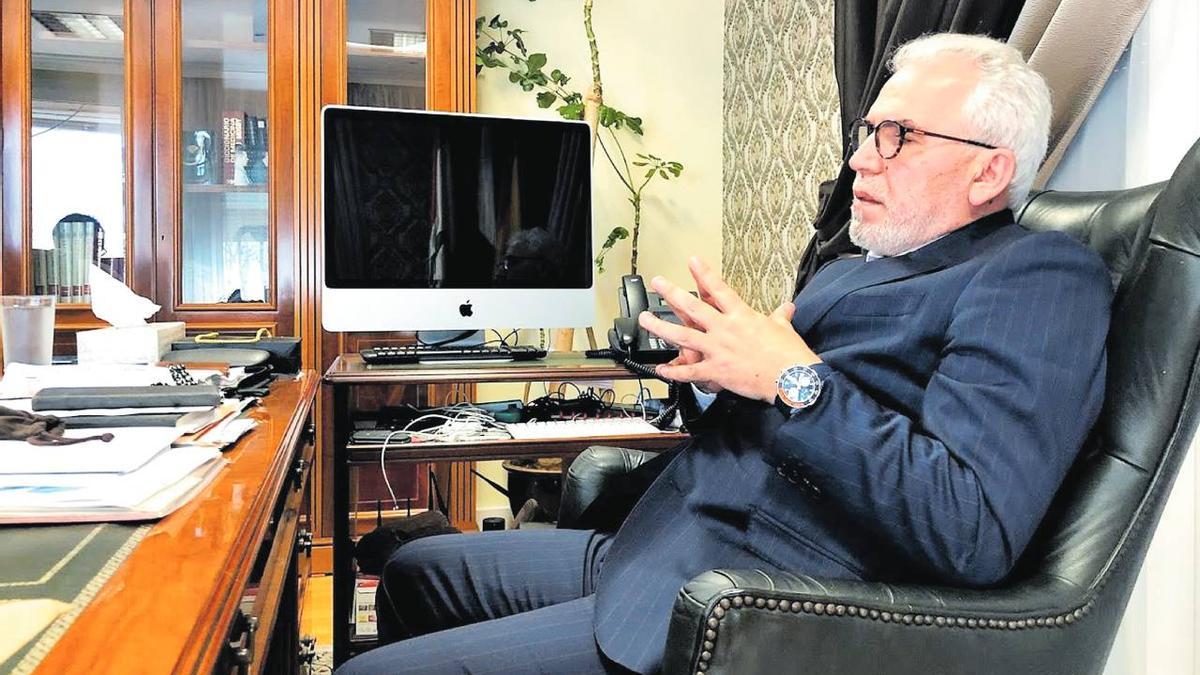
Unveiling the Dark Connections: Mohamed Derbah and Gustavo Matos
The meeting between Mohamed Derbah and Gustavo Matos on January 29 was anything but casual. The Lebanese investor, who would later be arrested on April 30 in Tenerife for leading a major criminal organization involved in drug trafficking, bribery, and money laundering, had two main motives for wanting to meet the former president and second vice president of the Canary Islands Parliament.
Intentions Behind the Meeting
Firstly, Derbah sought to leverage Matos’s political connections. As a member of the PSOE executive, Matos had access to numerous government officials and contacts relevant to areas of security and justice. This could potentially aid in smoothing over tensions that had escalated due to police inspections into cannabis clubs, which were a front for the heroin and cocaine trade.
More critically, Derbah intended to entrap Matos. It was, in fact, a baited meeting. Knowing that he was under scrutiny, Derbah took the precaution of recording their conversation, signaling his intent to gather information or perhaps incriminate Matos.
The Immediate Pressure on Derbah
Following the Christmas season, Derbah was increasingly anxious. After the holiday, he resolved to address what had initially seemed a minor nuisance but had grown into a significant challenge: police investigations into cannabis clubs in Costa Adeje. These were masquerading as legitimate businesses while hiding drug trafficking operations. Threats, car burnings, and coercion began to plague the drug market, heightening Derbah’s urgency.
Prior to his meeting with Matos, Derbah had attempted to court the Deputy Government Representative in Tenerife, Jesús Javier Plata Vera. He sought a meeting under the guise of discussing his recently acquired title as senior advisor to the Prime Minister of Guinea-Bissau. This title afforded him a veneer of legitimacy, which he believed would facilitate his dealings.
Unexpected Outcomes
Contrary to expectations, the Canary Government Delegation issued a public statement about the meeting between Derbah and Plata, presenting it as a model of transparency. Nevertheless, the official description only masked the true nature of Derbah’s intentions. He was not genuinely interested in diplomatic relations but rather in quelling police inquiries into his operations.
The response from government officials was clear: police intervention regarding the cannabis clubs was warranted and had been proper. As Derbah’s lawyer voiced concerns about police harassment, the detective work surrounding these clubs drew increased attention from authorities, including Anselmo Pestana, the top political figure overseeing the National Police in the region.
Derbah’s Desperation
In anticipation of worsening conditions, Derbah was aware that his once secure network of immunity was crumbling. The dynamic political landscape prompted him to escalate his approach, believing that Matos, with his closer ties to political power, could provide more substantial assistance.
As the Carnival of Santa Cruz de Tenerife loomed, Derbah arranged a meeting with Matos in El Corte Inglés. The politician, known for his affability, was met with a seemingly friendly proposition.
The Caught Conversation
When the meeting took place, Derbah began his recorded conversation by expressing urgency about ongoing "wars" in the drug trade. Matos, ever the pragmatist, downplayed the necessity for conflict.
"I don’t get involved in wars I can’t win," Matos said, reflecting a calculated approach towards their dealings. The conversation, later reviewed by Internal Affairs, exposed the blend of political maneuvering and criminal undertones, revealing how intertwined their lives had become.
Derbah’s requests for "contacts" hinted at seeking more favorable terms and intervention in his affairs. Matos’s dismissive attitude towards immediate gifts showed a wary but muddled boundary between assistance and bribery.
The Fallout
Though Derbah could not ensnare Matos in a bribery trap, he did manage to engage the politician’s interest in resolving his issues with law enforcement. The implications of this conversation unveiled a significant ethical and legal dilemma facing Matos, as the police were already gathering evidence against Derbah.
Months later, after the investigation intensified, Police agents suspected that there was enough evidence to open a judicial inquiry against Matos. However, the official stance from the Canary Government asserted there was no ongoing case against him, though the investigation continued in secrecy.
Conclusion
The intertwining of political ambitions and criminal activities underscores a critical issue within society. The meeting between Derbah and Matos illustrates how easily such relationships can stray into murky waters. The ramifications of these exchanges are vast, reflecting not just personal failings but systemic risks within governmental structures. As investigations persist, the need for transparency and accountability has never been clearer.