
Spain’s Forest Fires: A Review of the Crisis and Challenges Ahead
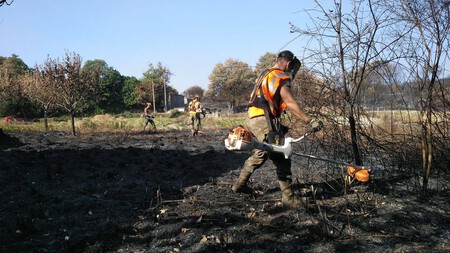
In recent weeks, Spain has encountered unprecedented forest fires, igniting a national crisis that has ravaged over 415,000 hectares of land. Reports from the European Fire Information System indicate that this year has seen more land burned in Spain than in neighboring countries like France, Portugal, and Italy. The flames have not only devastated forests but have also destroyed homes and farms, forcing Spaniards to confront a pressing question: What comes after the fire is extinguished?
After the smoke clears, Spain faces critical decisions regarding reforestation and ecological restoration. Should the emphasis be on returning ecosystems to their pre-fire state, or should the focus shift to creating ecosystems that are better adapted to future climatic challenges? This dilemma presents a complex set of considerations for scientists, environmentalists, and policy-makers alike.
The Aftermath: Reassessing Restoration Strategies
The immediate reaction to a forest fire often centers around recovery. However, experts argue that simply restoring the landscape to its previous state may not be realistic or beneficial. According to Ruth Domènech, a fire expert at the University of California, the species that thrived in the past may no longer be suited for the altered climate conditions. “It is hard for us to accept that some species, like chestnuts, may not return,” she explains. Her thoughts echo a growing consensus within the scientific community that the changing climate mandates a reevaluation of restoration goals.
Victor Resco, a professor of Forestry Engineering at the University of Lleida, shares a similar sentiment. Drawing attention to the inadequacy of trying to restore an ecosystem that no longer exists, he states, “We must be looking for something different.” This new perspective emphasizes adapting to impending climate scenarios rather than lamenting what has been lost.
The Influence of Climate Change
The great key to addressing Spain’s forest crisis lies in understanding the implications of climate change. As previously noted by Resco, we must clarify what type of forest we aim to restore. Is it a throwback to the ecosystems of the past or one tailored for future climatic conditions? “The term ‘restoration’ traditionally refers to putting things back to how they were,” he states. “But with a changing climate, this mindset can lead to failure.”
The narrative thus shifts from restoration to adaptation, incorporating strategies that account for climatic conditions projected for the next several decades. This could involve selecting species that are not currently found in a specific area but are more likely to thrive under future conditions.
A Question of Species: Native vs. Non-native
An ongoing debate is whether to utilize native or non-native species in reforestation efforts. Domènech warns that adherence to traditional notions of “native” can be misleading. “What native species do we refer to? The ones that existed hundreds or thousands of years ago?” she questions. Due to shifting climatic norms, she advocates for the acceptance of species that currently thrive in warmer climates, even if they are not indigenous to the affected areas.
Resco argues that the urgency of certain post-fire environments, such as those suffering from severe erosion, necessitates immediate intervention. Conversely, he also asserts that in less urgent situations, allowing for natural regeneration could yield more sustainable benefits over time.
Natural Resilience and Adaptation
It is crucial to note that many natural species possess inherent capabilities to withstand or even thrive post-fire. The Mediterranean ecosystem exhibits a range of organisms that have evolved adaptive traits, making them resilient. For example, the Fire Beetle (Melanophila acuminata) has evolved receptors enabling it to detect flames from kilometers away. It regenerates in burned forests by laying eggs in predator-free areas created by the fires.
Similarly, certain plant species, like the Carrasco pine, rely on fire for regeneration, with their seeds designed to disperse following a blaze. Conversely, some species face a precarious future; as climate conditions continue to shift, the remaining oaks, well-interrupted by past fires, may find themselves at risk from future temperatures and droughts.
The Urgency of Conservation
The complexity of restoring Spain’s forests is a multifaceted issue that weaves together various ecological, climatic, and social threads. Experts universally agree that focusing solely on the past is inadequate in the face of climate change. Those species that have withstood past fires may not thrive under future conditions, and thus conservation strategies need to reflect the changing environment.
What is urgently needed is a nuanced approach to restoration—one that considers not only the immediate ecology but also the long-term climatic trajectory of Spain’s natural landscapes. As leaders, scientists, and citizens engage in this critical discourse, the outcome will profoundly influence the health of Spain’s ecosystems in the years to come.
In the face of devastating wildfires, the opportunity for reflection and strategic planning now lies ahead; it is vital that the choices made today help build a resilient ecological foundation for future generations.