
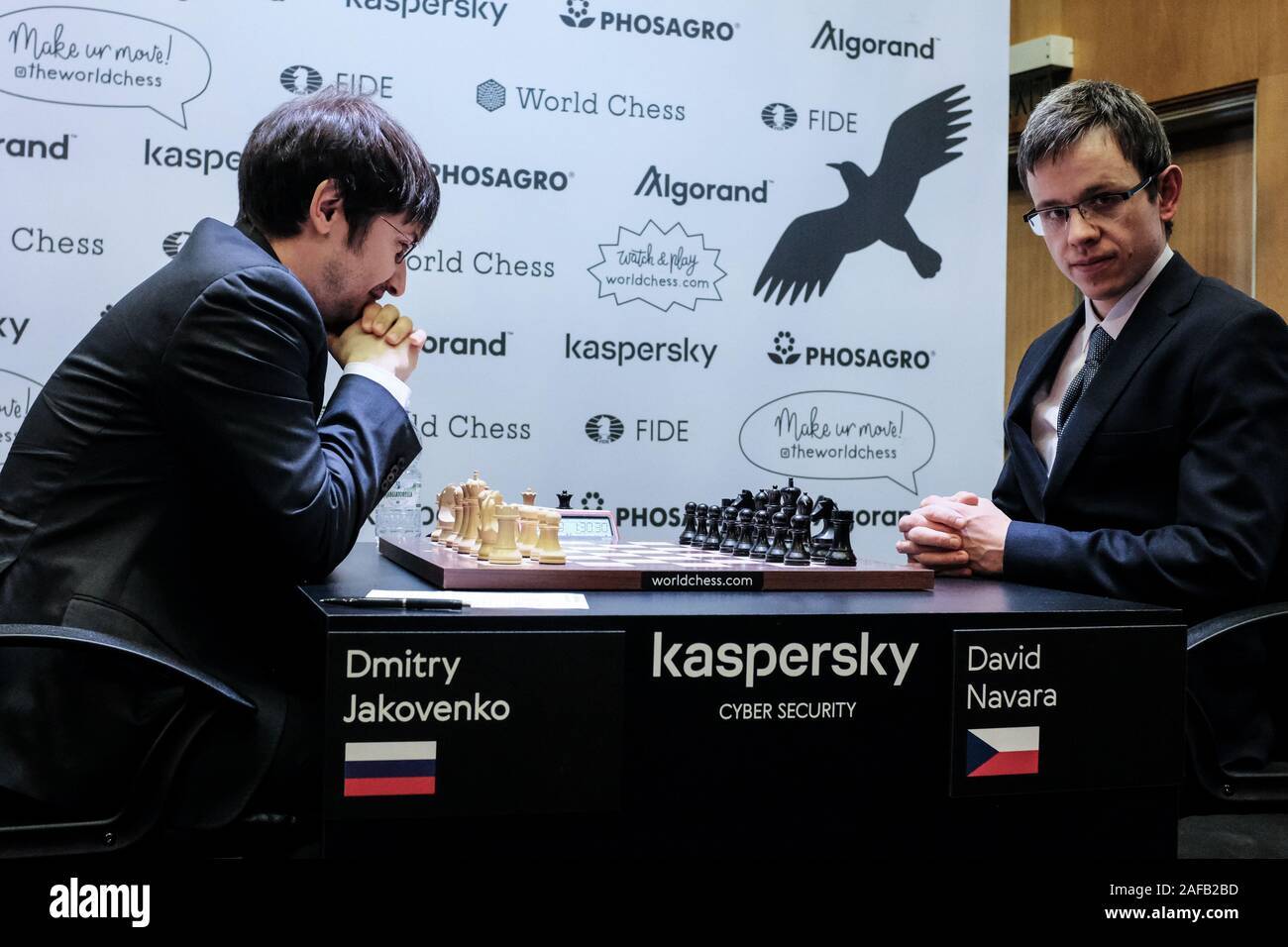
The paranoia surrounding cheating in chess has caused significant damage, often overshadowing actual cases of deception. The situation involving David Navara , a 40-year-old grandmaster and thirteen-time champion of the Czech Republic , exemplifies this issue, revealing sharp edges that are more pronounced than usual. Renowned for his integrity, Navara recently disclosed that he might have Asperger’s Syndrome. “It’s quite common among slightly eccentric geniuses… though I’m no genius!” he explained.
This past Friday, Navara confessed to something far more serious : he nearly took his own life due to the unbearable accusations, mostly insinuated, from former world champion Vladimir Kramnik . Navara also criticized the International Chess Federation (FIDE) for ignoring his repeated cries for help for months.
“Basically, I was asking for help,” Navara recounts. His pleas were “desperate,” as he describes them, yet the organization led by Arkady Dvorkovich , also Russian, didn’t respond until more than six months later. During that time, he sought the help of a psychiatrist and a psychotherapist, feeling “completely unbalanced.”
His suffering began in May 2024, triggered by a tweet from Kramnik suggesting that several players were suspected of cheating in the online tournaments he organizes weekly on Chess.com. Kramnik derogatorily termed these competitions “Cheating Tuesdays” instead of their official title, “Titled Tuesday,” referring to the titled players participating. Every week, numerous masters and grandmasters usually join these events.
With his complaint to FIDE, Navara did not expect much, aside from clearing any potential stain on his name. Ideally, he hoped for an apology from the former world champion. He knew that any sanction not involving a financial penalty wouldn’t be effective against a retired player.
Depression and Suicidal Thoughts
Initially, David Navara tried to ignore the message, but as he began to read comments on forums, including those from respected peers, he fell apart. Kramnik had planted a seed of doubt even among top grandmasters. The Czech admits he was already struggling, stating, “I was very depressed and cried for hours. Since childhood, I haven’t been the most mentally stable person. I had serious problems at 15, including recurrent suicidal thoughts. Fortunately, they faded, but they returned during very difficult situations. This issue rekindled my suicidal thoughts and caused me great pain.”
The grandmaster reveals unsettling details: “There was a real danger of suicide in mid-June 2024. I want to emphasize that I firmly believe this is a mistaken decision in the vast majority of situations, including my own.” In a curious twist, poor performance during that period kept him motivated to live, as he did not want anyone to think he would take his life over it.
An Example of Fair Play
Cheating is a genuine problem in chess, particularly online, yet Navara is one of the players farthest removed from any suspicion, akin to Faustino Oro, the prodigy aspiring to become the youngest grandmaster in history. The Argentinian has also faced similar scrutiny at Kramnik’s hands.
The Czech grandmaster epitomizes sportsmanship and education, respected by all. In 2011, FIDE even introduced a trophy to honor an exceptional act of fair play during one of his matches. This took place during the 2011 World Cup in Kanti-Mansisk (Russia). After six hours of play, Navara held a decisive advantage against Alexander Moiseenko (Ukraine). Unexpectedly, he offered a draw. He later explained that he had accidentally touched both his king and bishop while intending to move the latter. Moiseenko thought the hand touched the king first, but allowed his opponent to play the bishop. Navara refused to let the sacred rule of “touch move” distort the game’s spirit, deciding to offer a draw to reciprocate the gesture.
Kramnik’s Bitter Response
Navara’s character stands in stark contrast to Kramnik’s response on social media. Kramnik not only remains unrepentant, believing he has done nothing wrong, but also accuses Navara of playing the victim, criticizing his behavior as “reprehensible,” and threatening legal action if anyone mentions something he finds objectionable. The man who dethroned Garry Kasparov , a chess legend, has positioned himself as a Don Quixote against cheating but sometimes sees giants where there are merely windmills.
In his reaction to Navara’s writing, Kramnik makes damning remarks, without failing to wish him a swift recovery. “If you feel guilty and offended, I can do nothing but shrug my shoulders,” he states. “To the ‘chess mafia’: your panic is visible and futile; the end is near.” He finds it tragic to see David fall into such false statements. “Half a year of complaints and numerous emails to FIDE should have been directed to me, which would have solved the problem.”
When a fan critiques his behavior, Kramnik responds, “Someone must clear chess of dirt and corruption.” He feels he is at the forefront of a mission , willing to take down anyone along the way without concern for the presumption of innocence. Several esteemed grandmasters, including Susan Polgar and José Carlos Ibarra , have come to David Navara’s defense. Others have yet to express their opinions, including FIDE itself, as of the latest updates.