

What are the implications of exposing nearly 60,000 Bitcoin addresses? How did the recent cyberattack impact LockBit’s operational security? What details can be gleaned from the leaked internal data? How does this breach relate to past operations targeting ransomware groups? What measures are law enforcement agencies expected to take in the aftermath of this incident?
A major breach has rocked the infamous LockBit ransomware gang, exposing nearly 60,000 Bitcoin addresses after hackers defaced its dark web affiliate panels and leaked a trove of internal data online. The cyberattack, discovered on May 7, 2025, targeted LockBit’s dark web infrastructure, defacing affiliate admin panels and leaking a large internal records database.
What Happened?
The attackers left behind a message—“Don’t do crime CRIME IS BAD xoxo from Prague”—along with a downloadable MySQL database dump titled paneldb_dump.zip. Initially flagged by threat actor Rey, the breach was swiftly analyzed by cybersecurity experts, who uncovered a wealth of information about LockBit’s operations. According to Bleeping Computer, the leaked data includes a massive collection of ransomware infrastructure details. Most notably, it exposes 59,975 unique Bitcoin addresses linked to LockBit. These addresses are believed to be associated with ransom payments, each typically assigned to individual victims as part of LockBit’s efforts to compartmentalize and obscure the flow of illicit funds.
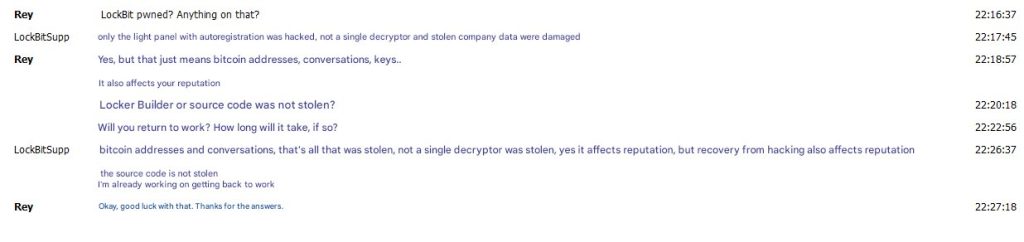
However, LockBit’s operator, “LockBitSupp,” confirmed the breach but insisted that no private keys or additional sensitive data were lost. Additional data reveals records of detailed logs of ransomware builds created by LockBit affiliates. These records not only document the technical configurations used in various attacks but also include extensive chat logs, over 4,400 negotiation messages between LockBit operators and their victims. Also among the compromised data were user credentials, including 75 admins and affiliates with access to the affiliate panel, with passwords stored in plaintext.
The exact method used to breach LockBit’s infrastructure remains uncertain. However, Bleeping Computer suggests similarities to a recent hack of the Everest ransomware group, raising suspicions of a common attacker or tactic. The report noted that the server was running PHP 8.1.2, which is known to be vulnerable to CVE-2024-4577, a critical exploit that could have enabled remote code execution.
LockBit’s Crumbling Empire: Global Crackdown Followed By Leaked Data
The fallout from the breach is likely to be far-reaching. For law enforcement agencies and blockchain forensic teams, the leaked Bitcoin addresses and data offer a new opportunity to trace ransomware payments and potentially identify individuals connected to LockBit. The breach also delivers a severe reputational blow to LockBit, which has already been weakened by Operation Cronos. The coordinated crackdown led by the U.S. Department of Justice, Europol, and law enforcement agencies worldwide in early 2024 temporarily dismantled its infrastructure.
The operation has already resulted in the freezing of over 200 cryptocurrency accounts linked to LockBit’s ransomware activities. Authorities have arrested two LockBit actors in Poland and Ukraine, while two affiliates were apprehended and charged in the U.S. The U.S. Treasury’s OFAC also blacklisted ten Bitcoin and Ether addresses tied to the group, with some linked to deposits on exchanges like KuCoin, Binance, and Coinspaid. These sanctions now prohibit U.S. entities from transacting with the individuals or wallets involved.
Key infrastructure used by LockBit, including its websites and ransom negotiation panels, was seized in early 2024. More than 1,000 decryption keys were recovered and are being distributed to victims to help them regain access to encrypted data without paying ransoms. A major developer behind LockBit’s tools, Rostislav Panev, was arrested in Israel and awaits extradition to the U.S. Panev allegedly built malware and other software for the group and received over $230,000 in crypto. His defense claims he was unaware of how the tools were used, but authorities say he played a central role in enabling the group’s operations.
LockBit, active since 2019, has attacked more than 2,500 victims in 120 countries and reportedly extorted over $120 million globally.
The post Hack Exposes Nearly 60,000 Bitcoin Addresses Linked to LockBit Ransomware Group appeared first on Cryptonews.
Hack Exposes Nearly 60,000 Bitcoin Addresses Linked to LockBit Ransomware Group
In a significant development in the ongoing battle against cybercrime, a recent hack has unveiled nearly 60,000 Bitcoin addresses that are reportedly associated with the notorious LockBit ransomware group. This revelation raises critical questions about the operations of ransomware gangs, the effectiveness of current cybersecurity measures, and the implications for victims and law enforcement agencies.
Understanding LockBit Ransomware
LockBit emerged on the cyber threat landscape in 2019 as a sophisticated ransomware-as-a-service (RaaS) operation. Operating under the double extortion tactic, it not only encrypts victims’ files but also threatens to leak sensitive data if the ransom isn’t paid. Operating on a subscription model, LockBit allows affiliates to launch attacks while providing them with the necessary tools and infrastructure. This decentralized approach contributes to its rapid growth and adaptation, making it one of the most prominent ransomware threats today.
LockBit’s operators focus on high-value targets, often penetrating critical sectors such as healthcare, manufacturing, and finance. This focus on crucial industries not only increases potential payouts but also exacerbates the impact of their operations on society.
The Recent Hack and Its Implications
The recent hack that exposed the 60,000 Bitcoin addresses linked to LockBit is a crucial breakthrough in understanding ransomware operations and their financial networks. This leak can be seen as a double-edged sword; while it provides valuable intelligence for law enforcement and cybersecurity professionals, it also highlights the vulnerabilities within the cryptocurrency ecosystem.
The Bitcoin addresses—often masked by layers of anonymity—can provide insights into the operational patterns and revenue streams of ransomware groups. By analyzing the flow of funds through these addresses, investigators can potentially trace back to the individuals and entities behind the attacks, making it easier to identify and apprehend those responsible.
The Role of Cryptocurrency in Ransomware
Cryptocurrency has become the preferred payment method for ransomware groups for several reasons. First, the decentralized and pseudonymous nature of cryptocurrencies like Bitcoin allows perpetrators to divert funds without revealing their identities. Second, the transparency of blockchain technology, while offering a public ledger, complicates tracking the end-users due to mixed transactions and complex routing.
However, the recent leak could radically alter this landscape. With the exposure of a large number of Bitcoin addresses, it may become feasible for cybersecurity firms and law enforcement to trace illicit funds more effectively. It could also lead to increased scrutiny and monitoring of cryptocurrency exchanges, potentially dampening the ease with which criminals can liquidate their ill-gotten gains.
The Road Ahead for Victims and Law Enforcement
The implications of the hack extend beyond law enforcement. Victims of ransomware attacks who find their data compromised might view this development with a mix of hope and skepticism. On one hand, the exposure of these addresses could assist in recovering funds or unraveling the networks of the criminals; on the other, it raises concerns about the potential for further attacks or reprisals from the LockBit group.
For law enforcement agencies, the leak presents an opportunity to enhance their understanding of ransomware operations. However, it also underscores the need for more robust inter-agency cooperation and advanced cybersecurity strategies. The dynamic nature of cybercrime necessitates continuous updates to legal frameworks and investigative techniques to keep pace with evolving threats.
The Need for Heightened Cybersecurity
The growing prevalence of ransomware is a stark reminder of the vulnerabilities embedded within digital infrastructures. Organizations need to invest more heavily in cybersecurity defenses, including regular security audits, staff training, and adherence to best practices in data protection. Moreover, adopting a proactive approach that includes regular backups and a comprehensive incident response plan can significantly mitigate the impact of a potential ransomware attack.
Public awareness also plays a crucial role in fighting ransomware. Many individuals underestimating their risk or lack limited understanding of cybersecurity can unintentionally become fodder for these attacks. Raising awareness about safe online practices, phishing schemes, and the importance of regular software updates can empower users to better protect themselves.
Conclusion
The exposure of nearly 60,000 Bitcoin addresses linked to the LockBit ransomware group is a potent reminder of the complexities and dangers posed by cybercrime today. While it presents unique opportunities for law enforcement and cybersecurity experts, it also underscores the urgency for organizations and individuals to bolster their cyber defenses. As the digital landscape continues to evolve, adapting to these changes will be vital in safeguarding against the ever-present threat of ransomware. Now, more than ever, cooperation among industries, law enforcement, and cybersecurity experts is critical to dismantling the frameworks that support these ransomware operations and enhancing our collective digital resilience.
A recent security breach has revealed nearly 60,000 Bitcoin addresses associated with the LockBit ransomware group. This exposure of sensitive information raises significant concerns about the compromised security within the cryptocurrency realm and the ongoing threat of ransomware attacks.
The leak could potentially impact various entities, including individuals, businesses, and victims who may have unknowingly engaged with the ransomware group. Security experts emphasize the importance of vigilance in tracking such addresses to understand the financial flows linked to illicit activities.
Additionally, this incident highlights the need for enhanced cybersecurity measures and greater collaboration among law enforcement agencies to combat ransomware exploitation effectively. As ransomware attacks continue to rise, the growing intersection between cybersecurity and cryptocurrency regulation becomes increasingly critical in safeguarding digital assets and mitigating risks for users.